
How to Improve Sleep Quality Naturally: A Science-Backed Guide
If you're trying to figure out how to improve sleep quality naturally, you've likely realized it's not about finding a magic pill. It's about a commitment to consistent, daily habits. Real, lasting changes come from focusing on your routines, environment, and lifestyle choices—they have a far greater impact than any quick fix.
Think of restorative sleep as a skill you build over time, not something you can force on a single, frustrating night.
The Real Foundation of Natural Sleep
Let's look at a classic scenario. A busy professional—we'll call her Sarah—is often stuck working late, firing off emails until 11 PM. To "wind down," she scrolls through her phone, only to find herself staring at the ceiling at 1 AM, her mind racing and body tense. She's exhausted, but she can't fall asleep.
This frustrating cycle of being "tired but wired" is incredibly common, and it points to a core misunderstanding about how sleep actually works.
Great sleep doesn't just happen when your head hits the pillow. It’s the direct result of countless small decisions you make all day long. Your body runs on an internal 24-hour clock called the circadian rhythm, a natural cycle that dictates when you feel alert and when you get sleepy. When your daily habits—like late-night screen time or a chaotic schedule—clash with this rhythm, your sleep quality inevitably suffers.
Understanding Your Internal Clock
Imagine your circadian rhythm as an internal conductor, orchestrating a complex symphony of hormones and bodily functions. When you expose your eyes to bright light in the morning, the conductor signals, "It's daytime! Time to be alert!" As darkness falls, it cues the release of melatonin, the hormone that signals, "Okay, it's time for sleep."
The problem is, modern life constantly sends our conductor confusing signals. The blue light from our phones, late-night meals, and high-stress evenings throw this whole process out of whack, preventing our bodies from preparing for rest. To improve sleep quality naturally, you have to learn to work with your internal clock, not against it. This is where creating powerful routines—often called sleep hygiene—comes in.
"The truth is that we've become disconnected from our natural sleep patterns. Reclaiming good sleep is about relearning how to listen to our bodies and creating an environment that supports, rather than fights, our biology."
Global data backs this up, showing that consistent routines and better day-to-day sleep hygiene are the most effective strategies. A recent analysis by Sleep Cycle, looking at over 105 million nights of data, found that countries with more regular schedules get significantly better rest. The Netherlands came in at #1 for sleep quality, while economies known for long work hours, like Japan and South Korea, were far behind.
This guide is built to give you practical, evidence-based solutions. If you're looking for even more, this additional guide to improving sleep quality naturally offers some fantastic insights.
The whole journey starts with small, intentional actions. You can start building these powerful routines by exploring these micro-habits that transform your life and applying them to your sleep schedule.
To help you get started right away, I've put together a few high-impact changes you can make tonight. These are simple, actionable steps that can make a noticeable difference almost immediately.
Quick Wins for Better Sleep Tonight
| Strategy | Why It Works | Simple First Step |
|---|---|---|
| Set a "Digital Sunset" | Blue light from screens suppresses melatonin, tricking your brain into thinking it's still daytime. | Turn off all screens (phone, TV, laptop) at least 60 minutes before your intended bedtime. |
| Cool Your Bedroom | Your body temperature naturally drops to initiate sleep. A cool room facilitates this process. | Set your thermostat to between 60-67°F (15-19°C) or open a window before bed. |
| Dim the Lights | Bright overhead lights signal "daytime" to your brain, inhibiting the wind-down process. | Use only dim, warm-toned lamps for the last hour before you get into bed. |
Trying even one of these tonight can set you on the right path. It's all about making small, sustainable changes that align with your body's natural biology.
Winning the Day to Win the Night
Most people think the battle for better sleep starts when their head hits the pillow. The truth? A great night's sleep is earned during the day. Your daytime habits are constant signals to your body, either working with your natural sleep-wake cycle or actively fighting against it.
If you want to genuinely improve your sleep, you have to be intentional from the moment you wake up. The choices you make in the daylight hours are what truly prepare your brain and body for a restorative night.
Anchor Your Day with Morning Sunlight
One of the simplest and most powerful things you can do for your sleep is get direct sunlight within the first hour of waking up. When that morning light hits your eyes, it sends a loud-and-clear signal to your brain to shut down melatonin production and kick off its 24-hour circadian timer.
This single act helps guarantee your body will be ready for sleep about 14-16 hours later.
Just 10-15 minutes of unfiltered sunlight is all it takes. This doesn't have to be some intense routine—a quick walk, sipping your coffee on the porch, or even just standing by an open window can set your internal clock perfectly for the day.
I once worked with a busy parent who was exhausted by evening but could never actually fall asleep. They started a simple new habit: a 15-minute walk around the block after school drop-off. This small change delivered morning sun, light exercise, and a moment of peace. Within two weeks, they reported it was significantly easier to wind down and fall asleep at night.
Strategic Exercise Timing for Deeper Sleep
We all know physical activity is great for sleep, but when you do it really matters. A good workout during the day can actually increase the amount of deep sleep you get later on. It gently raises your body temperature, and the cooling-off period a few hours later is a natural trigger for sleepiness.
On the other hand, a high-intensity workout too close to bedtime can backfire for some people. It jacks up cortisol and adrenaline, making it tough for your body and mind to relax. If evenings are your only option, stick to lower-intensity activities like yoga, stretching, or a leisurely walk. For some great equipment-free ideas, you might find our guide on primal fitness and its benefits useful.
The infographic below really nails down the core principles of building these kinds of lasting, natural sleep habits.
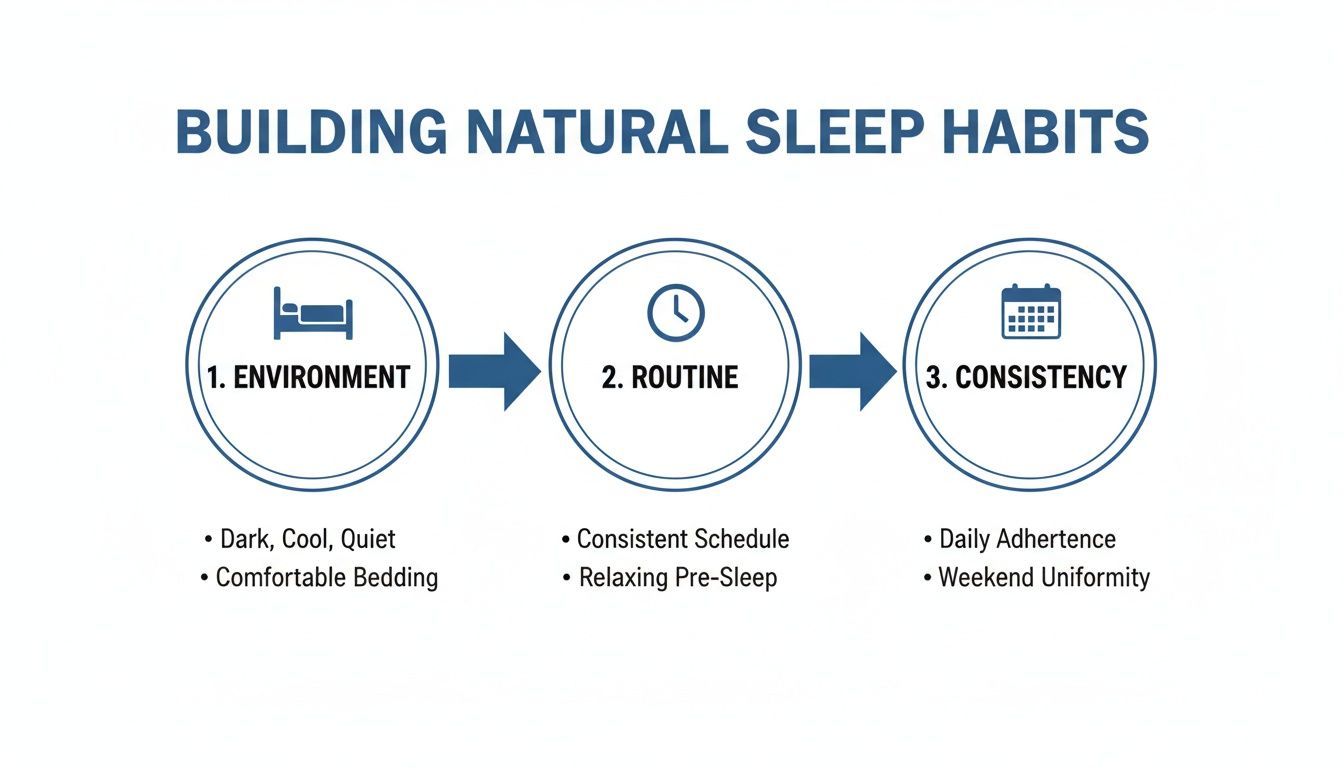
As you can see, it all comes down to mastering your environment, creating a solid routine, and—most importantly—sticking with it.
Navigating Caffeine for Restful Nights
Caffeine is a tricky substance. It's a powerful stimulant with a surprisingly long half-life, which means it hangs around in your system for hours. That 3 PM coffee can easily be messing with your sleep at 11 PM, even if you don't feel particularly "wired."
To keep caffeine from sabotaging your night, you need a hard cutoff time.
- A good rule of thumb: Stop all caffeine at least 8-10 hours before you plan to go to bed. For most of us, that means no more coffee, caffeinated tea, or energy drinks after 2 PM.
- Watch for hidden sources: Don't forget that caffeine also shows up in chocolate, many sodas, and even certain pain medications.
It’s easy to underestimate just how much poor sleep quietly undermines your daily life. But the research shows real, tangible rewards for getting good rest. When people sleep well, 42% report a better mood and 41% notice improved concentration. The data is clear: those who are satisfied with their sleep are nearly twice as likely to feel they are "flourishing" in life.
By getting a handle on these three key areas—sunlight, exercise, and caffeine—you're not just managing your day. You're setting yourself up to win the night.
Crafting Your Ultimate Sleep Sanctuary
Your bedroom needs to be a haven for rest, not a catch-all room for work, entertainment, and the day's leftover stress. When you're trying to figure out how to improve sleep quality naturally, your environment is one of the most powerful tools you have. Think of it as sending a clear, undeniable signal to your brain: this space is for sleep, period.
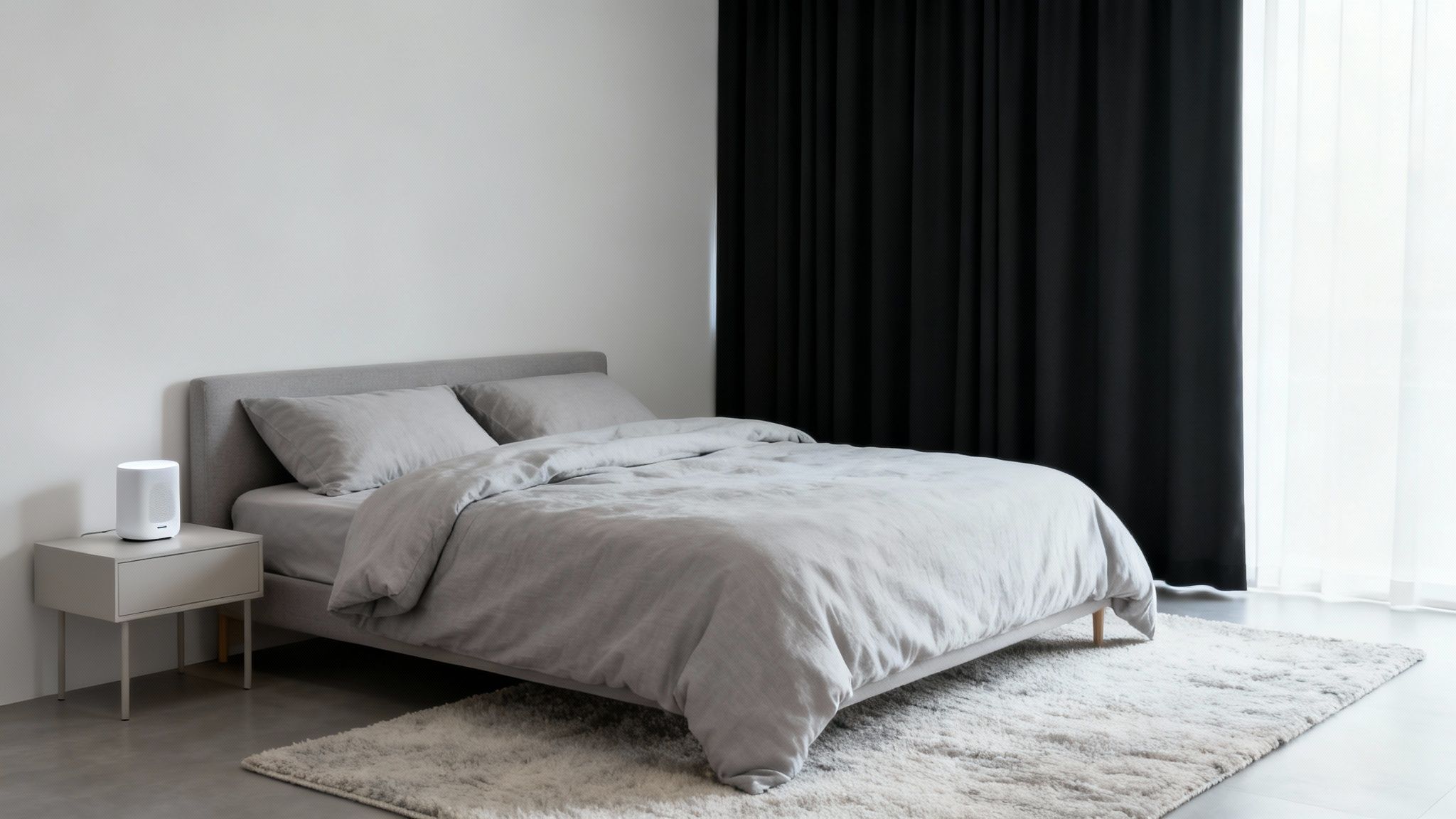
The whole game really boils down to three core pillars: light, temperature, and sound. Get these right, and you’re creating an environment that works with your body’s biology, making restorative sleep feel effortless instead of like a nightly battle.
Achieving True Darkness
Even a sliver of light can mess with your melatonin production and disrupt your sleep cycle. We're talking about the streetlight creeping through the blinds, the tiny glowing dot on your TV, or the bright display on your alarm clock. These are all common culprits that keep your brain from fully powering down.
- Blackout Curtains: These are an absolute game-changer. They’re far more effective than standard blinds at blocking out streetlights and early morning sun.
- Cover Electronics: A small piece of black electrical tape is your best friend here. Use it to cover those tiny LED lights on chargers, power strips, and other gadgets.
- Mind the Gaps: If light still finds its way in from under the door, a simple door draft stopper works wonders.
If you're really struggling with glowing screens and digital distractions, you're not alone. We've got a whole guide on how to start a digital detox and unplug effectively that can help reclaim your evenings.
Finding the Perfect Sleep Temperature
Here’s something most people don't realize: your body temperature actually needs to drop to initiate and maintain deep sleep. If your bedroom is too hot or stuffy, it can actively work against this process, leaving you tossing and turning all night.
The sweet spot for most people is somewhere between 60-67°F (15-19°C). This cool temperature helps your body’s natural cool-down process, paving the way for deeper, more continuous sleep. Play around within this range to find the exact temperature that feels best for you.
Controlling Your Sound Environment
An unpredictable soundscape is a huge sleep disruptor. A distant siren, a neighbor's dog barking, or even a partner's snoring can jolt you out of deep sleep, even if you don't fully wake up. The goal isn't absolute silence—it's consistency.
This is where a white noise machine or even a simple fan can be a lifesaver. The steady, predictable hum masks those sudden, jarring noises, creating a stable auditory blanket that helps your brain relax and stay asleep. There are also plenty of apps that offer everything from gentle rain to ambient drones.
Your sleep environment should be cool, dark, and quiet. These aren't just preferences; they are biological necessities for restorative sleep. Treating them as such is fundamental to improving your sleep quality.
It’s amazing how a few small tweaks to your bedroom can make a massive difference. Here’s a quick look at some common sleep disruptors and the simple, natural solutions that really work.
Common Sleep Disruptors vs. Natural Solutions
| Disruptor | Impact on Sleep | Natural Solution |
|---|---|---|
| Streetlight Bleed | Suppresses melatonin production, making it harder to fall asleep. | Install high-quality blackout curtains or use a comfortable sleep mask. |
| Warm, Stuffy Room | Prevents the necessary drop in core body temperature needed for sleep. | Set the thermostat to 60-67°F (15-19°C) and use a fan for air circulation. |
| Sudden Noises | Causes micro-awakenings that pull you out of deep, restorative sleep stages. | Use a white noise machine, a fan, or earplugs to create a consistent soundscape. |
| Glowing Electronics | Emits blue light that tricks your brain into thinking it's still daytime. | Cover all LED lights with black electrical tape and charge devices outside the bedroom. |
By addressing these common issues, you take back control and set the stage for a truly restful night.
By mastering these three pillars—light, temperature, and sound—you stop leaving your sleep to chance. You're actively designing an environment that supports your body’s most fundamental need for rest and recovery.
Mastering the Art of the Wind-Down Routine
You can't expect your brain to slam on the brakes after a packed day. It's like trying to stop a freight train on a dime—it simply doesn't work that way. To really improve your sleep quality, you need a buffer zone, a gentle transition between the hustle of your day and the rest you need at night. This is where a solid wind-down routine becomes your secret weapon.
Think of this pre-sleep ritual as more than just a nice habit; it’s a biological cue. A consistent routine sends clear signals to your brain that the day is winding down. This helps lower cortisol (the infamous stress hormone) and nudges your body to start producing melatonin, setting the stage for deep, restorative sleep.
Call a "Digital Sunset"
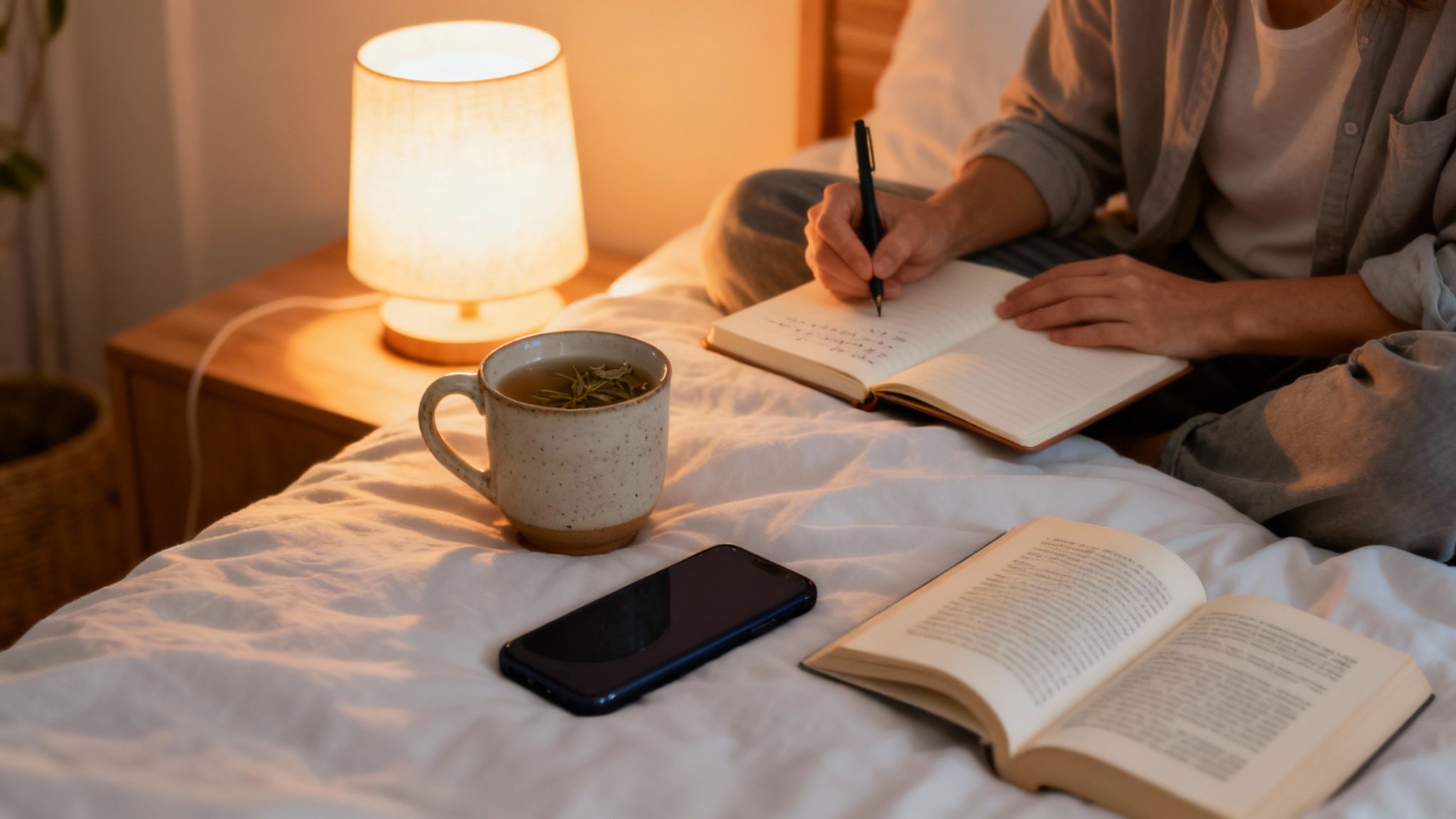
One of the most powerful things you can do is to implement a "digital sunset." This means putting away all screens—your phone, tablet, laptop, and TV—at least 60 to 90 minutes before your head hits the pillow. We’ve all heard it, but it’s true: the blue light from these devices is a notorious melatonin-killer, essentially tricking your brain into thinking it’s still high noon.
Instead of mindlessly scrolling through your feed or firing off that "one last email," use this screen-free time to do something genuinely relaxing. This conscious break from digital noise is a non-negotiable step for letting your mind quiet down naturally.
Find Your Go-To Screen-Free Rituals
Your wind-down activities should be things you actually enjoy and can stick with. The whole point is to create a peaceful, predictable ritual that you start to look forward to.
Here are a few ideas that have worked for countless people I've worked with:
- Read a real book: Unlike a screen, a paper book doesn’t blast your eyes with sleep-disrupting blue light. I find that fiction works especially well, as it pulls you into another world and away from your own daily worries.
- Do a "brain dump": Take 10 minutes to just write. Jot down whatever is on your mind—worries, to-do lists, random thoughts. Getting it all out on paper frees your mind from having to churn through it all night long.
- Try some gentle stretching or yoga: A few light, restorative poses can work wonders for releasing the physical tension that builds up in your muscles after a long day of sitting or stress.
- Listen to something calming: Put on some soothing music, an ambient soundscape, or a low-key podcast. The key is to choose something that doesn't require a ton of mental energy.
For some, that evening glass of wine might also be part of the problem. If you've been rethinking your relationship with alcohol, you might find it interesting to learn about the sober curious movement and how cutting back can improve both mental clarity and sleep.
How to Break the Sleep Anxiety Cycle
One of the most maddening sleep problems is sleep anxiety. This is when the fear of not being able to sleep becomes the very thing that keeps you wide awake. It’s a vicious cycle that can feel impossible to break.
A Real-World Example: The Stressed-Out Student
I once worked with a university student, Alex, who was paralyzed by anxiety before big exams. The more he fretted about needing a good night's sleep, the more it slipped through his fingers. We implemented a simple, non-negotiable 30-minute routine: 15 minutes of reading a sci-fi novel, followed by 15 minutes of journaling. That's it. This predictable ritual broke the anxiety loop by giving his brain a calm sequence to follow, helping him fall asleep faster and feel much more prepared for his exams.
The key is to change your goal. Stop "trying to sleep" and instead focus on "allowing yourself to rest." If you’re still awake and tossing around after 20 minutes, get out of bed. Go to another room and do something quiet in dim light until you start to feel sleepy again. This simple act helps break the frustrating mental link between your bed and the feeling of being wide awake.
How Your Diet and Nutrition Impact Sleep
It’s easy to overlook, but what you eat—and when you eat it—has a massive impact on how well you sleep. Think of food as the raw material your body uses to produce essential sleep hormones and neurotransmitters, like serotonin and melatonin. Making a few thoughtful tweaks to your diet is one of the most direct ways to naturally improve your sleep.
The connection is surprisingly simple. Certain nutrients help your nervous system power down and prepare for rest, while other foods and drinks can act as stimulants or cause digestive trouble that keeps you tossing and turning. It’s not about chasing a "perfect" diet, but about being more mindful of what you’re putting into your body, especially in the hours before you hit the pillow.
Foods That Promote Natural Sleep
You can actively support your body's natural sleep cycle by incorporating a few key foods into your diet. These aren't magic bullets, but they are packed with the compounds your brain needs to relax and initiate sleep.
Try working some of these into your evening meals or as a light snack:
- Tryptophan-Rich Foods: This amino acid is a direct precursor to serotonin, which then gets converted into the sleep hormone melatonin. You’ll find it in turkey, chicken, nuts, seeds, and oats.
- Magnesium Powerhouses: I think of magnesium as nature’s relaxation mineral. It helps calm the nervous system by regulating key neurotransmitters. Great sources include almonds, spinach, bananas, and avocados.
- Smart Carbs: A small portion of complex carbohydrates, like a bowl of oatmeal or a slice of whole-wheat toast, can actually help make tryptophan more available to your brain.
Beyond what you eat, when you eat is just as critical. A heavy, rich meal right before bed is a recipe for indigestion and acid reflux, both of which can wreck your sleep. On the flip side, drinking too much liquid can mean multiple trips to the bathroom overnight. A good rule of thumb is to finish your last big meal at least two to three hours before you plan to go to sleep.
A Balanced Look at Natural Sleep Supplements
When you've dialed in your diet and lifestyle but still struggle, it's natural to wonder about supplements. They can definitely be helpful for some people in specific situations, but they aren't a substitute for good sleep habits and should always be approached with a bit of caution. I can't stress this enough: talk to your doctor before starting any new supplement regimen.
If you're exploring drinkable options for wellness, you might be interested in learning more about functional beverages and adaptogenic drinks.
So, what are the most common options? Here’s a breakdown of three popular natural sleep aids to help you understand what they do and who they're best for.
Comparing Common Natural Sleep Aids
| Supplement | How It Works | Best For | Important Considerations |
|---|---|---|---|
| Melatonin | This is a hormone your body already makes to manage its sleep-wake cycle. A supplement can help reset your internal clock. | People dealing with jet lag, shift workers, or anyone with a diagnosed circadian rhythm disorder. | Start low—0.5 to 1 mg is plenty. More isn't better and can leave you groggy. It's not a great fix for general insomnia. |
| Valerian Root | The theory is that it increases GABA, a calming neurotransmitter in the brain, which can ease anxiety and help you relax. | Anyone whose sleep problems are tied to stress or anxiety. Be patient; it can take a few weeks of consistent use to notice an effect. | Some people experience mild side effects like dizziness. Quality varies a lot between brands, so do your research. |
| Chamomile | It contains an antioxidant called apigenin, which binds to brain receptors that may help reduce anxiety and encourage sleep. | Someone looking for a gentle, calming ritual to add to their wind-down routine. It's most commonly enjoyed as a tea. | It's very safe for most people, but if you have a ragweed allergy, you might have an allergic reaction. |
Key Takeaway: Supplements are just that—a supplement to a solid foundation of good sleep hygiene. They can't replace the essentials. Your focus should always be on building sustainable habits like a consistent routine, a healthy diet, and a great sleep environment.
Ultimately, your diet is a powerful and personal tool for getting better sleep. By choosing foods that nourish your body, timing your meals wisely, and making informed choices about supplements, you can create the perfect internal conditions for a night of deep, restorative rest.
Frequently Asked Questions About Natural Sleep Improvement
1. How long does it take for natural methods to work?
While you might notice an improvement after just one night of applying a tip like cooling your room, real, lasting changes typically take one to four weeks of consistent effort. The key is sticking to a regular sleep-wake schedule, even on weekends, as this anchors your body's internal clock most effectively.
2. Is it bad to nap during the day?
Not necessarily. A short "power nap" of 20-30 minutes in the early afternoon can boost alertness. However, long naps (over 30 minutes) or late afternoon naps can disrupt your nighttime sleep drive, making it harder to fall asleep later. If you have insomnia, it's often best to avoid naps altogether.
3. Can I just catch up on sleep over the weekend?
While sleeping in on weekends can help reduce some sleep debt, it creates "social jetlag" by shifting your internal clock, which is why Monday mornings can feel so rough. A better strategy is to maintain a consistent schedule all week. If you must sleep in, limit it to an extra hour to avoid disrupting your rhythm.
4. What if I wake up in the middle of the night and can't get back to sleep?
The golden rule is to get out of bed after about 20 minutes of tossing and turning. Go to another room, keep the lights very dim, and do something calming like reading a paper book or meditating. Return to bed only when you feel sleepy again. This breaks the mental association between your bed and the anxiety of being awake. For more tips, check out these 7 proven tips to improve sleep quality naturally.
5. Are sleep tracking apps actually helpful?
They can be useful for identifying patterns (e.g., how a late meal affects your rest) and motivating you to stick with good habits. However, obsessing over a "perfect score" can lead to anxiety (orthosomnia). Use trackers as a guide, but always prioritize how you feel over what the app says.
6. Does alcohol before bed really help with sleep?
This is a common myth. While alcohol can make you feel drowsy initially, it severely disrupts sleep in the second half of the night. As your body processes it, sleep becomes fragmented, and it suppresses crucial REM sleep, leaving you feeling unrested.
7. How can I shut my brain off when I have a high-stress job?
A dedicated wind-down routine is essential. One of the most effective techniques is a "brain dump" an hour before bed: spend 10 minutes writing down all your worries, thoughts, and to-do items for the next day. This act of getting them on paper helps release them from your mind.
8. Is it true that I should avoid all blue light before bed?
Yes, this is scientifically sound advice. The blue light from screens (phones, TVs, laptops) significantly suppresses the production of melatonin, the hormone that signals your brain it's time for sleep. Power down all screens at least 60-90 minutes before bed for the best results.
9. My partner snores loudly. What can I do?
First, encourage your partner to see a doctor to rule out medical conditions like sleep apnea. For immediate relief, try high-quality foam earplugs or a white noise machine to mask the sound. Some couples find that sleeping in separate rooms is the best solution for ensuring both partners get the uninterrupted rest they need.
10. I've tried everything and still can't sleep. What's next?
If you've consistently applied these natural strategies for over a month with no improvement, it's time to consult a professional. You may have an underlying sleep disorder. Talk to your doctor about Cognitive Behavioral Therapy for Insomnia (CBT-I), which is the gold-standard, drug-free treatment for chronic insomnia.
At Everyday Next, we believe that small, informed changes can lead to significant improvements in your well-being. By understanding the science of sleep and applying these practical strategies, you can build a foundation for a healthier, more energized life. For more insights on personal development and modern living, explore our guides at https://everydaynext.com.
Previous Post
Next Post










Pingback: 10 Ways to Improve Focus and Concentration for 2026
Pingback: How to Retain Information: Science-Backed Strategies