
10 Actionable Freelancing Tips for Beginners to Succeed in 2026
Embarking on a freelance career can feel both exhilarating and overwhelming. You're trading the traditional 9-to-5 for autonomy, flexibility, and unlimited growth potential, but where do you actually begin? The path to a sustainable business is paved with strategic decisions, not just talent. Many aspiring freelancers falter not from a lack of skill, but from a lack of process. They struggle with inconsistent income, difficult clients, and the constant stress of finding the next project. This guide is designed to prevent that.
This is not a collection of vague motivational quotes. Instead, this is your comprehensive roadmap, packed with actionable freelancing tips for beginners that address the real-world challenges you'll face. We will move beyond generic advice to provide concrete strategies, practical examples, and proven systems for building a profitable freelance business from the ground up. You will learn precisely how to build a niche-focused portfolio, set intelligent rates, manage your time effectively, and master client communication.
Furthermore, we'll cover the critical, often-overlooked aspects of freelancing, such as financial management, tax planning, and developing long-term client retention strategies. Establishing a professional online presence is key, but so is understanding how to build a personal brand that truly opens doors for high-value opportunities. Whether you are a writer, designer, developer, or consultant, these foundational tips will help you avoid common pitfalls and attract the high-quality clients you deserve. Consider this your step-by-step blueprint for building a career defined by freedom and success.
1. Build a Niche-Focused Portfolio That Demonstrates Expertise
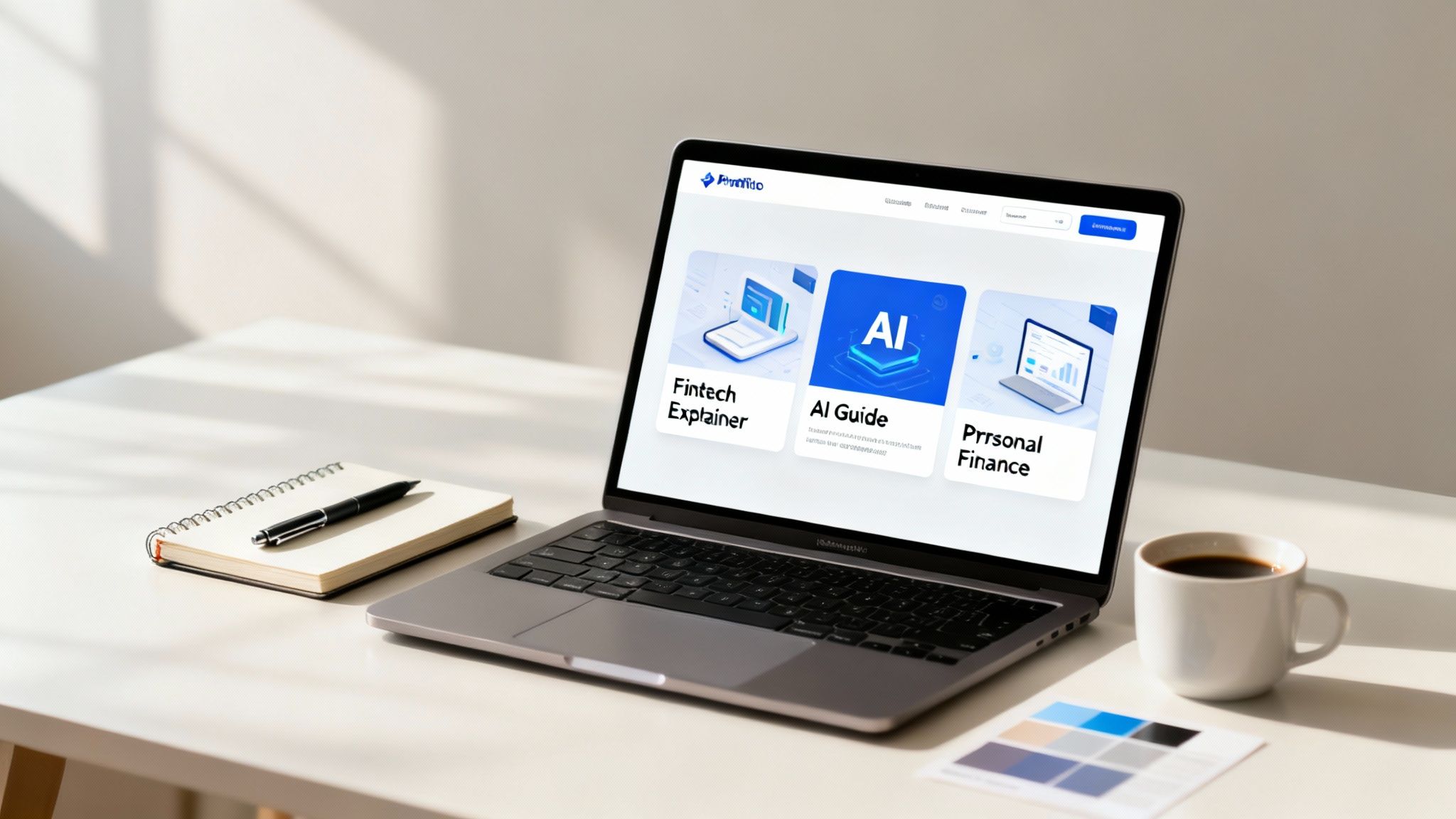
One of the most powerful freelancing tips for beginners is to resist the urge to be a generalist. While it seems counterintuitive, specializing in a specific niche makes you far more attractive to high-quality clients. Instead of offering "writing services," you offer "B2B SaaS content marketing for fintech startups." This positions you as an expert, not just another freelancer, allowing you to command higher rates and attract clients seeking specialized knowledge.
A niche-focused portfolio acts as undeniable proof of your expertise. It’s a curated collection of your best work that speaks directly to a specific industry's needs, language, and challenges. For a potential client in the AI space, a portfolio full of AI case studies is infinitely more compelling than one that mixes in blog posts about travel and pets. This targeted approach, championed by experts like Paul Jarvis, author of Company of One, helps you stand out in a crowded market.
Real-Life Example: A writer named Sarah wanted to break into the lucrative B2B tech space but only had general lifestyle clips. She spent a weekend writing three speculative articles: a deep-dive into a new AI model, a case study on a cybersecurity firm's success, and a comparison of two popular project management tools. By leading with these niche-specific samples, she landed a retainer with a SaaS blog within a month, bypassing lower-paying generalist roles.
How to Build Your Niche Portfolio
Your goal is to showcase 3-5 high-quality projects that align with your chosen specialty. If you don't have paid work in that niche yet, create sample pieces. This proactive step demonstrates your skill and commitment.
- Identify Your Niche: Find the intersection of your passion, existing skills, and market demand. Research topics frequently covered on platforms like Everyday Next, such as AI, personal finance, and career development, to spot lucrative opportunities.
- Create Spec Pieces: Write 2-3 sample articles, design a sample brand guide, or code a mini-project that mirrors the work you want to do. For example, a budding fintech writer could create an in-depth guide to decentralized finance (DeFi).
- Optimize for Your Audience: Tailor your portfolio website and project descriptions with keywords relevant to your niche (e.g., "quantum computing technical writer," "e-commerce UX designer"). This approach not only attracts clients but also improves your visibility in search engines. Building a specialized portfolio is a foundational step, similar to crafting a targeted resume; you can get more expert advice on how to master the art of resume writing here.
- Join Niche Communities: Engage in forums, LinkedIn groups, or Slack channels related to your industry. Share your insights and portfolio pieces to build visibility and establish your authority.
2. Set Clear Pricing and Rate Structures from Day One
One of the most daunting yet critical freelancing tips for beginners is establishing your rates before you even pitch a client. Many new freelancers undercharge out of insecurity or a lack of market knowledge, which devalues their work and attracts low-quality clients. Defining your rates upfront, whether hourly, project-based, or value-based, establishes a professional boundary and signals that you are a serious business owner. This clarity prevents awkward negotiations, protects you from scope creep, and ensures you're compensated fairly for your expertise.
Setting clear pricing is about more than just picking a number; it's about communicating your value. A well-defined rate structure tells clients what they can expect for their investment and positions you as a confident professional. This approach is heavily advocated by experts like Jonathan Stark, author of Hourly Billing is Nuts, who argues that tying your income directly to hours worked penalizes efficiency and caps your earning potential. By creating a transparent pricing model from the start, you build trust and attract clients who are focused on results, not just counting minutes.

How to Set Your Freelance Rates
Your goal is to create a pricing framework that is both competitive and profitable. This framework should be easy for clients to understand and simple for you to justify.
Pricing Model Comparison
| Pricing Model | Best For | Pros | Cons |
|---|---|---|---|
| Hourly Rate | Projects with unclear scope or ongoing work (e.g., consulting). | Simple to track; ensures you're paid for all time spent. | Penalizes efficiency; clients may micromanage hours. |
| Project-Based Rate | Well-defined projects with clear deliverables (e.g., a 5-page website). | Focuses on value, not time; easier for clients to budget. | Risk of scope creep; requires accurate time estimation. |
| Value-Based Rate | High-impact projects where your work directly affects revenue (e.g., sales copy). | Highest earning potential; positions you as a strategic partner. | Difficult to calculate; requires deep client understanding. |
- Research Industry Standards: Use platforms like Upwork, Contently, and Mediabistro to research what other freelancers in your niche and experience level are charging. This gives you a data-backed starting point.
- Start Competitively, then Increase: Price yourself 10-20% lower than established professionals to secure your first few projects. Once you have a solid portfolio and testimonials, quickly raise your rates to match your growing expertise.
- Create Tiered Packages: Offer different pricing tiers for varying levels of service. For example, a "Basic" package could include one blog post, while a "Premium" package includes the post, social media copy, and a newsletter blurb.
- Define Your Scope: Your pricing sheet or proposal must clearly outline what is included in the fee and what constitutes extra work. Specify the number of revisions, meeting times, and deliverables to avoid unpaid labor later on.
3. Establish a Professional Online Presence Across Multiple Platforms
In today's digital-first world, your online presence is your storefront, business card, and networking event all rolled into one. Establishing a professional and cohesive brand across multiple platforms is one of the most crucial freelancing tips for beginners because it dramatically increases your discoverability and credibility. Clients often vet freelancers online before ever sending a message; a strong, consistent presence shows you are a serious, professional, and active expert in your field.
This multi-platform strategy, advocated by personal branding experts like Gary Vaynerchuk, isn't about being everywhere at once. It's about strategically choosing a few key channels where your target clients spend their time and building a reputation there. For a tech writer, this might be a polished LinkedIn profile and an active Twitter (X) account sharing AI insights, while a finance consultant might focus on LinkedIn and a personal blog. Each platform acts as a different entry point for potential clients to find you, learn about your expertise, and view your work.

How to Build Your Online Presence
Your objective is to create a seamless brand experience that positions you as the go-to expert in your niche. Your personal website should act as the central hub, with social platforms driving traffic back to your portfolio.
- Prioritize 2-3 Platforms: Don't spread yourself too thin. Research where your ideal clients are most active. For tech and finance niches, LinkedIn and Twitter (X) are often non-negotiable. For creative fields, Instagram or Behance might be more relevant.
- Maintain Consistent Branding: Use the same professional headshot, a consistent bio that highlights your niche value, and similar color schemes or logos across all profiles. This makes your brand instantly recognizable and builds trust.
- Publish Platform-Specific Value: Tailor your content to each platform’s format and audience. Share in-depth articles on your blog, professional insights and case studies on LinkedIn, and quick, valuable tips or industry news on Twitter.
- Engage Authentically: Building a presence isn’t just about broadcasting; it’s about community. Follow industry leaders, comment thoughtfully on their posts, and participate in relevant discussions. This builds relationships and puts your expertise in front of the right people.
4. Master Time Blocking and Project Management Systems
One of the biggest challenges for new freelancers is juggling multiple clients and deadlines without a manager to guide them. This is where mastering time blocking and project management systems becomes non-negotiable. Instead of reactively tackling whatever seems most urgent, you proactively structure your day, assigning specific blocks of time to specific tasks. This prevents context-switching, a major productivity killer, and ensures every project receives the focused attention it deserves.
Adopting a structured workflow is one of the most impactful freelancing tips for beginners because it transforms chaos into order. By using a dedicated system, you create a central hub for all project-related information, deadlines, and communications. This approach, heavily influenced by productivity experts like Cal Newport, author of Deep Work, allows you to move from being a stressed-out task-switcher to a focused, in-demand professional who consistently delivers high-quality work on time.
How to Implement Time and Project Management
Your goal is to create a repeatable system that reduces mental clutter and maximizes deep work. For example, a content creator managing five client blogs might use Asana to track each article's stage, from outline to final draft, while time blocking their calendar to dedicate Monday mornings to Client A and Tuesday mornings to Client B.
Project Management Tool Comparison
| Tool | Best For | Key Features | Pricing |
|---|---|---|---|
| Trello | Visual learners and simple project tracking. | Kanban boards, cards, checklists. | Free tier; paid plans start at ~$5/user/month. |
| Asana | Managing complex projects with multiple dependencies. | Timelines, task assignments, progress tracking. | Free tier; paid plans start at ~$10.99/user/month. |
| Notion | All-in-one workspace for notes, projects, and databases. | Highly customizable, wikis, databases. | Free for individuals; paid plans start at ~$8/user/month. |
- Choose One Tool and Commit: Select a project management tool like Asana, Notion, or Trello. Don't get overwhelmed by options; pick one and commit to using it exclusively for at least 30 days to build a habit.
- Practice Time Blocking: Schedule 60-90 minute focused work sessions directly in your calendar for your most demanding tasks, like writing, coding, or designing. Protect this time as you would a client meeting.
- Batch Administrative Tasks: Group similar, low-focus tasks together. Dedicate a specific block, such as 30 minutes at the end of the day, for responding to emails, sending invoices, and handling administrative work.
- Use Color-Coding: Assign a different color to each client or project type within your calendar and project management tool. This simple visual cue helps you quickly assess your workload and priorities for the day or week.
- Build in Buffer Time: Always add a 20% buffer to your project timelines. If you estimate a task will take 10 hours, schedule 12. This buffer accounts for unexpected client revisions, technical issues, or research delays, preventing stress and missed deadlines.
5. Develop Strong Client Communication Practices and Set Expectations
Beyond delivering quality work, your ability to communicate effectively and manage expectations is what transforms a one-off project into a long-term client relationship. Excellent communication prevents misunderstandings, eliminates scope creep, and builds the trust necessary for repeat business and referrals. Instead of reacting to client needs, you proactively establish a framework for how you'll work together, positioning yourself as a professional partner, not just a hired hand.
This structured approach, advocated by experts like Ramit Sethi, demonstrates your professionalism and respect for the client's time. A clear communication plan, established from day one, ensures both parties are aligned on project goals, timelines, and feedback processes. For remote freelancers working with clients in different time zones or industries, this clarity is non-negotiable and directly impacts your reputation and success. To foster a thriving freelance career, it's crucial to develop strong client communication best practices for boosting relationships and success.

How to Implement Strong Client Communication
Your goal is to create a predictable and transparent process that makes working with you easy and efficient. This framework should be outlined in your contract and reiterated during your kickoff call.
- Set Clear Protocols: Define your primary communication channels (e.g., email for official requests, a project management tool for updates) and business hours. Clearly state your expected response time, such as within 24-48 business hours.
- Use Kickoff Calls: A brief 15-20 minute video call before a project begins is invaluable. Use this time to align on the vision, ask clarifying questions about the project brief, and establish a personal connection.
- Leverage Templates: Create email templates for common scenarios like project kickoffs, weekly status updates, and requests for feedback. This saves time and ensures consistent, professional messaging every time.
- Document Everything: Keep a written record of all significant conversations, feedback, and scope changes. Using shared documents like Google Docs for revisions or a project management tool for task tracking provides a clear, accessible history for everyone involved. For a deeper dive into professional interaction, you can learn more about how to improve communication skills here.
6. Build Strategic Relationships and Network Within Your Niche
One of the most impactful freelancing tips for beginners is to understand that your network is your net worth. Going beyond simply applying for jobs, you must actively cultivate professional relationships with other freelancers, agency owners, editors, and potential clients within your niche. This transforms your career from a series of one-off gigs into a sustainable business built on referrals, collaborations, and insider knowledge.
This strategic approach, championed by networking experts like Keith Ferrazzi, author of Never Eat Alone, focuses on giving value before you ask for it. For freelancers targeting tech, finance, or personal development, building a rapport with editors at key publications or influential figures in online communities can open doors to high-quality, consistent projects that are never publicly advertised. It’s the difference between cold pitching into a void and receiving a warm introduction from a trusted contact.
Real-Life Example: A freelance developer, Alex, regularly contributed helpful code snippets and answered questions in a niche developer Slack community. He never pitched his services directly. After a few months, a senior engineer at a startup, who had noticed Alex's consistent value, sent him a direct message asking if he'd be interested in a contract to help build a new feature. This single relationship led to six months of steady, high-paying work.
How to Network Strategically
Your goal is to become a known, trusted, and helpful member of your professional community. Authentic connections lead to far better opportunities than transactional interactions ever will.
- Join Niche-Specific Communities: Identify and actively participate in 2-3 online communities where your ideal clients and peers gather. This could be a Slack group for AI developers, a subreddit like r/fintech, or a Discord server for personal development coaches.
- Offer Value First: Before ever mentioning your services, focus on contributing. Answer questions, share insightful articles, or offer helpful feedback on others' work. This builds social capital and positions you as an expert.
- Engage Authentically: Make a habit of engaging with the content shared by key people in your niche on platforms like LinkedIn or X (formerly Twitter). A thoughtful comment is more memorable than a simple "like." For a deeper dive, you can learn more about how to network like a pro in the digital age.
- Attend Industry Events: If possible, attend one or two key industry conferences or virtual summits each year. In-person or live interactions can solidify online connections and lead to significant opportunities.
7. Create Systems for Continuous Skill Development and Industry Education
Your freelance career doesn't stop once you land your first client; long-term success requires a commitment to continuous learning. Top freelancers operate as experts, and expertise is a moving target, especially in fast-paced industries like AI, fintech, and digital marketing. Creating a deliberate system for ongoing education ensures you stay ahead of trends, deliver cutting-edge work, and justify premium rates.
This proactive approach to skill development, championed by thought leaders like Cal Newport, is what separates thriving career freelancers from those who stagnate. For instance, an AI writer who regularly follows advancements from OpenAI and Anthropic can offer more insightful, accurate content than one relying on outdated knowledge. This commitment to being an industry insider builds immense trust with clients, who see you as a strategic partner, not just a service provider.
How to Systematize Your Learning
Your goal is to make learning a consistent, non-negotiable part of your workweek. Instead of cramming information randomly, build a structured routine that compounds your knowledge over time. This is one of the most crucial freelancing tips for beginners aiming for longevity.
- Schedule Dedicated Learning Time: Block out 3-5 hours in your calendar each week specifically for education. Treat this time as you would a client meeting. Use it to read industry newsletters, listen to podcasts, or watch tutorials.
- Allocate an Education Budget: Set aside 5-10% of your freelance income for professional development. This fund can cover premium subscriptions (like financial research platforms for a fintech writer), certifications, and significant courses to deepen your expertise.
- Maintain a 'Learning Log': Keep a simple document or notebook where you summarize new concepts, tools, or industry shifts. Crucially, note how each new piece of information can be directly applied to improve your current or future client work.
- Invest in Formal Education: Aim to complete at least one significant course or certification annually. This not only builds your skills but also provides a powerful credential for your portfolio and LinkedIn profile. You can explore a curated list of programs and find top online courses to launch your entrepreneurial journey here.
- Join Professional Associations: Engage with organizations relevant to your field, such as the American Marketing Association or the Society for Technical Communication. These groups offer valuable resources, networking, and educational opportunities.
8. Optimize Your Proposals and Pitching Strategy
Sending generic, copy-and-paste proposals is one of the fastest routes to rejection. A powerful freelancing tip for beginners is to treat every proposal as a targeted sales pitch, not a blanket application. A well-optimized pitching strategy demonstrates that you understand a potential client's specific problems and can provide a direct solution, setting you apart from dozens of other applicants. This approach shifts your position from a commodity freelancer to a strategic partner.
Your proposal is often your first direct interaction with a client; it must be compelling, professional, and client-focused. Instead of leading with your own credentials, lead with their pain point. As business strategist Ramit Sethi often emphasizes, a successful pitch focuses on the client's world and their desired outcome. For instance, a finance freelancer pitching a fintech startup shouldn't just list their skills; they should propose a content plan that addresses the startup's goal of increasing user sign-ups for their new investment app.
How to Craft a Winning Pitch
The goal is to create a concise, high-impact proposal that is impossible to ignore. Each pitch should be customized to the specific client and project, showing you’ve done your research.
- Research the Client: Before writing a single word, investigate the client's company, recent projects, and target audience. For example, if pitching to Everyday Next, mention a specific article on AI you enjoyed and suggest a follow-up piece that would resonate with their tech-savvy readers.
- Lead with Their Need: Start your pitch by identifying a specific pain point or goal you noticed. Instead of "I am a writer," try "I saw your latest blog post on personal finance lacks a section on robo-advisors, a key interest for millennials. I can write a comprehensive guide to fill that gap."
- Provide Hyper-Relevant Samples: Attach only 1-2 of your best portfolio pieces that directly mirror the work they need. A personal development writer should send articles on behavioral psychology, not their travel blog posts. Overwhelming a client with irrelevant options creates unnecessary work for them.
- Keep It Concise and Actionable: Keep your initial pitch under 200 words. Clearly state your proposed idea, the value it brings to them, and a simple call to action like, "Are you available for a brief 15-minute call next week to discuss this?" Remember to follow up once if you don't hear back within a week.
9. Implement Financial Management and Tax Planning Systems
One of the most critical freelancing tips for beginners is to treat your finances like a business from day one. Many new freelancers get caught in a cycle of inconsistent income and are blindsided by a massive tax bill. Establishing clear financial systems immediately separates successful freelancers from those who struggle. This means actively managing your income, tracking expenses, and planning for taxes, rather than just hoping for the best.
This proactive approach to money management, championed by financial experts like Barbara Weltman, prevents major stress and creates stability. It transforms freelancing from a precarious gig into a sustainable career. By implementing simple systems, you gain a clear view of your business's health, allowing you to make informed decisions about your rates, expenses, and long-term goals. For a tech writer, this could mean meticulously tracking software subscriptions; for a finance content creator, it means logging every business-related expense for maximum tax deductions.
How to Set Up Your Financial Systems
Your goal is to create a simple, repeatable process for managing your money. This isn't about complex accounting; it's about building good habits that ensure profitability and compliance.
- Open a Separate Business Bank Account: Immediately open a dedicated checking account for your business income and expenses. This simplifies tracking and makes tax time infinitely easier.
- Use Invoicing Software: Tools like Wave, FreshBooks, or QuickBooks automate invoicing, track payment statuses, and send reminders. This ensures you get paid on time and maintain a professional image.
- Set Aside Tax Money: Transfer 25-30% of every single payment you receive into a separate high-yield savings account designated for taxes. This prevents the shock of owing thousands to the IRS when you file.
- Track Every Business Expense: Keep detailed records of all business-related costs, such as software, professional development courses, home office supplies, and even a portion of your internet bill. These are valuable deductions.
- Plan for Quarterly Taxes: As a self-employed individual, you are required to pay estimated taxes to the IRS four times a year. A tax professional can help you calculate these payments to avoid underpayment penalties. Developing these financial habits is a cornerstone of self-sufficiency; you can discover more strategies on how to achieve financial independence here.
10. Build Long-Term Client Relationships and Retention Strategies
Many new freelancers fall into the "feast or famine" cycle, constantly hunting for the next project. A more sustainable freelancing tip for beginners is to shift your focus from constant acquisition to strategic client retention. It costs significantly less time and energy to retain a happy client than to find a new one. This approach builds a stable foundation of predictable income, allowing you to be more selective with new projects.
Building long-term relationships transforms you from a disposable contractor into an indispensable strategic partner. When a client trusts you, they are more likely to offer you consistent work, refer you to their network, and approve rate increases that reflect your growing expertise. This concept, championed by thought leaders like Seth Godin, emphasizes the value of permission-based marketing and building trust over time. For example, a tech writer who secures a monthly retainer with a fintech startup has a predictable income stream and can focus on delivering high-value work instead of constantly pitching.
How to Foster Client Retention
Your goal is to become the go-to expert for your best clients, creating a mutually beneficial partnership. This requires proactive communication and consistently demonstrating your value beyond the initial project scope.
- Propose Retainer Agreements: For clients you enjoy working with, propose a retainer for a set number of hours or deliverables each month. Offer a slight discount as an incentive, like "10 hours per month at a 10% discount," to secure predictable income and give the client consistent access to your skills.
- Document and Adapt: Create a simple document for each client that outlines their specific preferences, such as tone of voice, preferred communication style, formatting guidelines, and key stakeholders. This shows you pay attention and makes each new project more efficient.
- Stay Top-of-Mind: After a project ends, send a thank-you note and ask for a testimonial. Then, touch base every quarter. You can send a relevant industry article, congratulate them on a company milestone, or share a quick insight.
- Proactively Pitch New Ideas: Don't wait for the client to come to you. Based on their business goals, pitch new ideas for blog posts, website copy, or design improvements. This demonstrates your investment in their success and positions you as a strategic thinker.
10-Point Freelancing Tips Comparison
| Item | 🔄 Implementation complexity | ⚡ Resource requirements | 📊 Expected outcomes | Ideal use cases | ⭐ Key advantages |
|---|---|---|---|---|---|
| Build Niche Portfolio | Medium — focused research + curated projects | Moderate — time to produce 3–5 samples, website setup 💡 | Higher rates, better-fit inquiries, faster credibility | Freelancers targeting fintech, AI, personal finance, tech startups | Differentiation, premium positioning, deeper client relationships |
| Set Clear Pricing | Low–Medium — define models, docs, and policies | Low — pricing templates, market research | Improved profitability, fewer scope disputes | New freelancers and those scaling rates or clients | Protects margins, signals professionalism, prevents scope creep |
| Build Online Presence | Medium — consistent branding and content plan | Moderate — website, LinkedIn/Twitter upkeep, content time | Increased discoverability and organic leads | Those needing visibility in tech, finance, or thought leadership | Multiple discovery channels, credibility, audience building |
| Master Time Management | Low–Medium — tool setup + habit discipline | Low–Moderate — PM tool subscription, calendar blocking | Higher productivity, on-time delivery, less burnout | Managing multiple clients or scaling workloads | Improves efficiency, scalability, and focus |
| Master Client Communication | Medium — templates, contracts, and cadence | Low — document templates, onboarding calls, time | Reduced misunderstandings, fewer revisions, stronger trust | Remote clients, complex or multi-stakeholder projects | Prevents scope creep, builds trust, legal clarity |
| Network Strategically | Medium–High — ongoing outreach and follow-up | Low $ — high time and social capital investment | Referral business, insider opportunities, partnerships | Long-term growth, editorial access, collaborations | Sustainable referrals, market insights, collaboration pipeline |
| Develop Skills Continuously | Low–Medium — regular learning routines | Moderate — courses, subscriptions, weekly time allocation | Up-to-date expertise, higher-value deliverables, rate growth | Fast-moving niches (AI, fintech, emerging tech) | Competitive edge, authoritative content, client confidence |
| Optimize Proposals | Medium — research + tailored proposals | Low — templates, time per customized pitch 💡 | Higher conversion, better-fit clients, fewer negotiations | Competitive editorial or startup opportunities | Raises win rate, justifies premium rates, signals understanding |
| Manage Finances | Medium — setup of accounts, tracking, and routine | Low–Moderate — accounting tools, occasional tax advice | Cashflow visibility, tax compliance, reduced surprises | Freelancers with variable income or growing revenue | Financial stability, easier filing, data-driven decisions |
| Retain Clients | Medium — consistent delivery, proactive outreach | Low — regular touchpoints, retainer proposals, CRM | Predictable income, lower acquisition costs, repeat work | Those seeking stable revenue and relationship-based growth | Income stability, deeper understanding of client needs, higher LTV |
Putting It All Together: Your Freelance Launchpad
Embarking on a freelance career can feel like assembling a complex puzzle. You have all the pieces: your skills, your ambition, and a wealth of advice. The challenge lies in connecting them to form a clear and sustainable picture of success. The freelancing tips for beginners detailed in this guide are designed to be more than just a checklist; they are the cornerstones of a durable, profitable, and fulfilling independent career. This is not about finding a single "magic bullet" but about building a robust operational system for your one-person business.
Think of it this way: your niche-focused portfolio is your storefront, showcasing exactly what problems you solve and for whom. Your clear pricing structures are the transparent price tags that build immediate trust. Your professional online presence acts as your 24/7 marketing team, drawing in the right opportunities even while you sleep. Each tip builds upon the last, creating a powerful engine for growth. A brilliant portfolio is ineffective if your proposals are weak, and a great pitch falls flat without a system to manage the incoming work. This interconnectedness is the very foundation of a thriving freelance business.
From Beginner to In-Demand Professional
The transition from a novice freelancer to a sought-after expert is not accidental. It is the direct result of implementing and refining the very systems we've discussed.
- Systematize for Success: Amateurs wait for inspiration; professionals build systems. By establishing routines for time blocking, financial management, and client communication, you remove the guesswork and decision fatigue from your daily operations. This frees up your mental energy to focus on what truly matters: delivering high-quality work and strategically growing your business.
- Invest in Relationships: The most successful freelancers understand that their network is their most valuable asset. Proactively building strategic relationships and focusing on long-term client retention transforms your business from a transactional service into a partnership-based consultancy. This is how you move from one-off gigs to consistent, high-value retainer work.
- Commit to Lifelong Learning: The digital landscape is in a constant state of a flux. A commitment to continuous skill development is non-negotiable. This dedication ensures your services remain relevant, valuable, and at the cutting edge of your industry, allowing you to command higher rates and tackle more exciting projects.
Your Actionable Next Steps
Reading a list of freelancing tips for beginners is the easy part. The real progress begins with implementation. To avoid feeling overwhelmed, adopt a focused, incremental approach.
- Choose Your "One Thing": Review the ten tips and identify the single area that represents your biggest weakness or opportunity right now. Is it your portfolio? Your pricing? Your time management?
- Set a 7-Day Goal: For the next week, dedicate your focus to improving that one area. For example, if you chose your portfolio, your goal might be to complete one new case study or redesign your main portfolio page.
- Track and Measure: At the end of the week, assess your progress. What worked? What didn't? This small win will build momentum and give you the confidence to tackle the next area.
By systematically addressing each of these foundational pillars, you are not just hoping for success; you are actively engineering it. You are building the resilience to navigate the inevitable challenges and the infrastructure to capitalize on the incredible opportunities that freelancing offers. The journey from beginner to expert is a marathon, not a sprint, but with these strategies, you have a detailed map to guide you every step of the way.
Frequently Asked Questions (FAQ)
1. How much should I charge as a beginner freelancer?
Start by researching the market rates for your niche and experience level on platforms like Upwork or through freelancer communities. A common strategy is to price yourself slightly below the market average (around 10-15%) to build your portfolio, then raise your rates after securing 3-5 successful projects with positive testimonials.
2. How do I find my first freelance client?
Your first client often comes from your existing network. Inform friends, family, and former colleagues that you are freelancing. Beyond that, create a niche portfolio, optimize your LinkedIn profile, and actively participate in online communities where your ideal clients hang out. Offering value and building relationships is more effective than cold pitching.
3. Do I need a contract for every freelance project?
Yes, absolutely. A contract protects both you and the client. It should clearly define the scope of work, deliverables, deadlines, payment terms, and revision rounds. Simple, legally-vetted templates are available online from sources like Bonsai or And.co. Never start work without a signed agreement.
4. How do I handle a client who keeps asking for more work (scope creep)?
Prevent this with a strong contract that clearly defines the project scope. When a client requests work outside that scope, politely and professionally point it out. You can say, "That's a great idea! It falls outside the scope of our current agreement, but I'd be happy to draft a separate proposal for this new phase." This respects their idea while protecting your time.
5. What's the best way to manage my finances and taxes?
Open a separate business bank account from day one. Use invoicing software (like Wave or FreshBooks) to track income. Most importantly, set aside 25-30% of every payment into a separate savings account for taxes. This prevents a surprise tax bill at the end of the year.
6. Should I specialize in a niche or be a generalist?
Specialize. A niche focus (e.g., "UX designer for SaaS startups" instead of "designer") positions you as an expert, allows you to charge higher rates, and makes it easier to attract your ideal clients. You become the go-to person for a specific problem.
7. How many clients should I work with at once?
This depends on the size and complexity of your projects. A good rule of thumb for beginners is to aim for 2-3 clients simultaneously. This provides a safety net if one project ends, but isn't so many that you can't deliver high-quality work and excellent service to each one.
8. What are the most important tools for a beginner freelancer?
Focus on the essentials: a project management tool (like Trello or Asana) to stay organized, invoicing software (like Wave) for payments, a professional email address, and a simple portfolio website (on platforms like Carrd or Webflow). You don't need expensive software to get started.
9. How do I build a portfolio with no experience?
Create your own projects. Write speculative articles for a blog you admire, design a brand guide for a fictional company, or code a small application that solves a problem. These "spec" pieces demonstrate your skills and initiative just as well as paid work when you're starting out.
10. Is it better to charge by the hour or by the project?
For beginners, charging by the project is often better. It forces you to accurately estimate your time and focuses the client on the value of the deliverable, not the hours you spend. As you become more efficient, project-based rates reward your speed, whereas hourly rates would penalize it.
Ready to streamline your freelance operations and elevate your productivity? Everyday Next offers a suite of intelligent tools designed to help you manage projects, track time, and organize your workflow seamlessly. Visit Everyday Next to discover how our platform can provide the structure you need to focus on what you do best.
Previous Post
Next Post