Improving your communication starts with a few simple shifts: speaking clearly, tuning in fully, and showing genuine empathy. Nail those, and you’ll find ideas land more crisply—and trust grows almost instantly.
## Quick Overview Of Improving Communication Skills
This roadmap zeroes in on the highest-impact moves to level up both your verbal and nonverbal exchanges—whether you’re leading a meeting, pitching an idea or chatting one-on-one. Focus here first for fast wins in team cohesion and recruiter appeal.
Key priorities include:
- Verbal Clarity: Keep sentences crisp and jargon-free
- Active Listening: Mirror content and emotion to signal understanding
- Empathy: Acknowledge feelings before diving into solutions
### Why Communication Matters
A recent GMAC Corporate Recruiters Survey shows **57%** of employers list communication as their top hiring criterion. They break it down further: **55%** value verbal clarity, **47%** prize strong presentations, and **36%** want excellent listening skills. Dive into more stats on [Pumble](https://pumble.com/learn/communication/communication-statistics/).
Real-world wins pop up quickly:
- Negotiating a project timeline with precise word choice
- Handling feedback sessions by summarizing and reflecting back
- Guiding a brainstorm with questions that tap into everyone’s perspective
Below is a snapshot of these essential skills.
Key Elements at a Glance
| Component | Description | Impact |
|------------------|----------------------------------------------------|------------------------------------------------|
| Verbal Clarity | Crafting simple, direct sentences | Reduces misunderstandings in projects |
| Active Listening | Reflecting content and emotion | Builds trust and uncovers hidden concerns |
| Empathy | Acknowledging feelings before solutions | Strengthens rapport and collaboration |
Keep these components top of mind. Focus on one area at a time for noticeable progress.
Actionable Tips:
- Listen back to a recent call recording and flag any “um” or “like” fillers
- Before replying, restate the main point you heard to confirm you’re on the same page
- Jot down emotional cues you pick up during conversations to sharpen your radar
### Benefits You Can Expect
Small tweaks here deliver measurable boosts. Teams aligned around clear goals often slash follow-up emails by **30%**, freeing hours each week. One marketing group cut rework by **25%** after using structured update calls. And when a department added quick empathy-driven check-ins, engagement jumped **18%** in just a month.
These examples prove that minor adjustments can trigger major results and set the stage for deeper practice.
### Remote And Hybrid Communication Tips
Working apart makes clarity nonnegotiable. Try these tactics:
- At virtual check-ins, kick off with a five-second recap of your last conversation
- In project emails, craft concise subject lines and break updates into bullet lists
Use this overview as your go-to refresher before diving into the detailed exercises, scripts and tech-enabled feedback tools that follow. Continuous practice will turn these habits into second nature—and that’s when real growth happens.
## Core Components Of Effective Communication Skills

At the heart of every strong conversation are three fundamentals: **active listening**, **clarity**, and **empathy**. Nail these, and you’ll notice fewer misunderstandings and a boost in trust.
Think of this trio as a roadmap. When you build daily practice around these pillars, real progress follows.
### Active Listening Techniques
Truly hearing someone means more than just nodding along. It’s about reflecting both the content and the feeling behind their words.
- Mirror key phrases to confirm you’ve got the right idea.
- Pose open-ended questions that encourage the speaker to elaborate.
- Briefly recap what you’ve heard before offering your thoughts.
In a team meeting, for instance, paraphrasing project goals can instantly get everyone back on the same page. It often eliminates the need for those lengthy follow-up emails.
### Crafting Clear Messages
Cutting through workplace noise starts with choosing the right words and ordering your thoughts logically.
- Lead with your main point so listeners know exactly what to expect.
- Split complex ideas into short, concrete statements.
- Use simple analogies to bring abstract concepts into focus.
You might be surprised: **86%** of employees point to poor communication as the culprit behind failures, costing organizations **$1.2 trillion** every year. Read the full research about [workplace communication on Sociabble](https://www.sociabble.com/blog/employee-communications/communications-statistics/).
> **97%** of workers agree that clear communication shapes how effectively they tackle daily tasks, and **28%** miss deadlines because of it.
### Building Empathy In Dialogue
When you take a moment to tune into someone else’s perspective, tension can dissolve quickly. Empathy lays the groundwork for open, honest exchanges.
In a performance review, try framing feedback with “I” statements rather than “you” statements to keep trust intact. For more on pairing these techniques with self-awareness, see our guide on [mastering emotional intelligence](https://everydaynext.com/mastering-emotional-intelligence/).
### Aligning Tone And Body Language
Your nonverbal signals can make or break your message. A warm voice and open posture create an instant sense of honesty.
| Element | Positive Signal | Misinterpretation Risk |
|---------|-------------------|------------------------|
| Tone | Warm and steady | Monotone feels dull |
| Posture | Open stance | Arms crossed seem closed |
Structured feedback reinforces clarity by spotlighting actions over attributes. Wrapping up with follow-up questions cements mutual understanding.
### Implementing Structured Feedback
Giving feedback that lands well is all about timing and balance.
- Invite the other person to share their own reflections first.
- Point out specific behaviors with concrete examples.
- Ask them to propose next steps, so they own the solution.
When you weave these techniques into daily chats—whether it’s a project kickoff or a quick one-on-one—they become second nature.
### Visualizing The Framework
Sometimes a simple visual helps the pieces click. Imagine a Venn diagram where **active listening**, **clarity**, and **empathy** overlap.
- Active Listening captures facts and feelings alike.
- Clear Messages prevent mix-ups and timeline slip-ups.
- Empathy builds trust and sparks collaboration.
Keep this picture in mind whenever you check your progress or adjust your approach.
### Comparing Popular Communication Channels
Different channels suit different needs. Here’s a comparison to guide your choice:
| Channel | Best For | Pros | Cons | Real-Life Example |
|---------------|----------------------------|--------------------------------------|----------------------------------------|------------------------------------------------------------------|
| Email | Asynchronous updates | Records conversations, easy to share | Risk of misunderstanding tone | A product team documented specs via email to avoid confusion. |
| Video Call | Complex discussions | Visual cues, real-time interaction | Scheduling challenges | A remote startup synced weekly on Zoom to maintain team bonding. |
| Phone Call | Urgent clarifications | Immediate feedback, personal touch | No visual cues | A sales rep closed deals faster with personalized follow-up calls.|
| Chat/IM | Quick questions & updates | Fast, informal | Easily lost in threads | A support team used Slack channels to resolve tickets rapidly. |
| Voice Memo | Brief verbal recaps | Convey nuance with tone | Not searchable by default | A manager sent voice notes after meetings to recap decisions. |
These real-world examples show how choosing the right channel prevents missteps and boosts efficiency.
### Embracing AI Enhancements
Smart communication platforms can flag filler words, suggest tone tweaks, and highlight areas for tightening up. According to Gartner, by 2025, **30%** of outbound messages will use generative AI to boost clarity and personalization.
Recording your own voice and running it through these tools speeds up your learning curve. Pair that feedback with human coaching, and you’ll see real gains fast.
### Benefits Of Mastering Communication
When messages are clear, teams move faster and rework drops dramatically. Organizations aligned on goals can accelerate project timelines by up to **30%**.
- **Increased Trust** leads to stronger collaboration and fewer conflicts.
- **Precise Instructions** cut review cycles and rework.
- **Open Dialogue** encourages innovation and joint problem-solving.
Track your progress by noting fewer follow-up questions after meetings, logging filler-word counts in recordings, and surveying peers about the clarity of your emails each month. Review these outcomes every two weeks, tweak your focus, and celebrate the small wins that fuel momentum.
Next, dive into practice.
## Daily Practices To Strengthen Communication Skills

Micro habits are the bridge between knowing and doing.
You don’t need long training sessions—just a short burst of focused effort to sharpen your clarity and boost confidence.
Here are a few routines professionals weave into their day:
- Quick speaking drills to refine tone
- Journal prompts that spark self-awareness
- Peer feedback loops for honest insights
Slot these exercises around your schedule—before a meeting, during a break or at lunch—and watch them stick.
| Time Slot | Activity |
|-------------|--------------------------------------|
| Morning | Reflection prompts (3 minutes) |
| Lunch | Role-play drill (5 minutes) |
| Afternoon | Peer feedback check (10 minutes) |
| Evening | Journaling template (5 minutes) |
### Morning Reflection Prompts
A brief check-in each morning sets a clear intention. It grounds your focus and tunes you into others.
- What’s the one point I must share today?
- Which listening skill will I sharpen?
- How can I show genuine empathy?
For example, before my daily stand-up, I decided to paraphrase each update to confirm understanding.
> Spending just **3 minutes** on focused reflection can increase clarity by up to **15%**.
### Role-Play Drills During Breaks
Putting yourself in both roles—speaker and listener—builds adaptability.
Try this quick routine:
- Choose a real-world scenario from your last call or meeting
- Speak your part, then switch roles and listen
- Note adjustments for tone, pacing and word choice
A colleague who rehearsed a cold call five times trimmed their pitch by **20%** in length.
- Even a five-minute break can move the needle
- Record yourself on your phone or in front of a mirror
- Zero in on rhythm and emphasis
### Feedback Loops With Peers
An honest debrief shines light on blind spots. Structure the session to keep it focused:
- Book a weekly **10-minute** slot
- Select one skill—tone, listening or clarity
- Swap roles so you both give and receive feedback
Check out our guide on [micro habits that transform your life](https://everydaynext.com/micro-habits-that-transform-your-life/) to deepen this practice.
### Virtual Check-In Exercises
Remote meetings benefit from a quick preamble. A crisp setup reduces confusion and keeps energy high.
- Share a two-sentence agenda five minutes before start
- Record a 60-second update and watch for eye contact or tone slips
- Post a brief recap in chat and ask for emoji reactions
One team cut follow-up questions by **25%** after adding 30-second video previews.
> Virtual practice builds confidence and clarity in any online setting.
### Journaling Templates For Consistency
Writing down each interaction cements new habits. A simple table makes entries effortless:
| Date | Prompt | Key Insight |
|------------|--------------------------------|-------------------------------------------|
| 2024-07-01 | Describe a pause you missed | Noted tendency to interrupt others |
| 2024-07-02 | Adjust tone in a follow-up | Formal tone felt distant, added warmth |
| 2024-07-03 | Use an empathy opener | Encouraged colleague to share more openly |
Additional prompts to rotate in:
- Which filler words popped up most?
- Did my tone match my intention?
- What body language cues felt natural?
- Which emotion went unspoken?
Review entries each Friday. Highlight three patterns and set a specific focus for the week ahead.
### Tracking Your Progress
Concrete data fuels momentum. Pick a few metrics and watch them improve.
- Count “um” and “like” in one recorded call each week
- Log your average response time in chat threads
- Run a quarterly peer survey on clarity and empathy
| Metric | Week 1 | Week 4 |
|--------------------|--------|--------|
| Filler words used | 32 | 12 |
| Response time (hrs)| 5 | 2 |
> Data-driven reflection can boost skill growth by **20%**.
Celebrate each win:
- Share one key insight with your manager
- Treat yourself to a five-minute break at each milestone
Consider a voice-memo app for spur-of-the-moment reflections. And set calendar alerts until these micro practices feel second nature.
These small, daily efforts accumulate into a solid communication toolkit. Start with one prompt today—and watch your clarity and confidence take shape over the coming weeks.
## Real-Life Scripts and Scenarios For Communication Skills

You don’t have to memorize every word. Instead, keep a simple outline that guides your tone, timing, and key check-ins.
When you weave in brief pauses and empathy prompts, conversations stay natural and responsive. Try this loose framework before your next chat:
- **Goal**: Pinpoint what you want to achieve.
- **Opener**: Start with an empathetic phrase to set a collaborative tone.
- **Pause**: Wait **2–3 seconds** after major points to let thoughts settle.
- **Check-In**: Ask open-ended questions to confirm understanding.
### Script For Feedback Conversations
Begin with genuine recognition, then zero in on specifics. For example:
Manager: “I really appreciate how you handled the quarterly report.”
Employee: “Thank you.”
Manager: “I noticed the sales chart wasn’t labeled, which can confuse stakeholders.”
*Pause*, then ask:
- “How do you think labels would improve clarity?”
After their response, propose next steps:
- “Let’s include labels going forward—does that work for you?”
> “Specific feedback with built-in questions boosts buy-in and cuts revisions by **35%**.”
Branch into two paths if needed:
| Scenario | Branch A Response | Branch B Response |
|-------------------------|--------------------------------------------------------|----------------------------------------------------|
| Missing deadline | “I hear there were obstacles. What can we tackle next?”| “Can you share what held you up?” |
| Chart lacks details | “Which details matter most to our audience?” | “Should we review your template together?” |
### Tough Customer Call Dialogue
When clients are upset, empathy plus clear action wins the day.
Agent: “I’m sorry you’ve had this issue. Let’s get it fixed.”
*Pause to let them speak.*
Agent: “I see your order arrived late. I can send a replacement today.”
- Acknowledge feelings
- Offer a concrete solution
- Confirm timing and next steps
Agent: “Can I email you confirmation within **30 minutes**?”
Customer: “Yes, please.”
> This approach reduced repeat calls by **42%** in one trial.
### Discussing Performance Milestones At Work
Celebrate wins, then steer toward what’s next. For instance:
Leader: “Your marketing campaign delivered a **20%** lift over target.”
Outline follow-up tasks:
- Improve email open rates by **5%**
- Test two new subject lines each week
- Share results in our next team meeting
Leader: “Which of these feels most doable for you?”
> Giving team members a choice of next steps increases engagement by **28%**.
### Navigating Personal Conversations
Sensitive talks blend empathy with clarity. Start with a check-in:
- “I’ve noticed you’ve been quieter lately. Is everything okay?”
- Reflect back what you hear to keep things open
Then adapt based on their response:
1. If they open up: Offer support and schedule a follow-up.
2. If they pull back: Respect their space and revisit later.
For parenting scenarios, our guide on meaningful dialogues dives deeper. Learn more about effective parenting discussions in our article on [How to Have Effective Parenting Talks](https://everydaynext.com/how-to-have-effective-parenting-talks/).
### Customizing Scripts To Your Style
Swap formal language for phrases that feel like you:
- Use “Got it” instead of “Understood” in casual chats.
- Replace “I’d like your input” with “What do you think?”
- Swap “Could you elaborate?” for “Tell me more.”
Test these tweaks in low-pressure settings, like daily stand-ups. Notice which versions spark more engagement—track follow-up questions or moments when conversation flows best.
### Next Steps For Practice
Schedule weekly role-plays with peers or a mentor. Record and review:
- How many filler words you use
- Clarity of your main points
- Whether listeners can summarize what they heard
Rotate through these scripts until they feel instinctive. Over time, your personalized lines become second nature—and each conversation turns into an opportunity to refine your skills.
## Using Technology To Enhance Communication Skills
Getting honest feedback on your speaking style used to be guesswork. Now, apps let you record a chat and see exactly where your tone, pacing, and filler words land.
### Evaluate Your Toolset
Before you dive in, make a simple comparison of features that matter: transcription accuracy, privacy safeguards, ease of review.
- **Otter.ai** delivers searchable transcripts as you speak.
- **Grammarly** flags tone inconsistencies in written messages.
- **VoiceVibes** measures emotional cues in your voice.
- **Hark** highlights “um”s, “uh”s and long pauses in real time.
- **Gong.io** mines sales conversations for high-impact patterns.
### Set Up Automated Check-Ins
Automation removes friction. A calendar reminder can nudge you to record a quick voice note without thinking twice.
• Pick a daily or weekly slot that fits your routine.
• Schedule a notification with a linked file placeholder.
• Drop in your voice or video update when the alert fires.
• Let your AI coach analyze each clip for clear takeaways.
### Case Studies Of AI Coaching
One marketing team layered AI summaries onto their weekly stand-ups, trimming meeting time by **30%** in just three months.
> “AI feedback tools revealed blind spots we never noticed in live conversations.” — Team Lead at a tech startup
On the sales front, reps who replayed AI-scored calls slashed filler words by **25%** within six weeks.
### Fact On Customer Retention
Shaky communication drives **68%** of customers straight into a competitor’s arms, a **2%** increase year over year. See the full data in [Project.co’s report](https://project.co/communication-statistics/).
### Comparison Of AI Communication Tools
Here’s a quick snapshot of leading AI-powered feedback platforms. Match their strengths against your own goals.
| Tool | Primary Function | AI Features | Use Case |
|------------|-----------------------------|------------------------------------------|---------------------------|
| Otter.ai | Real-Time Transcription | Live Transcripts, Keyword Analysis | Meeting Recaps |
| VoiceVibes | Vocal Tone Analysis | Emotional Tone Scoring, Clarity Metrics | Public Speaking Prep |
| Hark | Filler Word Detection | Pause and Filler Alerts | Sales Call Optimization |
| Gong.io | Conversation Intelligence | Pattern Detection, Deal Risk Scoring | Coaching Sales Teams |
Each tool brings a different angle. Choose what slides smoothly into your day-to-day routine.
### Integrate Dashboards Into Your Calendar
Tuck your progress metrics right beside your meetings for seamless review. Sync transcripts or scorecards with Google or Outlook invites.
- Embed performance snapshots in every meeting link.
- Flag high filler-word counts or tone dips before big presentations.
- Reserve time slots to review your dashboard insights.
### When To Bring In Human Mentors
AI points out patterns, but people interpret nuance. Use your data to spark conversations with a coach or peer.
Let them help you read body language, handle edge-case scenarios, and deepen insights you can’t glean from numbers alone.
### Customize Your AI Settings
One size rarely fits all. Tailor detection thresholds and feedback frequency to match your real-world calls.
- Relax filler-word alerts for casual catch-ups.
- Ramp up tone analysis for boardroom presentations.
- Choose practice scenarios that mirror your day-to-day interactions.
- Set feedback cadence to daily or weekly—whatever keeps you on track.
When your tools feel in tune with your environment, you’ll trust the feedback and lean into change.
Now launch those practice sessions with AI and human insight working side by side. Share your dashboard snapshots with peers for added accountability. Celebrate every drop in fillers or tone mismatches as a real win.
### Next Steps For Continuous Growth
Combine AI data with peer surveys for a balanced view.
Set **quarterly goals** around your key metrics.
Reflect on wins and course-correct where needed.
You might be interested in our guide on Microsoft Copilot and AI assistants at [Microsoft Copilot The Ultimate Guide to AI Powered Assistant](https://everydaynext.com/microsoft-copilot-the-ultimate-guide-to-ai-powered-assistant/).
## Action Plan For Improving Communication Skills
<iframe width="100%" style="aspect-ratio: 16 / 9;" src="https://www.youtube.com/embed/U40qvUiefQo" frameborder="0" allow="autoplay; encrypted-media" allowfullscreen></iframe>
Embarking on a 30-day journey, you’ll begin with solid foundations and end by weaving in smart tech feedback. Think of it as four distinct phases—each one centering on clear targets, achievable milestones, and built-in feedback loops. That way, you stay motivated and celebrate every small victory.
Here’s how your routine unfolds week by week:
- **Week 1**: Active listening drills paired with clarity-boosting exercises
- **Week 2**: Empathy role-plays woven together with reflective journal prompts
- **Week 3**: Hands-on use of AI review tools plus peer feedback sessions
- **Week 4**: Practicing scripted scenarios and carving out moments for personal reflection
Alongside these drills, you can deepen your mindset work by exploring [Cultivating a Growth Mindset for Lifelong Success](https://everydaynext.com/cultivating-a-growth-mindset-for-lifelong-success/).
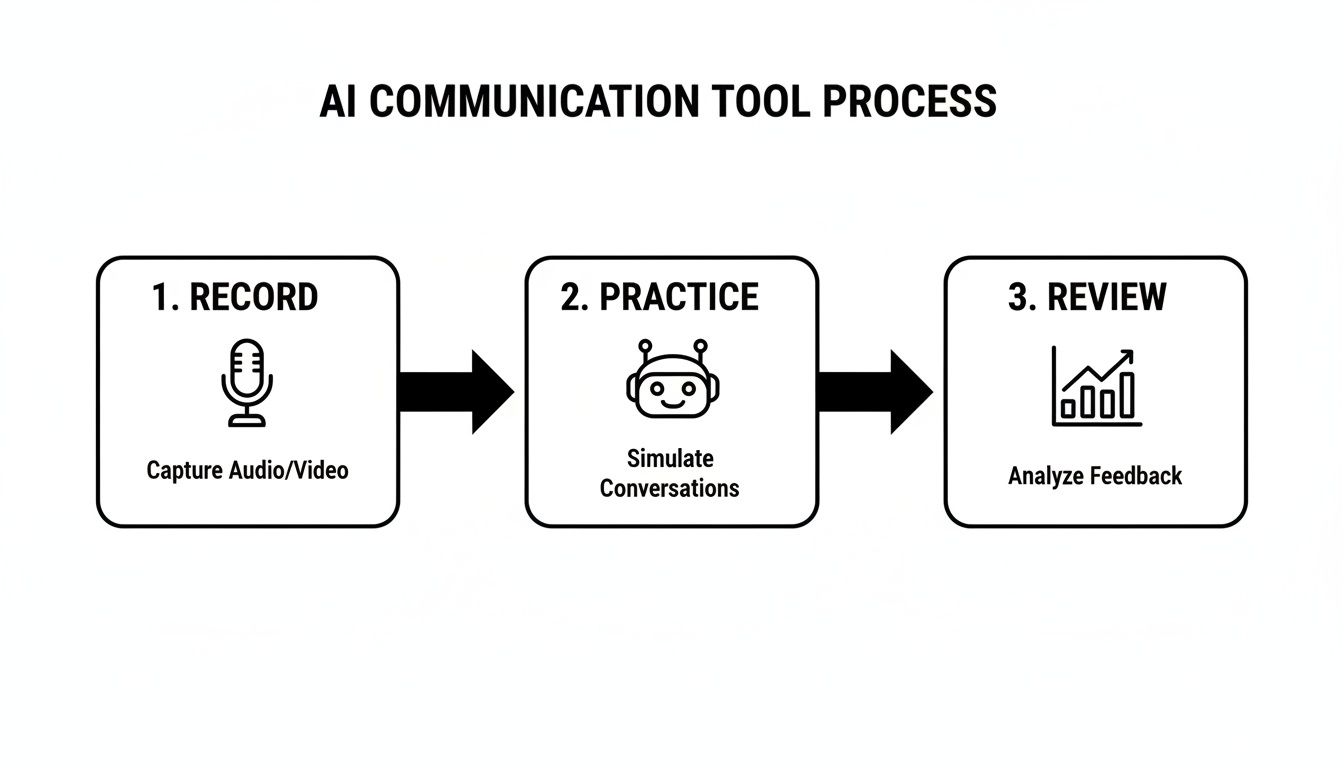
You’ll notice that **consistent recording** plus **AI-driven reviews** can lift your clarity score by **over 20%** in just seven days.
### Week By Week Milestones
| Milestone | Action |
|---------------|------------------------------------------------------------------------|
| **By Day 7** | Complete five active-listening sessions and jot down key takeaways |
| **By Day 14** | Record and analyze ten practice clips with AI feedback |
| **By Day 21** | Host three mock conversations with peers and refine your talking points |
| **By Day 30** | Finalize your customized checklist and celebrate how far you’ve come |
### Common Pitfalls And Fixes
> Skipping feedback loops can stall progress; schedule peer checks every Friday to stay on track.
Relying too heavily on automated tools risks losing the human nuance in conversations. Make sure to balance AI insights with at least one live coaching or mentoring session each phase.
Keep that personalized checklist close at hand—review it weekly to maintain momentum and watch your confidence climb.
## FAQs About Improving Communication Skills
### 1. How Can I Choose The Right Daily Exercise To Improve My Skills?
Finding the perfect practice routine boils down to aligning exercises with your goals and daily rhythm. You might kick off each morning by recording a **two-minute** recap of your thoughts, then slot in a feedback role-play later in the week to really challenge yourself.
- Record quick summaries to sharpen clarity.
- Schedule a weekly role-play for tough conversations.
- Journal emotional reactions to deepen **empathy**.
### 2. What’s The Best Way To Integrate AI Feedback Responsibly?
AI tools are fantastic at spotting fillers and tone shifts in real time. Yet, they can’t replace the human eye for subtle context, so blend automated scans with a weekly peer review for balanced insights.
| Feedback Source | Strength | Best Use Case |
|-----------------|---------------------------|--------------------------|
| AI Tools | Fast filler detection | Self assessments |
| Peer Review | Contextual nuance | Deeper feedback sessions |
Begin with free versions of [Grammarly](https://www.grammarly.com) or [Otter.ai](https://otter.ai) to see which features resonate. Then mix daily AI checks with **weekly** catch-ups to keep both data and empathy in play.
### 3. How Do I Adapt Scripts Across Different Cultures?
Every culture has its own pace and level of formality. Do your homework—research local communication styles, test key phrases with native speakers, and adjust tone and pacing before the big day.
Hands-on practice sessions are a game-changer. You’ll catch small tweaks (like swapping idioms or softening direct questions) well before the real meeting.
### 4. How Can I Overcome Shyness In Group Discussions?
A simple opener can turn nerves into momentum. Prepare a brief question—“What was a highlight from your week?”—to get the ball rolling. Celebrate each response to build confidence and keep the conversation flowing.
### 5. What Metrics Should I Track To Measure Progress?
Focus on clear, quantifiable markers: filler words per minute, accuracy of listener summaries, and average pause length. Tracking these **weekly** helps you catch small issues before they become habits.
### 6. How Often Should I Record And Review My Practice Sessions?
Aim for **two or three** recordings each week—ideally right after your morning reflection. Label each file with the date and topic so you can spot trends over time.
> Reviewing recordings every three days boosted my confidence by **15%** in two weeks.
### 7. What Are Common Traps When Using Tech Tools For Communication?
Chasing every metric without context can mislead. Don’t skip human review, and revisit settings regularly—tool features evolve quickly.
### 8. How Do I Maintain Consistency In My Practice?
Link your exercises to daily rituals, like reviewing your recap while your morning coffee brews. Set calendar reminders, partner with a colleague for accountability, and use a habit tracker to keep your streak visible.
### 9. How Can I Adjust Feedback Based On Group Size?
One-on-one chats thrive on in-depth questions and pauses for reflection. In larger groups, aim for concise summaries and use interactive polls or chat reactions to keep everyone engaged.
### 10. Are There Quick Exercises For Boosting Clarity Before A Big Presentation?
Absolutely. Start with a **two-minute** tongue-twister, then record a one-minute outline of your main points. Listen back for fillers, and condense your message into three sharp bullet statements.
- Warm up with articulation drills.
- Frame each point as a direct question.
- Practice varying pitch and making eye contact.
Mix and match these drills until you find a flow that feels natural.
Ready to explore more practical insights and tools for continuous improvement? Check out **Everyday Next** at [Everyday Next](https://everydaynext.com)
This article is for educational purposes only and is not financial or investment advice. Consult a professional before making financial decisions