

A Modern Guide to Parenting in the Digital Age
Parenting in the digital age is about a fundamental shift in our role. It means moving from being a simple gatekeeper or monitor to becoming a digital mentor. The goal isn't just to limit access but to guide our kids so they can use technology safely, wisely, and creatively.
It all comes down to building a relationship based on trust and open communication. This is the bedrock that will help them navigate both the amazing opportunities and the inevitable challenges they'll find online.
Embracing Your Role as a Digital Parent

Trying to keep up with your child's online world can feel like you're exploring a foreign country without a map. There’s a constant flood of new apps, games, and social media trends that can make any parent feel like they're always one step behind.
But here’s the good news: this journey is a huge opportunity to connect with your kids on their own turf. Instead of getting bogged down by fears about screen time or online predators, we can take a much more positive and proactive approach.
From Digital Monitor to Digital Mentor
Think about the difference between a monitor and a mentor. A monitor just watches for mistakes and enforces rules, which can create an "us vs. them" vibe. A mentor, on the other hand, is a guide—someone who teaches, supports, and empowers.
Your job isn't just to keep your kids from harm. It's to give them the tools to thrive online, just like you teach them how to cross the street or treat others with kindness. This shift away from simple bans and punishments helps build trust instead of chipping away at it.
The heart of modern digital parenting is understanding that devices are woven into how kids learn, connect with friends, and organize their lives. Just ‘taking it away’ often isolates them from their social world. That’s why working together is so much more effective than strict control.
This more balanced view treats technology as a powerful tool for learning and connection, not as the enemy. When you build a healthy foundation early, you're helping your kids develop resilience and critical thinking skills. For a comprehensive look at this, the Muslim Parent’s Guide to the Digital Age offers some fantastic, detailed insights.
Building a Proactive Foundation
Being proactive means thinking ahead and starting conversations before a problem pops up. Instead of reacting to a crisis, you can set clear expectations and create a supportive environment right from the beginning.
This guide will give you a roadmap for building that foundation, complete with practical, age-appropriate strategies. You'll quickly see that the core principles of good parenting haven't really changed—just the environment. If you want to dive deeper into how parenting roles are evolving, our article on how parenting is defined in modern society is a great place to start. By the end, you’ll feel more confident and prepared for the road ahead.
Understanding Your Child's Digital World
Before you can guide your child through their digital life, you have to get a feel for the world they're living in every single day. It’s a space that runs on a completely different set of rules than the one we grew up with—a place powered by algorithms, instant gratification, and constant connection. This isn't just about knowing the names of the latest apps. It's about understanding why they're so incredibly magnetic.
The old parenting playbook doesn't quite work anymore. We've moved on from managing time on a single family computer in the living room. Today, the internet is in our kids' pockets, creating a nonstop current of social pressure, notifications, and information. It’s an "always-on" reality, and that presents a whole new kind of parenting challenge.
What Makes Today's Platforms So Compelling?
Apps like TikTok, Roblox, and YouTube are more than just simple entertainment—they're entire social ecosystems. The rapid-fire, short-form videos on TikTok deliver a quick dopamine hit, while sprawling games like Roblox offer a powerful sense of community, teamwork, and achievement.
These platforms are meticulously engineered to capture and hold our attention. Knowing this isn't about blaming technology; it's about acknowledging the powerful psychological forces you're up against. This perspective helps you have conversations rooted in empathy, not just frustration.
If you feel like parenting has gotten harder, you're not alone. A recent Pew Research study found that a staggering 66% of US parents believe raising kids is more difficult today than it was 20 years ago, with technology being a primary culprit. The numbers back this up: daily YouTube use among kids shot up from 43% to 51% since 2020, with even bigger jumps for toddlers. While most parents feel they're doing a decent job, nearly 40% admit they worry they could be doing better. You can dive deeper into the data by reading the full research about screen time trends for kids.
“If I take their phone away, I’m not just stopping scrolling—I’m cutting them off from their friends, their plans, their whole social world.”
This common feeling gets to the heart of it. For kids today, their devices are the primary hub for their social lives.
Same Challenges, New Playground
While the technology is new, many of the underlying social challenges are timeless. Peer pressure, bullying, and the simple desire to fit in have always been part of growing up. The difference now is that technology acts as a massive amplifier, making these issues far more visible, persistent, and public.
Think about the media you grew up with. A TV show, a movie, or a magazine had a clear beginning, middle, and end. Today’s content feeds are literally infinite, designed by algorithms to keep you scrolling forever.
Here’s a quick look at how things have changed:
| Feature | Then (Pre-Internet Era) | Now (Digital Age) |
|---|---|---|
| Social Interaction | Mostly face-to-face, scheduled phone calls | Always-on, constant group chats & status updates |
| Media Consumption | Scheduled TV shows, finite content | On-demand, endless algorithmic feeds |
| Privacy | Conversations were mostly private | Potentially public, shareable, and permanent |
| Parental Oversight | Centralized in shared family spaces (one TV) | Decentralized, personal, and mobile |
This shift makes it clear why old strategies—like just limiting screen time—often fall short. Parenting in the digital age demands a new approach. It requires a playbook that accounts for the fact that technology is now personal, portable, and persistent. By truly understanding this new reality, you can start creating guidelines that are both effective and fair, addressing the root causes of the challenges instead of just their symptoms.
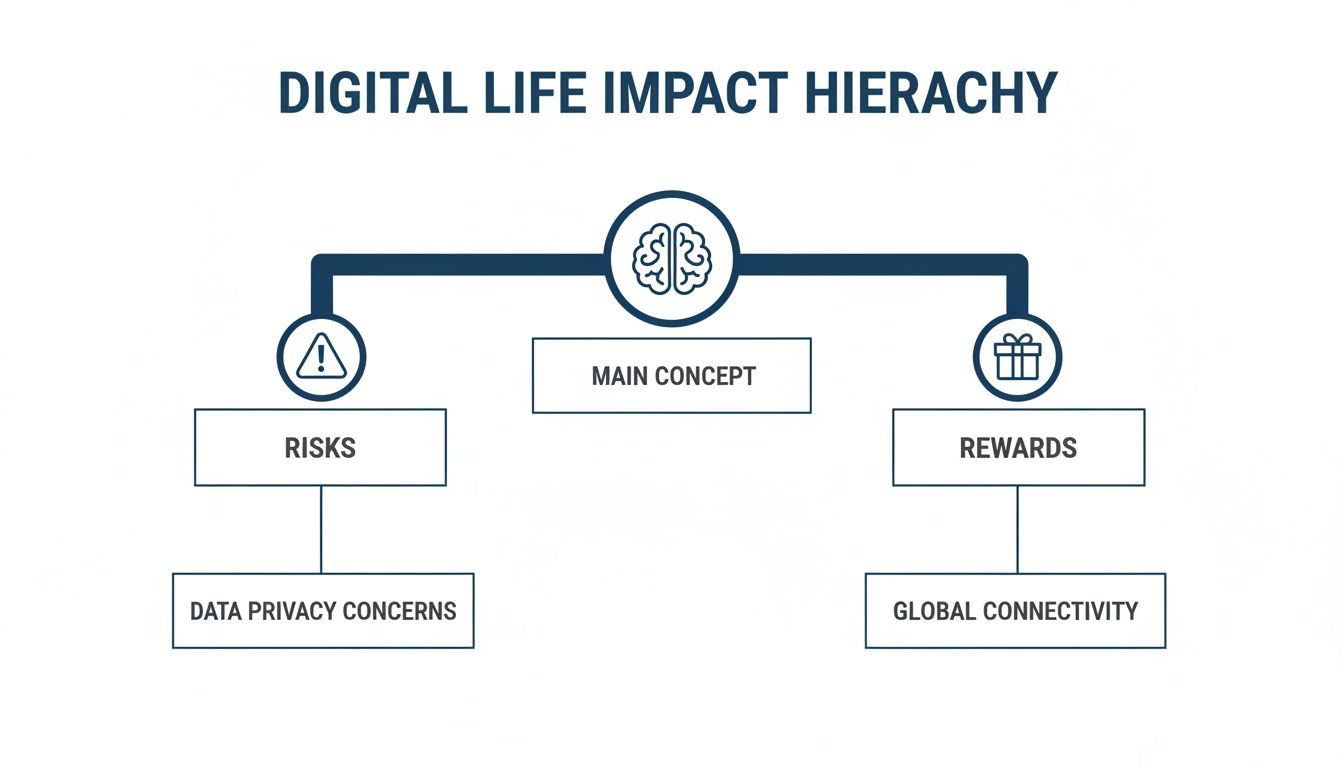
The Two Sides of the Digital Coin: Risks and Rewards
When it comes to our kids and their devices, it’s never just a simple "good" or "bad" story. The digital world isn't a switch you can just flip off; it's more like a sprawling, vibrant city, full of amazing opportunities but also some genuine dangers. The first step toward smarter parenting is getting past the old myth that all "screen time" is harmful.
Instead of just counting the minutes, we need to look at what our kids are actually doing online. Think about it: is your child just mindlessly scrolling through an endless feed of short videos? Or are they using an app to create their own stop-motion movie? Are they getting into heated arguments in a toxic gaming chat, or are they working together with friends to build something amazing in Minecraft?
Seeing the difference helps you guide them toward a healthy digital life, not just try to cut them off from it completely.
Being Honest About the Risks
Let's be real—there are some serious downsides we need to face head-on. The online world throws challenges at our kids that we never had to deal with, from cyberbullying that follows them home to stumbling across content that's just plain wrong or harmful. A huge concern is the toll social media can take on their mental health, especially the constant pressure to measure up to others.
It's critical to understand the connection between social media and addiction and other potential pitfalls. Research keeps pointing to a link between heavy social media use and negative feelings. Fresh data from 2023 really drives this home, showing that the positive effects of being online can diminish. Among the kids who use social media the most, a troubling 22% report experiencing five or more online harms—things like bullying or seeing fake news—compared to just 2% for those who use it the least. That gap is a wake-up call, especially since kids who are already vulnerable tend to get hit the hardest. You can discover more insights from the 2023 Children's Wellbeing in a Digital World report.
Tapping into the Powerful Rewards
But for every risk, there’s an incredible reward waiting on the other side. The internet is like the world's biggest library, offering everything from virtual tours of the Louvre to free coding classes on YouTube. It's also a powerhouse for creativity, giving kids tools to make art, compose music, and shoot videos that once required a professional studio.
Online communities can also be a lifeline. For a kid who’s passionate about something unique—whether it's ancient Roman history, astrophotography, or a specific video game—the internet is where they find their people. They can build real, meaningful friendships with others who get them, which is a game-changer for kids who might feel a bit isolated or different at school.
The goal isn't to shield our children from the digital world, but to equip them with the critical thinking skills and emotional resilience to navigate it wisely.
A balanced approach means weighing these pros and cons for every situation. This simple table can help you think through what your child is doing online.
| Digital Activity Type | Potential Risks | Potential Rewards |
|---|---|---|
| Passive Consumption | Mindless scrolling, exposure to ads & misinformation, social comparison. | Entertainment, relaxation, discovering new interests. |
| Active Creation | Perfectionism, negative feedback, privacy concerns when sharing. | Skill development (coding, art), self-expression, confidence building. |
| Social Connection | Cyberbullying, drama, exclusion, exposure to risky behavior. | Sense of belonging, collaborative play, emotional support from peers. |
At the end of the day, a healthy digital life isn't about being perfectly screen-free. If you're feeling the pressure, our guide on how to digital detox and unplug might offer some relief. It's really about teaching our kids how to be thoughtful, smart, and kind citizens of the digital world.
Your Age-By-Age Digital Parenting Playbook
Trying to create one single digital rule for your family is like trying to find one shoe that fits a toddler, a ten-year-old, and a teenager. It just doesn't work. Effective digital parenting isn't a static rulebook; it’s a living, breathing conversation that grows right alongside your child.
Your approach has to adapt as they do. What works for a four-year-old is totally different from what a fourteen-year-old needs. This playbook breaks down the journey into manageable stages, giving you practical strategies that fit their developmental needs at every step.
As you can see, every stage involves a careful balance. You're constantly weighing the incredible opportunities against the new risks. That’s why your strategy needs to be thoughtful and tailored to their age.
Early Childhood: Ages 2 to 5
In these early years, think of yourself as a Co-Pilot. Little ones learn about the world by watching and doing, so their first tech experiences should be shared with you. The goal isn't to use a screen as a babysitter, but to introduce it as a fun tool for learning and creating things together.
- Set the Stage: Stick with high-quality, educational content from trusted sources like PBS Kids. The most important part is watching with them. Talk about what’s happening on screen and connect it to their real life.
- Establish Boundaries: Aim for about one hour per day of quality programming. It’s also smart to establish tech-free times and zones, like during meals or the hour before bed, which helps protect sleep and keeps family connection strong.
A great example is turning a car ride into a shared activity. Instead of just handing over a tablet, try saying, "Hey, let's watch this show about animals together. What sound does that lion make? Can you roar like that?" Just like that, you've turned passive viewing into an interactive game.
Middle Childhood: Ages 6 to 10
Once kids hit elementary school, their world gets a lot bigger, and so does their digital one. They’re using tech for schoolwork, playing games with friends, and starting to explore their own interests online. Your role now shifts from Co-Pilot to Guide. You're helping them build the critical foundation for being a smart and safe digital citizen.
This is also a great age to start talking about money, and our guide on how to teach kids about money offers a fantastic starting point that complements their growing independence online and off.
- Build Digital Literacy: Start having simple conversations about how the online world is different from the real world. Introduce the most important rule of all: If anything online makes you feel weird, scared, or confused, tell a grown-up immediately. Make it clear they will never get in trouble for coming to you.
- Create a Family Media Plan: This doesn't have to be complicated. Just sit down together and agree on some basic rules for screen time, which sites and games are okay, and how to be kind online. When they help create the plan, they're much more likely to follow it.
Let's say your 8-year-old is begging to play an online game with their friends. This is your moment to guide them. Sit down and create the account together. Go through the privacy settings and establish ground rules like, "We only add friends we know in real life" and "We never share our address or phone number." Check in casually now and then by asking what cool things they're building.
Adolescence: Ages 11 to 18
With teenagers, your role makes another big shift. Now, you’re a Trusted Advisor. They are pulling away, seeking independence, and their social lives are completely tangled up with their phones. The focus is no longer on direct supervision but on encouraging critical thinking and responsible choices.
The goal is not to eliminate uncertainty but to make it safe: creating conditions where children can explore, make mistakes and develop resilience, knowing they can turn to adults without fear of overreaction.
Heavy-handed restrictions usually backfire with teens. It just teaches them to get better at hiding things. Instead, focus on keeping the lines of communication wide open. Show them you trust them to make good decisions, but make it clear you're always there to help if they mess up.
A powerful tool is the "phone contract." Before you hand over that first smartphone, sit down and write up an agreement together. It can cover responsibilities like charging the phone in the kitchen at night, tech-free dinners, and what happens if the rules are broken. This frames the phone as a tool they are learning to use responsibly, not just a toy.
Age-Based Digital Parenting Strategies at a Glance
This table offers a quick snapshot of how your parenting approach can evolve as your child grows, providing a handy reference you can come back to again and again.
| Developmental Stage (Age) | Recommended Screen Time | Content Focus | Key Safety Rule | Parental Role |
|---|---|---|---|---|
| Early Childhood (2-5) | Around 1 hour/day | High-quality, educational, co-viewed content. | Devices stay in common areas. | Co-Pilot |
| Middle Childhood (6-10) | Consistent daily limits, balanced with other activities. | Creative tools, educational games, age-appropriate media. | Never share personal info; tell a trusted adult if something feels wrong. | Guide |
| Adolescence (11-18) | Self-regulated, with established tech-free times (meals, bedtime). | Social connection, identity exploration, skill-building. | Think before you post; your digital footprint is permanent. | Trusted Advisor |
Ultimately, these are all just starting points. The most important thing is to stay connected, keep talking, and adapt your approach as your child navigates their own unique path through the digital world.
Practical Tools and Conversation Starters for Your Family

Alright, let's get practical. Putting a family tech plan into action requires the right tools and, even more importantly, the right words. Technology itself can be a fantastic ally here, offering smart solutions that do a lot more than just count minutes of screen time.
The goal isn't to play digital police; it's to provide a safety net. Think of parental controls and educational apps like training wheels on a bike. They offer support and a bit of a buffer while your child builds the confidence and skills to navigate their online world on their own.
Choosing the Right Digital Tools
It’s no surprise that tech designed to help parents has become a huge industry. The global market for parenting apps was valued at $552.6 million in 2024 and is expected to more than double by 2034. Parents are clearly looking for help. With educational apps making up 45% of the 150 million downloads in 2024 alone, it's obvious we're searching for tech that adds real value. You can dig deeper into these trends and read the full research on parenting apps.
But with so many options, how do you pick what's right for your family? My advice is to shift your focus from simply locking things down. Instead, look for tools that can grow with your child and, ideally, open up more opportunities for conversation.
| Tool Category | What to Look For | Real-World Example |
|---|---|---|
| Parental Controls | Customizable settings that let you adjust rules based on age and maturity, not just crude on/off switches. | Using Apple Screen Time or Google Family Link to set limits on gaming apps while leaving educational or creative apps unrestricted. |
| Content Filters | Age-appropriate presets that block genuinely harmful content but still allow access to the wide world of safe, educational material. | Setting up a web browser to filter out mature content categories so your child can safely research a school project without stumbling into the wrong corners of the internet. |
| Educational Apps | Interactive and engaging platforms that require active thinking and participation, not just passive screen-staring. | Choosing an app like Duolingo for language learning or Khan Academy Kids for core skills, effectively turning screen time into learning time. |
| Location Sharing | Privacy-respecting features that are used for safety and coordination, not for constant tracking. This should always be based on mutual agreement. | Agreeing with your teen to use a feature like Find My Friends for specific situations, like when they’re coming home late from a friend’s house or an event. |
Finding the right digital support is especially important for teens. If you’re looking for tools to help them manage the pressures of daily life, our guide on mindfulness apps for teens is a great place to start.
Opening the Door to Tough Conversations
Honestly, the best tool in your entire toolkit is open, non-judgmental conversation. But knowing how to get started can feel awkward. The secret is to ask open-ended questions that invite your child to share what they really think, without fear of being lectured.
The most powerful protection for any kid is knowing they can go to an adult without that adult freaking out. Your goal is to listen and explore their world with them, not to jump in with a quick fix or an immediate punishment.
Don't wait for a problem to pop up. Use everyday moments to plant the seeds for bigger discussions. A scene in a movie, a story on the news, or just a quiet drive to school can all be natural entry points.
Here are a few conversation starters to get you going:
- For Online Friendships: "I was thinking about how you talk to so many of your friends online. What’s the best part about having friends you can connect with that way?"
- For Cyberbullying: "I saw a story about someone getting mean comments online. Have you ever seen anything like that happen? How do you think you'd help a friend if they were going through it?"
- For Privacy: "It’s wild how much information apps ask for. Let's look at the privacy settings on your favorite game together. I'm actually curious to see what they collect."
- For Inappropriate Content: "You know, sometimes weird or confusing stuff just pops up online. I want you to know you can always come to me if you see something that makes you feel uncomfortable. You will never, ever be in trouble for it."
These aren't scripts you have to follow perfectly. They're about building a foundation of trust so strong that your child feels empowered to make smart choices, even when you're not looking over their shoulder.
Raising Resilient and Responsible Digital Citizens
At the end of the day, our goal isn't just to manage screen time or block a few bad websites. It’s about raising kids who can think for themselves, feel for others, and handle the messy, complicated online world with a strong sense of who they are. This final piece of the puzzle is all about empowering them to become thoughtful, responsible digital citizens.
The best way to teach these skills? Do it together. Instead of just laying down the law, turn digital literacy into a family activity you can build from the ground up.
Modeling the Behavior You Want to See
Your kids are watching you. How you use your phone at the dinner table or react to a news story sends a much louder message than any lecture you could ever give. You are their living, breathing blueprint for healthy digital habits.
Co-watch and Discuss: Pick a new Netflix show or a popular YouTube channel and watch it with them. When it's over, just talk about it. Ask simple questions like, "What do you think that creator was really trying to say?" or "How did that scene make you feel?"
Fact-Check Together: See a crazy headline on social media? Use it. Say, "Whoa, that sounds a little too wild to be true. Let's be detectives for a minute and see if we can figure out where this story actually came from."
Create a Shared Project: Start something small and fun online as a family. It could be a private Instagram account just for sharing pictures from your weekend hikes or even a simple blog about a hobby you all enjoy, like cooking or board games.
The most powerful protection for any kid is knowing they can go to an adult without that adult freaking out. Your goal is to listen and explore their world with them, not to jump in with a quick fix or an immediate punishment.
The Core Principles of Modern Digital Parenting
As we've seen, navigating this world successfully really comes down to a few core ideas. These hold true no matter what new app or trend comes along next.
| Core Principle | In Action |
|---|---|
| Trust | Believing your child when they come to you with a problem. It’s about giving them the space to make mistakes without fearing a massive overreaction. |
| Empathy | Acknowledging that their digital life is a real, significant part of their social world. It means trying to understand the pressures and joys they experience online. |
| Conversation | Treating this as an ongoing dialogue, not a one-time lecture. It’s about asking more questions and listening more than you talk. |
Parenting in the digital age doesn't have a finish line; it’s a journey you're on together. By building your strategy on a foundation of trust and open communication, you give your kids something far more valuable than any parental control app—you give them the wisdom to make smart, kind choices for themselves.
If you're looking to strengthen those conversations, our guide on how to improve communication skills is a great place to start.
Frequently Asked Questions (FAQ)
1. How can I monitor my child's online activity without spying?
Focus on transparency and trust. Use parental control tools like Google Family Link or Apple Screen Time not as secret spy software, but as a shared dashboard. Have a conversation about why these tools are in place—for safety, not punishment. Schedule regular, casual check-ins where you look at their favorite apps or games together. This turns monitoring into a collaborative process.
2. What are the most important online safety rules to teach my kids?
Keep it simple and memorable. The top three rules are:
- Personal info is private: Never share your full name, address, school, or phone number online.
- Think before you click: Don't click on links from strangers or download unknown files.
- Tell a trusted adult: If anything online makes you feel scared, weird, or uncomfortable, tell a parent or trusted adult immediately, with no fear of getting in trouble.
3. My child seems addicted to their phone. What should I do?
First, try to understand the "why." Are they escaping stress, connecting with friends, or just bored? Address the root cause. Then, work with them to create a "digital diet." Establish tech-free zones (like bedrooms at night) and times (like during dinner). Encourage alternative, offline activities they genuinely enjoy. If the behavior is severe and impacting their mental health or daily functioning, consider consulting a therapist who specializes in technology addiction.
4. What is a "digital footprint" and how do I explain it to my child?
Explain it like this: "Everything you post, share, or 'like' online leaves a trail, like footprints in the sand. This trail can be seen by others and is very hard to erase." Use a real-life example: "A silly photo you post today could be seen by a college admissions officer or a future boss years from now." This helps them understand the permanence and long-term consequences of their online actions.
5. Are online friendships "real" friendships?
Yes, they absolutely can be. For many kids, especially those with unique interests or who feel isolated at school, online communities provide a vital sense of belonging. The key is to teach them how to nurture these friendships safely. Encourage video chats to confirm identities and talk about the difference between a casual online acquaintance and a true, trusted friend.
6. What's a good age to talk about cyberbullying?
Start the conversation early, around age 6 or 7, as they begin to interact with others online in games or school platforms. Frame it simply: "Just like we have to be kind on the playground, we have to be kind online." As they get older, the conversations can become more nuanced, covering what to do if they see it happening to someone else (being an "upstander," not a bystander).
7. How do I handle disagreements about screen time rules?
Acknowledge their feelings and be willing to negotiate. A Family Media Plan created together is your best tool. If they feel a rule is unfair, listen to their argument. Are they making a valid point? Perhaps you can compromise. For example, "Okay, you can have an extra 30 minutes of gaming time on Saturday if all your homework and chores are done first." This teaches them responsibility and negotiation skills.
8. Is all screen time bad for my child's development?
No, quality over quantity is key. Passive, mindless scrolling is very different from active, creative screen time. Using a device to create art, learn a new language with an app like Duolingo, build a world in Minecraft, or video chat with grandparents can be highly beneficial. Guide them toward these more engaging activities.
9. How do I keep up with all the new apps and trends?
You don't have to be an expert on every single app. Instead, make it your child’s job to be the expert for you. Ask them to give you a tour of the new app they're excited about. Ask questions like, "What do you like about it? How does it work? Is there anything I should be worried about?" This keeps you informed, opens up dialogue, and shows them you respect their world.
10. What's the single most important thing I can do as a digital parent?
Keep the lines of communication wide open. Your child needs to know, without a doubt, that they can come to you with any problem—big or small—without fear of you freaking out, judging them, or immediately taking their devices away. A strong, trusting relationship is the most powerful safety tool you have.
At Everyday Next, we're committed to providing practical insights for modern life. Our guides on personal development and family wellness are designed to help you navigate today's challenges with confidence. Discover more actionable advice at https://everydaynext.com.

Previous Post
Next Post