What Problem Does Terafab Solve? AI Chip Factory Explained
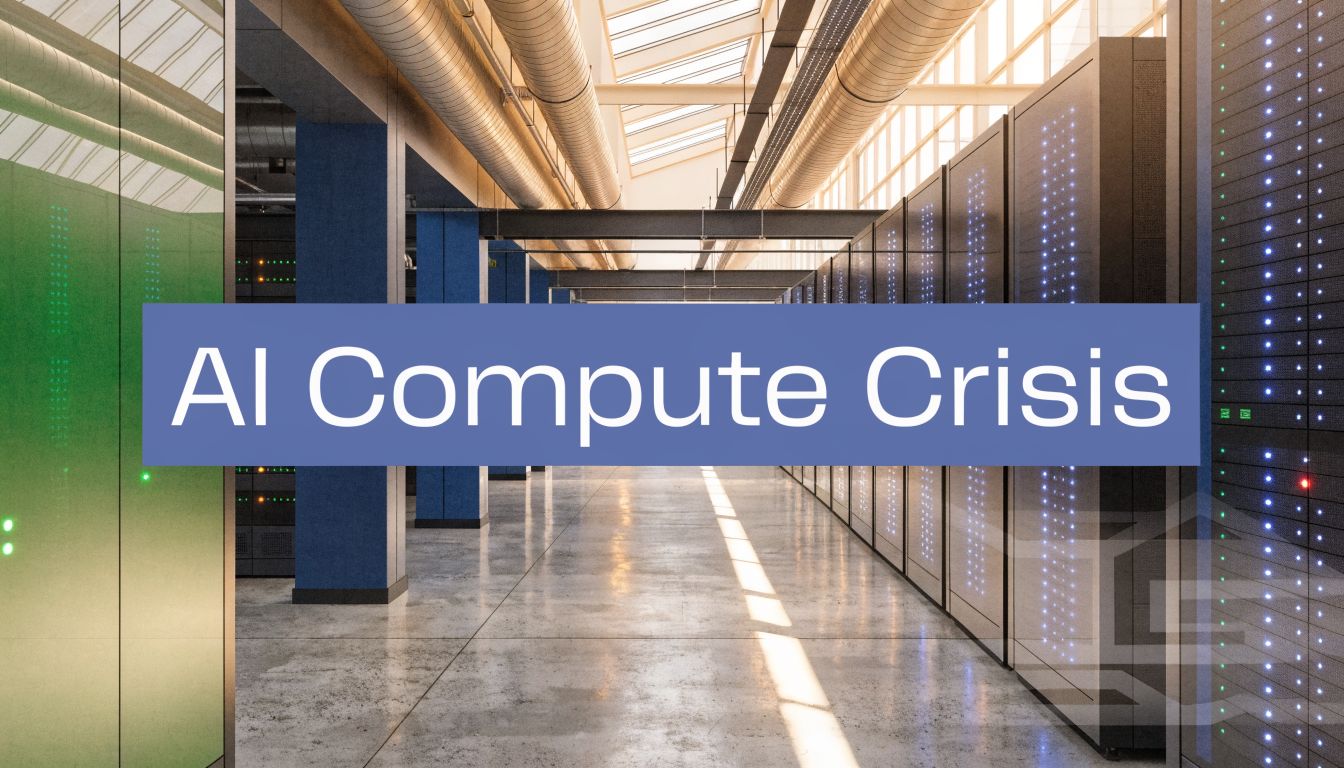
The most revealing number in the Terafab story isn't the factory size or the process node. It's this: the global semiconductor industry currently produces 20 gigawatts of computing capacity annually, while Tesla, SpaceX, and xAI alone are described as needing far more than that, including 1 terawatt for orbital data centers and up to 200 gigawatts for a billion Optimus robots, according to Wikipedia's Terafab entry. That gap reframes the project. Terafab isn't just a manufacturing bet. It's a response to a capacity crisis.
Asked plainly, what problem does Terafab solve? It solves two linked problems at once. First, there isn't enough advanced AI compute supply available from the existing semiconductor system for the scale of autonomous vehicles, humanoid robotics, and space-based AI infrastructure being proposed. Second, even when supply exists, the way chips are developed and manufactured is too fragmented and slow for the pace of AI iteration these systems require.
For investors and technology leaders, the strategic point is bigger than factory output. If compute becomes the main constraint on product rollouts, model deployment, robotics scaling, and space infrastructure, then whoever controls chip supply and iteration speed controls the tempo of the next AI era.
Table of Contents
- The Unseen Bottleneck Limiting AI's Future
- Terafab's Solution A Vertically Integrated Powerhouse
- How Terafab Collapses Chip Development Timelines
- The Technology Powering a Terawatt of Compute
- Real-World Applications From Autonomous Cars to Humanoid Robots
- Competitive Landscape and Broader Market Implications
- Answering Your Top 10 Questions About Terafab
The Unseen Bottleneck Limiting AI's Future
AI demand is rising faster than the physical systems that make AI possible. The limiting factor is no longer only model quality or data access. It is whether enough advanced chips, packaging capacity, power equipment, and data center hardware can be built in time.

That shift has strategic consequences. If compute supply cannot expand at the rate frontier AI requires, software progress starts to queue behind manufacturing capacity. Training runs get scheduled around hardware availability. Product launches depend on packaging and deployment lead times. Capital allocation starts to favor whoever can secure long-term access to chips, memory, power systems, and facilities.
This is why Terafab is worth examining. The project is built around a specific thesis: the next phase of AI will be constrained less by algorithmic ideas than by industrial throughput. That is a different kind of bottleneck. It sits below the software stack, but it determines how fast the software stack can advance.
A normal supply shortfall can be handled with contracts, second-source suppliers, or larger buffers. The current compute problem runs deeper because several constraints are hitting at once. Advanced node wafer capacity is tight. High-bandwidth memory is limited. Advanced packaging has become a major chokepoint. Power and cooling infrastructure are also harder to secure for large AI clusters. In practice, the bottleneck is not a single missing component. It is a chain of dependencies that must all scale together.
The timing matters. AI systems are moving from chat interfaces into physical and always-on environments such as vehicles, robotics, and industrial automation. Those categories need sustained inference capacity, not just occasional bursts of training. They also raise the bar for reliability, cost control, and deployment speed. For readers comparing centralized and distributed infrastructure models, this discussion of cloud computing benefits and drawbacks helps frame the tradeoffs. Terafab pushes the question one layer lower by focusing on the factory system that must exist before any cloud or edge strategy can work.
There is also a second-order effect that gets less attention. If compute remains scarce, the largest AI companies gain an advantage that compounds over time because they can reserve capacity, finance custom hardware, and shape supplier roadmaps. If compute becomes abundant, the opposite can happen. More industries can afford to build specialized AI systems, and innovation spreads beyond a small group of firms with the biggest balance sheets.
That makes Terafab more than a manufacturing story. It is a bet that industrial capacity will decide which companies can deploy AI at global scale, which countries can host the next generation of digital infrastructure, and which ambitious categories, from humanoid robots to space-based systems, move from prototype to production.
The operational side of AI reinforces the point. CloudCops' perspective on AI ops focuses on what happens after models are deployed, where reliability, observability, and cost control become ongoing concerns. Terafab addresses the earlier constraint. It targets the hardware pipeline that determines whether those systems can be deployed broadly in the first place.
Terafab's Solution A Vertically Integrated Powerhouse
Terafab's answer isn't just "build more chips." Its answer is change the manufacturing model.
The conventional semiconductor system is fragmented. One group designs chips. Another handles masks. Another fabricates wafers. Another packages them. Another tests them. Each handoff introduces delay, coordination risk, and less visibility across the whole process.
Terafab is designed around vertical integration, which means bringing chip design, lithography, fabrication, memory production, advanced packaging, and testing together in one place, as described in this Futurist Speaker analysis of Terafab.

Chip Manufacturing Models Compared
| Metric | Traditional Fragmented Model | Terafab Integrated Model |
|---|---|---|
| Process structure | Multiple specialized firms and sites | Major stages consolidated under one roof |
| Handoffs | Frequent cross-company transfers | Fewer external transfers |
| Iteration speed | Slower because each stage waits on the next | Faster because teams and tools are co-located |
| Operational visibility | Split across vendors | More unified oversight |
| IP control | Shared across a broader chain | Tighter internal control |
| Product optimization | Often constrained by foundry schedules and external packaging paths | More directly aligned to in-house product priorities |
| Strategic role | Supplier relationship | Core infrastructure asset |
Why integration matters strategically
Most readers hear "vertical integration" and think about margin capture. That's only part of the story here. In AI, the bigger advantage is coordination.
A company building self-driving systems, robots, and space-grade computing doesn't just need chips. It needs the right chips, built on the right schedule, revised in sync with software, and allocated according to internal priorities rather than a foundry queue.
That creates a different kind of moat. It's not just lower dependence on external vendors. It's tighter coupling between product teams and semiconductor teams.
The strategic shift is simple: chips stop being something the company buys and become something the company continuously improves as part of the product itself.
This is why Terafab looks less like a standard factory expansion and more like a new operating system for hardware development.
How Terafab Collapses Chip Development Timelines
A conventional chip revision can take months to cycle from design change to validated hardware. In AI, that delay turns hardware into the pacing factor for the entire product roadmap.

Terafab addresses that problem by shrinking the distance between design, fabrication, packaging, and test. As noted earlier, the traditional process stretches across multiple facilities and organizations, which slows feedback and adds queue time between each step. A more integrated model can compress those loops from a quarterly planning cadence into something closer to an engineering cadence.
Why the old loop breaks down
The constraint is not only fabrication speed. It is coordination speed.
A chip team can identify a flaw in memory behavior, thermals, or inference efficiency quickly. Acting on that insight is harder. A revised design may wait for masks, then wait again for fab access, then wait for advanced packaging, then wait for validation results to come back through another company. By the time engineers see the outcome, the software stack may already have changed and the original context may be partially lost.
That lag has strategic consequences. It reduces the number of design experiments a company can afford to run in a year, which narrows the search space for better architectures. In AI hardware, fewer iterations often matter more than small gains in any single generation.
Why faster chip loops matter now
The timing matters because AI systems are no longer improving only at the model layer. Progress increasingly depends on how well chips, packaging, power delivery, memory bandwidth, and software are tuned together.
That changes the economics of experimentation. If hardware teams can test more ideas in less time, product teams can pursue designs that would otherwise look too risky or too slow to validate. The benefit is not limited to one chip. It compounds across full self-driving, humanoid robotics, training clusters, and edge inference systems.
A shorter development loop usually looks like this:
- Engineers spot a bottleneck in performance, yield, power, or reliability.
- Design and process teams revise the chip while the failure mode is still well understood.
- A new build moves into fabrication and test with fewer external handoffs.
- Results feed the next revision quickly, which increases the pace of learning.
That feedback cycle is what gives integrated hardware programs their edge. The factory stops acting like a distant supplier and starts functioning as part of the research system.
For readers tracking how faster hardware iteration influences the next computing era, this overview of quantum computing in simple terms is a useful parallel. In both cases, the winning organizations are the ones that reduce the time between technical insight and real-world validation.
For a visual overview of the broader AI hardware race, this video is a useful companion:
Faster chip iteration changes more than engineering speed. It expands the set of products that can reach viability before the market moves on.
The Technology Powering a Terawatt of Compute
Terafab's ambition depends on more than factory design. It depends on a specific technical stack that can support both scale and specialization.
According to Built In's overview of the Terafab project, Terafab will utilize 2-nanometer process technology with a capacity of 100,000 wafer starts per month. The same source says it will produce specialized chips including Tesla's fifth-generation AI5 for inference in FSD and Optimus, and the D3 chip designed for use in LEO data centers.

What the manufacturing stack is aiming to do
A 2-nanometer process signals a push toward cutting-edge manufacturing, where efficiency and performance per area matter enormously. For AI workloads, that matters because the economic value of a chip isn't just raw power. It's useful power within product constraints such as heat, space, and energy draw.
The cited Built In piece also notes specialized packaging and production ideas tied to this effort. That matters because chip capability increasingly depends on how compute, memory, and interconnect are assembled, not just on the transistor layer.
A simple way to think about the stack:
- Process technology shapes how advanced the silicon can be.
- Packaging and integration shape how much practical performance that silicon can deliver in a real system.
- Testing and refinement determine whether those gains hold up at scale and in demanding environments.
Why custom chips matter
AI5 and D3 point to a strategic choice: don't build one generic processor and force every product to adapt around it. Build chips for distinct operating environments.
AI5 is positioned for inference in Tesla vehicles and Optimus. D3 is aimed at space deployment in low Earth orbit. Those aren't minor variants. They represent different mission profiles, different reliability demands, and different economic logic.
That specialization is one reason custom silicon keeps gaining strategic importance across the industry. Readers who want a broader foundation on next-generation computing concepts may also find this primer on quantum computing explained simply helpful, especially when comparing where classical semiconductor advances still have room to run.
Analyst view: The real technical story isn't just a smaller process node. It's the combination of advanced manufacturing, product-specific silicon, and an integrated feedback loop that lets those chips evolve faster.
Real-World Applications From Autonomous Cars to Humanoid Robots
Terafab matters only if its output changes what products can do. On that front, the use cases are unusually direct.
Autonomous vehicles
For autonomous driving, guaranteed access to inference chips changes two things. It supports continuity of supply, and it gives product teams a path to tune hardware around their own software stack rather than waiting for merchant silicon roadmaps.
That matters because autonomy isn't a single feature. It's a rolling sequence of perception, planning, prediction, and control workloads that have to run reliably in the field. Custom chips can make those tradeoffs more specific to the product.
For a business audience, the bigger point is that hardware availability can shape software ambition. If supply is uncertain, teams optimize for what's available. If supply is secure, teams can optimize for what the product needs. That distinction shows up across many generative AI business applications, where infrastructure constraints often define which use cases make it out of pilot mode.
Humanoid robots
Humanoid robotics is where the second-order effects become more interesting. A robot isn't just an AI model with arms. It is an embodied system that needs on-device inference, responsiveness, and durable cost structures to scale.
The relevance of deployment tooling is visible in examples like Applied's insights on robotics AI deployment, which show how much work goes into training and operationalizing humanoid systems. Terafab's contribution sits one layer beneath that. It would provide the specialized compute foundation such systems depend on.
If a company can secure a steady flow of purpose-built inference chips for robots, it doesn't just reduce procurement uncertainty. It improves the odds that robotics roadmaps can move from lab demonstrations to repeatable manufacturing programs.
Space-based AI infrastructure
The space angle is where Terafab departs from ordinary fab logic. A radiation-hardened chip like D3 is aimed at environments that commercial chips aren't built for.
That matters because a space-based compute network has different requirements from terrestrial infrastructure. Reliability, environmental tolerance, and mission-specific design become part of the product. Terafab's role is to make that specialized hardware available at all.
Taken together, these examples show the core answer to what problem does Terafab solve. It removes a bottleneck that would otherwise hold back three separate industries at once: autonomous transport, humanoid labor automation, and space-based computing.
Competitive Landscape and Broader Market Implications
AI infrastructure is becoming a strategic control point, not just a procurement category. That is why Terafab should be read less as a standard fab project and more as an attempt to compress three constraints at once: chip supply, iteration speed, and mission-specific hardware availability.
Why incumbent chip leaders should pay attention
For companies such as TSMC and Samsung, the near-term risk is not merely a customer shifting some volume in-house. The larger issue is what that decision signals. If a major AI buyer concludes that outside suppliers cannot match its timing, packaging needs, or product cadence, the merchant foundry model starts to look less complete at the frontier of AI.
Terafab does not need to rival the full scale of leading foundries to change competitive behavior. It only needs to cover the highest-priority chips for a tightly connected group of products. That changes the bargaining position of the buyer, reduces exposure to external queue times, and gives internal product teams a hardware roadmap they can plan around with more confidence.
The structure of the semiconductor market has historically rewarded specialization. Design, fabrication, packaging, and test became separate businesses because that model improved efficiency at scale. Terafab points to a different conclusion for advanced AI systems. Once compute becomes the gating factor, handoffs between specialized vendors can impose a meaningful speed cost.
Why now, not later
This timing is the critical strategic point.
AI demand is shifting from training clusters alone to a wider mix of inference, robotics, automotive, and edge deployments. Those use cases do not just need more chips. They need different chips, tighter integration with software, and a shorter path from design change to production. A fragmented supply chain was manageable when product cycles were slower and workloads were narrower. It becomes harder to justify when hardware decisions increasingly shape what an AI product can do, how fast it can ship, and what its unit economics look like.
That same logic is showing up in enterprise AI. Platform companies are being judged less on model demos and more on whether they control the full stack needed to turn intelligence into reliable operations. The shift is visible in this analysis of Jensen Huang's view of AI agents in the enterprise. The common thread is clear. Software advantage increasingly depends on who owns the underlying compute path.
The second-order market effects
If Terafab works as intended, the effects reach well beyond chip output.
- Product planning changes: Companies can commit earlier to hardware-dependent roadmaps because supply risk becomes more predictable.
- Capital allocation changes: Internal chip capability starts to resemble insurance against delays, not a prestige investment.
- Talent markets change: Process engineers, packaging experts, chip architects, and systems integration teams become more central to AI competition.
- Valuation frameworks change: Investors may place more weight on compute control and supply resilience, not only model performance or user growth.
The broader consequence is easy to miss. A company that controls more of its compute stack can operate on a different clock from rivals that still depend on shared external capacity. That gap affects product release cycles, margins, and the range of bets a business can afford to make.
For the wider market, Terafab suggests a future in which AI leaders look more like industrial systems companies. They will still write software and train models. But they will also treat semiconductors, power, packaging, and deployment infrastructure as core strategic assets. If that shift holds, the winners in AI will not be defined only by who builds the best model. They will be defined by who can turn compute into dependable, repeatable production at scale.
Answering Your Top 10 Questions About Terafab
Advanced AI progress is running into a physical constraint. Readers asking about Terafab are usually trying to answer a bigger question: if compute supply becomes the limiting input, what changes for AI products, business strategy, and the industries built on top of them? The FAQ below addresses that practical layer.
Frequently Asked Questions
| Question | Answer |
|---|---|
| What problem does Terafab solve in one sentence? | It is meant to address two linked constraints: not enough advanced AI compute, and a chip development process that is too slow and fragmented for fast-moving AI deployment. |
| Why is the chip shortage described as so serious? | The concern is not a temporary procurement issue. It is a structural gap between the amount of specialized compute these companies expect to need and the amount outside suppliers can deliver on the required schedule. |
| Is Terafab just another chip factory? | The project is described as a tightly integrated chip development and production system that combines design, fabrication steps, packaging, and testing into a more coordinated pipeline. |
| Why does that integration matter so much? | Hardware delays ripple outward. If chip revisions take longer, vehicle programs slip, robot platforms wait for optimized silicon, and model deployment plans become harder to schedule with confidence. |
| What kinds of chips is Terafab expected to make? | Public descriptions focus on purpose-built chips such as AI5 for inference in Tesla vehicles and Optimus, along with D3 for low Earth orbit compute. That points to application-specific silicon tied to defined operating environments. |
| Why not keep buying from existing suppliers? | Buying externally works until volume, timing, or customization requirements exceed what shared foundry capacity can reliably support. At that point, supply dependence becomes a product risk, not just a sourcing choice. |
| Does this only matter to Tesla, SpaceX, and xAI? | No. Even if the first use cases are internal, the broader signal is that frontier AI companies may need to treat semiconductor capability as part of their operating model, not as a commodity input. |
| How does Terafab affect robotics specifically? | Robotics depends on chips that balance power, latency, thermals, and cost in a physical machine. A dedicated chip pipeline makes it easier to tune those tradeoffs around robot performance and manufacturing requirements. |
| Could Terafab change the competitive balance in AI? | Yes. Faster chip iteration and more predictable supply can improve product timing, lower deployment friction, and let one ecosystem plan around its own constraints instead of the industry's shared bottlenecks. |
| What's the biggest reason people should pay attention now? | AI demand is expanding from model training into vehicles, robots, and distributed compute systems. That raises the value of controlling the path from chip concept to deployed hardware. |
Three points sharpen the strategic picture.
First, Terafab is best understood as infrastructure built in response to a timing problem. If custom AI silicon arrives too slowly, software gains do not translate into shipped products at the pace companies are promising. The immediate effect is slower iteration. The second-order effect is larger. Product teams become more conservative, capital plans get pushed back, and adjacent bets in robotics or space systems become harder to justify.
Second, the project forces a clearer distinction between technical difficulty and strategic necessity. Execution may prove expensive, slow, or operationally complex. Even so, the logic behind it is straightforward. When outside capacity cannot support a company's compute roadmap with enough speed or certainty, internal capacity starts to look less like vertical expansion and more like schedule control.
Third, Terafab matters beyond semiconductor specialists because AI is entering industries where hardware constraints are inseparable from product performance. A model can be trained in the cloud. A humanoid robot has to operate within thermal and power limits. An autonomous vehicle needs inference hardware that works reliably in real-world conditions. A space-based compute system has an even narrower margin for error.
That shift explains the attention. Terafab is a visible sign that AI competition is moving from software-first claims to industrial execution.
Readers who want more background on how models and compute fit together can start with this guide to machine learning for beginners. It provides useful context for why infrastructure decisions now shape model deployment later.
The final takeaway: Terafab addresses a constraint that many AI discussions still underrate. The future of AI depends not only on better models or larger budgets, but on whether organizations can produce enough specialized chips, on the right timeline, for the systems they want to put into the world. If that constraint eases, the effects will reach far beyond data centers, into robotics, transportation, defense, and space infrastructure.
If you like clear, evidence-based analysis on AI, computing, investing, and the technologies shaping daily life, explore more from Everyday Next. It's a strong resource for readers who want practical explainers without hype.
Related Posts
Previous Post
Next Post