The 12 Best Personal Growth Resources to Level Up Your Life in 2026
Embarking on a personal growth journey can feel overwhelming. With countless books, apps, and courses all promising transformation, how do you know where to start? The sheer volume of options can lead to decision paralysis, preventing you from taking the first step. This guide is designed to cut through that noise and provide a clear, actionable roadmap.
We've done the heavy lifting for you, curating a comprehensive list of the most effective personal growth resources available today. Instead of generic summaries, you'll find a detailed breakdown of each platform, from giants like Coursera and Amazon to specialized apps like Headspace and Calm. We analyze who each resource is best for, outline practical use cases, and offer honest assessments of their strengths and limitations. This isn't just a list; it's a strategic toolkit designed to help you build better habits, master new skills, and cultivate a resilient growth mindset.
Each entry includes screenshots and direct links to help you explore further. Whether you're an entrepreneur aiming to scale your business, a parent focused on instilling positive habits, or a student dedicated to continuous development, you'll find tools tailored to your specific goals. For those interested in cultivating this mindset from an early age, it's helpful to understand the principles behind raising lifelong learners. This article will help you find the perfect fit to start making meaningful, sustainable progress on your personal development journey today.
1. Amazon
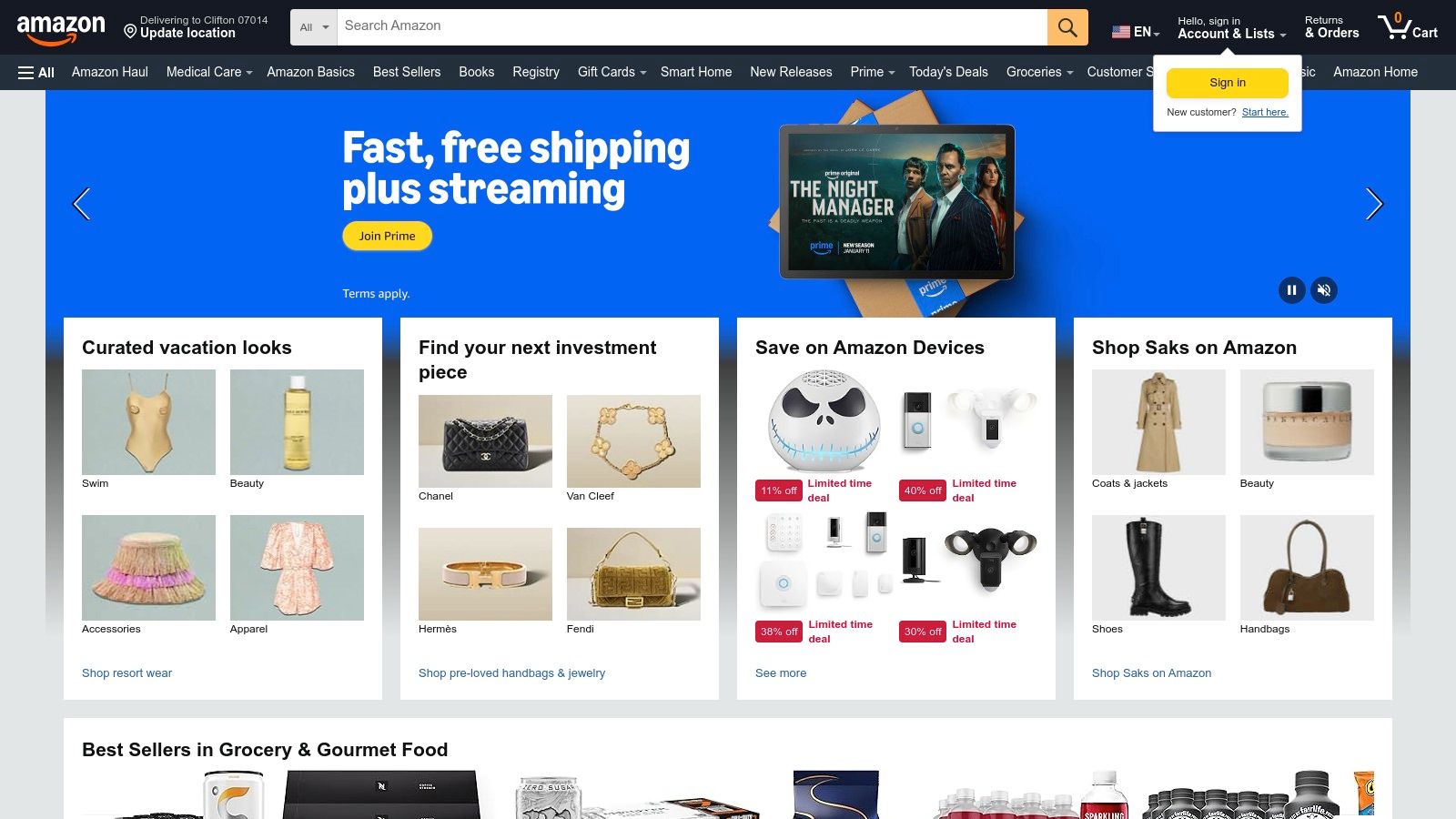
Amazon serves as the foundational marketplace for nearly all physical and digital personal growth resources. While not a personal development platform itself, its sheer scale makes it an essential starting point for anyone looking to purchase books, workbooks, journals, or audiobooks on topics ranging from habit formation to mindfulness. It's the world's largest bookstore, offering unparalleled access to both classic texts and newly released titles.
The platform's primary strength is its massive catalog. You can find almost any personal development book ever published, often in multiple formats like print, Kindle eBook, and Audible audiobook. This makes it a one-stop shop for building your personal growth library.
Real-Life Example:
A project manager named Sarah wanted to improve her leadership skills. She used Amazon to search for "leadership books for new managers." By filtering results by "4 stars & up" and reading detailed reviews, she chose "The Making of a Manager" by Julie Zhuo. She used the "Look Inside" feature to read the first chapter, confirming the writing style was engaging before purchasing the Kindle version for instant access.
Key Features and Usage Tips
Amazon's user reviews are a critical tool for vetting resources. Look for detailed reviews that discuss the book's practical application rather than just summarizing the content.
Practical Tip: Use Amazon's "Look Inside" feature to preview the table of contents and the first few chapters. This helps you assess the author's writing style and determine if the book's structure aligns with your learning preferences before you buy.
The "Best Sellers" and "Movers & Shakers" lists are excellent for discovering trending topics and popular authors in the self-help category. For more targeted searches, use specific keywords like "procrastination workbook" or "financial mindset for entrepreneurs" instead of broad terms like "self-help."
Pros and Cons
| Pros | Cons |
|---|---|
| Unmatched Selection: The largest catalog of books and media. | Overwhelming Choice: The vast selection can cause indecision. |
| Multiple Formats: Print, Kindle, and Audible versions available. | Varying Quality: User reviews and products can be unreliable. |
| Fast Delivery: Prime members get quick, often next-day shipping. | Discovery Issues: Algorithms can favor popular, not niche, titles. |
| Competitive Pricing: Often has the best prices, plus used options. | Distracting Interface: Easy to get sidetracked by other products. |
Website: https://www.amazon.com
2. Audible
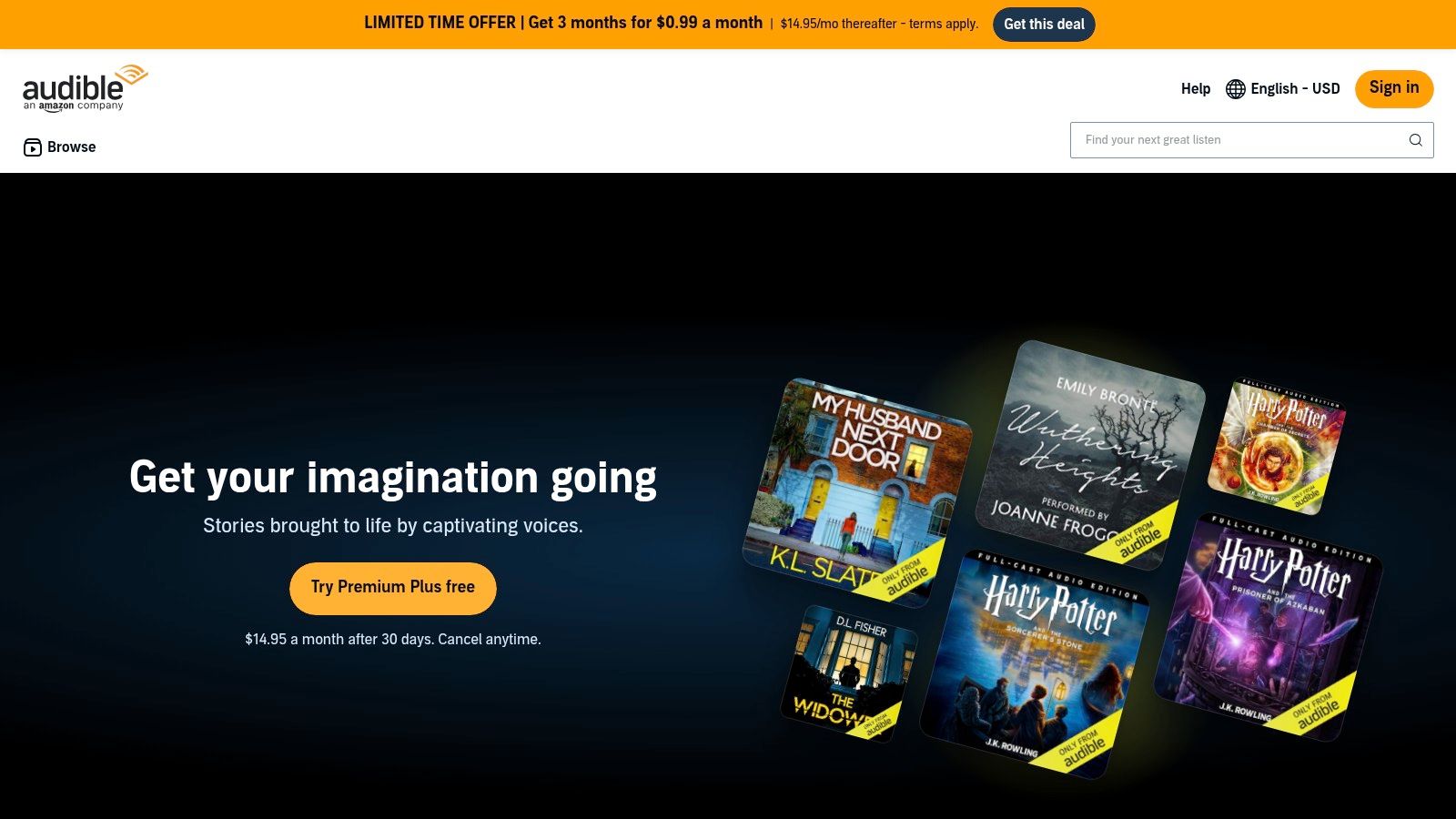
Audible transforms personal growth into a mobile experience, making it one of the most powerful personal growth resources for people with busy lifestyles. It's the leading platform for audiobooks, offering an enormous library of self-help titles, biographies, and exclusive audio content. This allows you to absorb key concepts from best-selling authors while commuting, exercising, or doing chores.
The platform excels at making knowledge accessible anytime, anywhere. Instead of needing to set aside dedicated reading time, you can integrate learning seamlessly into your daily routine. Its collection includes everything from timeless classics like "The 7 Habits of Highly Effective People" to modern hits on productivity and mindfulness, all narrated by professional voice artists.
Key Features and Usage Tips
Audible's main value comes from its two subscription models: Audible Plus, which gives you unlimited access to a large streaming catalog, and Premium Plus, which adds a monthly credit to purchase and permanently own any title. This ownership feature is a key differentiator, as the books remain in your library even if you cancel your subscription.
Practical Tip: Use the "Clips" feature to bookmark and save key insights or powerful quotes. You can revisit these audio snippets later to reinforce your learning without having to find the specific timestamp in a long chapter.
For discovering new content, explore Audible's curated lists like "Self-Development Essentials" or browse the "Audible Originals" for exclusive series and podcasts you won't find anywhere else. The app's offline listening capability is perfect for travel or areas with poor connectivity.
Pros and Cons
| Pros | Cons |
|---|---|
| Learning on the Go: Perfect for commuting and multitasking. | Subscription Model: Can be costly if not used regularly. |
| Vast Selection: Huge library of personal growth audiobooks. | Credit Limitations: Some top titles require a credit, even on Plus. |
| Own Your Books: Premium Plus titles are yours to keep forever. | Auto-Renewal: Subscription renews automatically, which can be missed. |
| High-Quality Production: Professional narration enhances the experience. | Passive Listening: Requires active focus to avoid zoning out. |
Website: https://www.audible.com
3. Coursera
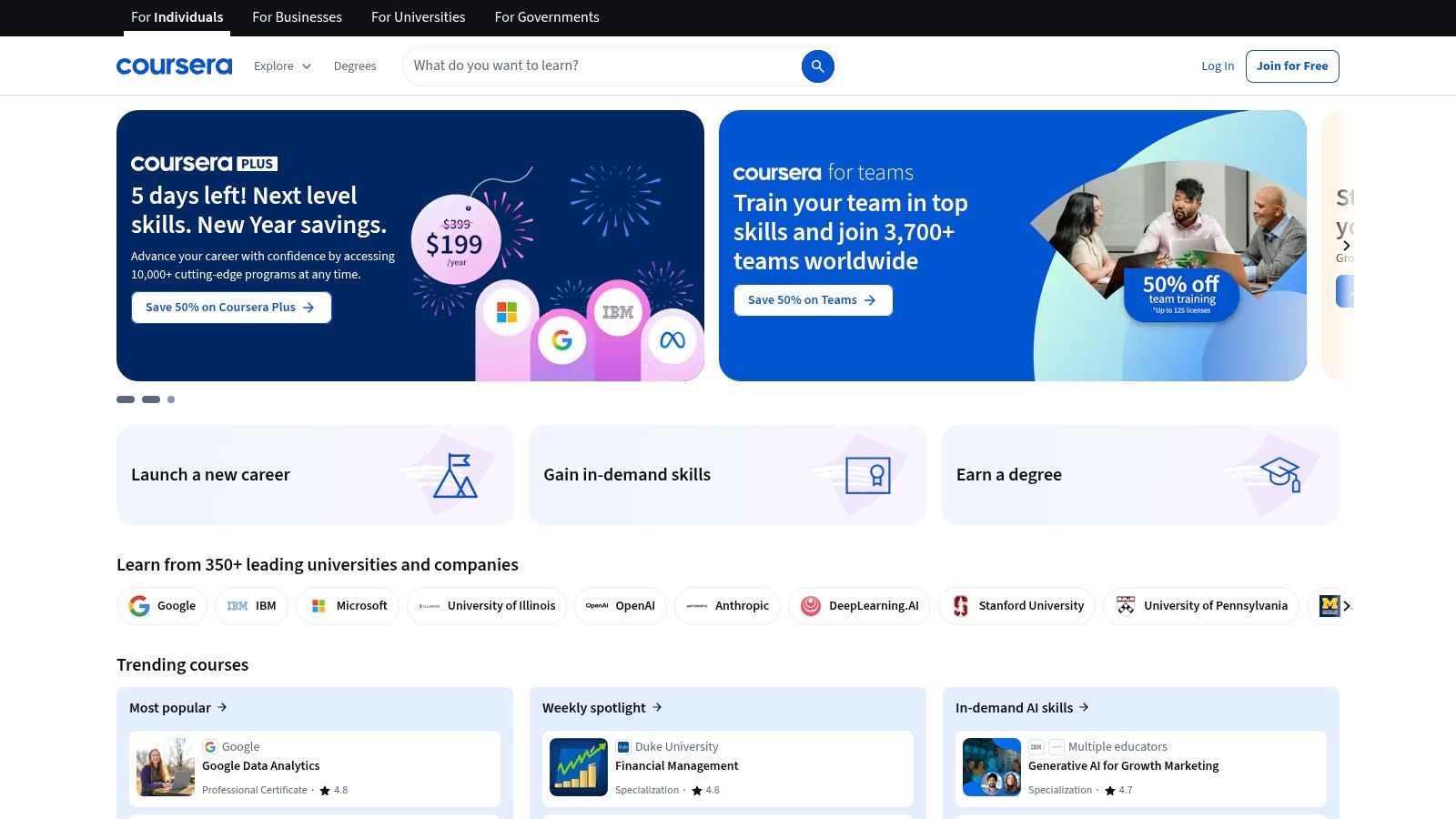
Coursera brings academic rigor to personal growth by offering university-backed online courses on topics like resilience, well-being, and leadership. It’s an ideal platform for individuals who prefer structured, expert-led learning and want to earn recognized certificates to validate their skills. Unlike more informal resources, Coursera provides a curriculum-driven approach to self-improvement.
The platform's main advantage is its collaboration with top universities and companies, ensuring high-quality, research-based content. This makes it one of the most credible personal growth resources for developing tangible skills in areas like career advancement and mental fortitude.
Key Features and Usage Tips
Many courses on Coursera can be audited for free, which gives you access to the lecture videos and readings without paying. This is perfect for exploring a topic before committing to a paid certificate. A Coursera Plus subscription offers unlimited access to thousands of courses, which is cost-effective for dedicated learners.
Practical Tip: Use the "audit" option to explore several courses on a topic like positive psychology. Once you find a program that resonates, you can upgrade to the paid version to complete graded assignments and earn a shareable certificate for your LinkedIn profile.
For a focused approach, combine specific courses to build a comprehensive skill set. For instance, pair a course on emotional intelligence with another on effective communication to enhance your interpersonal skills. This targeted learning path can be more effective than just picking random classes.
Pros and Cons
| Pros | Cons |
|---|---|
| Strong Academic Partners: Courses from top universities. | Certificates Not Academic Credit: Certificates don't typically count toward a degree. |
| Recognized Certificates: Valued by many employers. | Overwhelming Choice: The vast catalog can make selection difficult. |
| Free Audit Options: Access course content without payment. | Variable Course Quality: Quality can differ between institutions. |
| Structured Learning: Clear syllabi, assignments, and deadlines. | Time Commitment: Courses require a more significant time investment. |
Website: https://www.coursera.org
4. Udemy
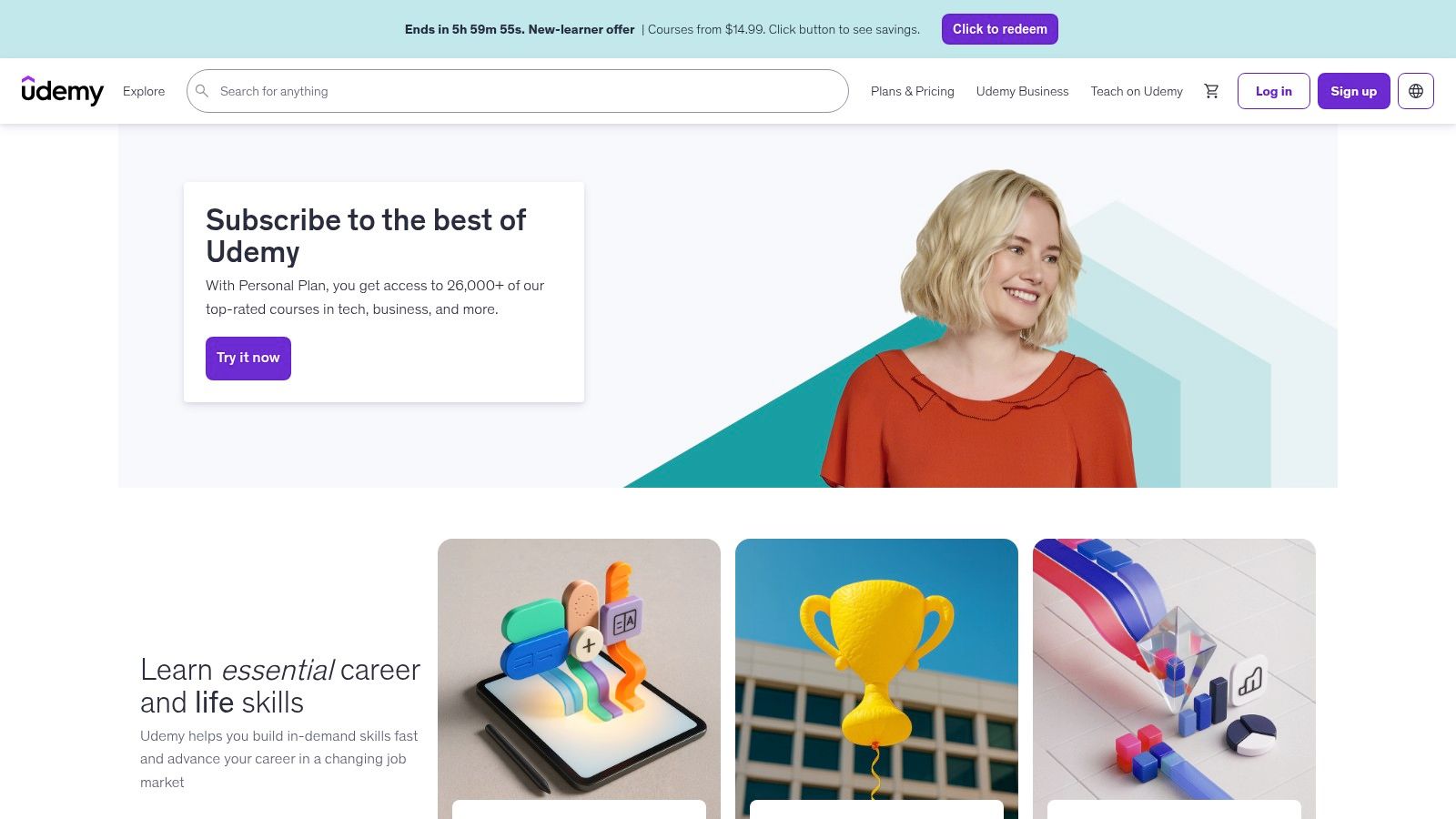
Udemy is a vast online learning marketplace offering individual courses on nearly any personal development topic imaginable. Unlike subscription-based platforms, Udemy allows you to purchase courses à la carte, giving you lifetime access to specific skills in areas like confidence, communication, productivity, and mindfulness without recurring fees. It's an ideal choice for learners who prefer to build a targeted library of personal growth resources they can revisit anytime.
The platform's core strength lies in its pay-per-course model, which empowers you to focus your investment on precise topics. You can find highly specialized courses, from mastering emotional intelligence to overcoming procrastination, taught by a wide range of instructors.
Key Features and Usage Tips
Udemy's frequent and deep discount sales are its most notable feature. Full-price courses can be expensive, but during promotional periods, they often drop to a fraction of the cost, making high-quality instruction extremely accessible.
Practical Tip: Never pay full price. Add courses that interest you to your wishlist and wait for one of Udemy's site-wide sales. Use the course preview videos and read recent reviews to gauge instructor quality and teaching style before purchasing.
The platform's rating and review system is essential for navigating the variable quality of courses. Filter by top-rated courses and look for those with a high number of student enrollments and detailed, positive feedback to find the best content.
Udemy vs. Coursera: A Quick Comparison
| Feature | Udemy | Coursera |
|---|---|---|
| Model | Pay-per-course (lifetime access) | Subscription or per-course (for certificate) |
| Best For | Specific, practical skills on a budget | Academic knowledge, career certificates |
| Content Source | Individual instructors and experts | Universities and established companies |
| Accreditation | Certificate of completion (not formal) | Shareable, often university-branded certificates |
Pros and Cons
| Pros | Cons |
|---|---|
| Very Affordable During Sales: Pay only for the courses you want. | Quality Varies by Instructor: Course effectiveness is not uniform. |
| Lifetime Access: Learn at your own pace and revisit content anytime. | Common Upsells: Instructors may promote other products. |
| Huge Catalog: Covers many niche personal development topics. | Variable Course Consistency: Structure and depth differ between courses. |
Website: https://www.udemy.com
5. LinkedIn Learning
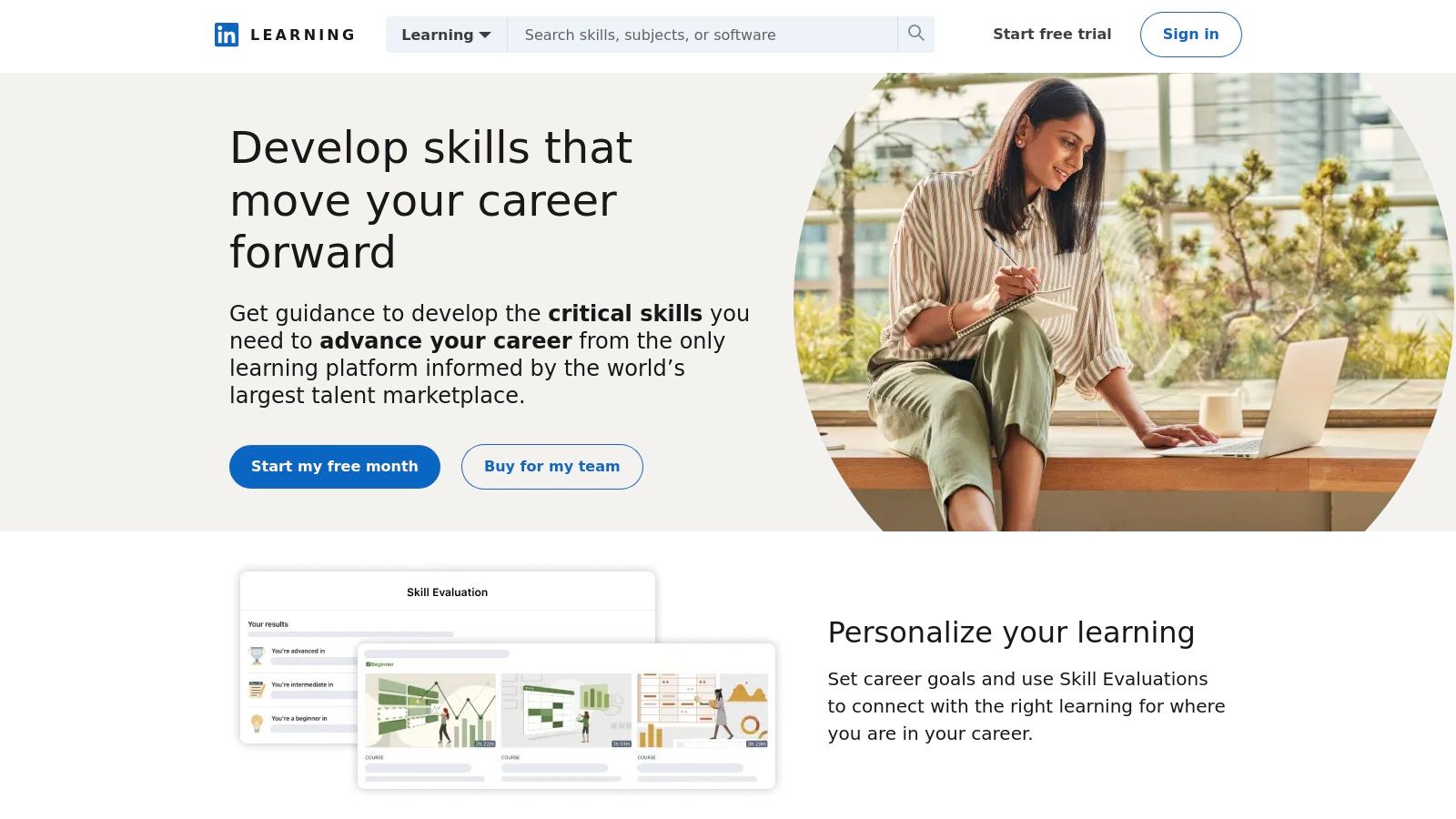
LinkedIn Learning is a premier platform for professional development, offering a vast library of expert-led courses focused on business, technology, and creative skills. It directly connects learning to career advancement, making it one of the most practical personal growth resources for professionals. The platform excels at translating personal improvement into tangible career outcomes, such as promotions and new job opportunities.
Its key differentiator is the seamless integration with your LinkedIn profile. Completing a course allows you to add a certificate directly to your profile, publicly showcasing your commitment to continuous learning and skill acquisition. This provides a clear, verifiable way to demonstrate your new competencies to recruiters and your professional network.
Key Features and Usage Tips
The platform features structured "Learning Paths" that group related courses into a comprehensive curriculum, guiding you from a beginner to an advanced level in a specific skill. These paths are ideal for targeting a new role or mastering a complex subject like project management or data analysis. Many courses also include downloadable exercise files to practice what you learn.
Practical Tip: Use the mobile app to download courses for offline viewing. This is perfect for learning during a commute or when you have spare moments away from your desk, ensuring you can consistently make progress on your goals.
To maximize its value, focus on courses that teach skills that will make your resume stand out. Instead of generic searches, look for specific, in-demand competencies in your field, like "Advanced Excel Formulas" or "Communication for Leaders."
Pros and Cons
| Pros | Cons |
|---|---|
| Strong Career Focus: Excellent for workplace-related development. | Limited Wellness Content: Less focus on mental health or mindfulness. |
| LinkedIn Integration: Certificates can be added to your profile. | Variable Pricing: Subscription costs can differ based on region. |
| Quality Instructors: Courses are taught by vetted industry experts. | Generic Certificates: Certificates are not accredited university credits. |
| Bite-Sized Content: Short, focused videos make learning manageable. | Requires Subscription: Access is primarily through a paid monthly plan. |
Website: https://www.linkedin.com/learning
6. MasterClass
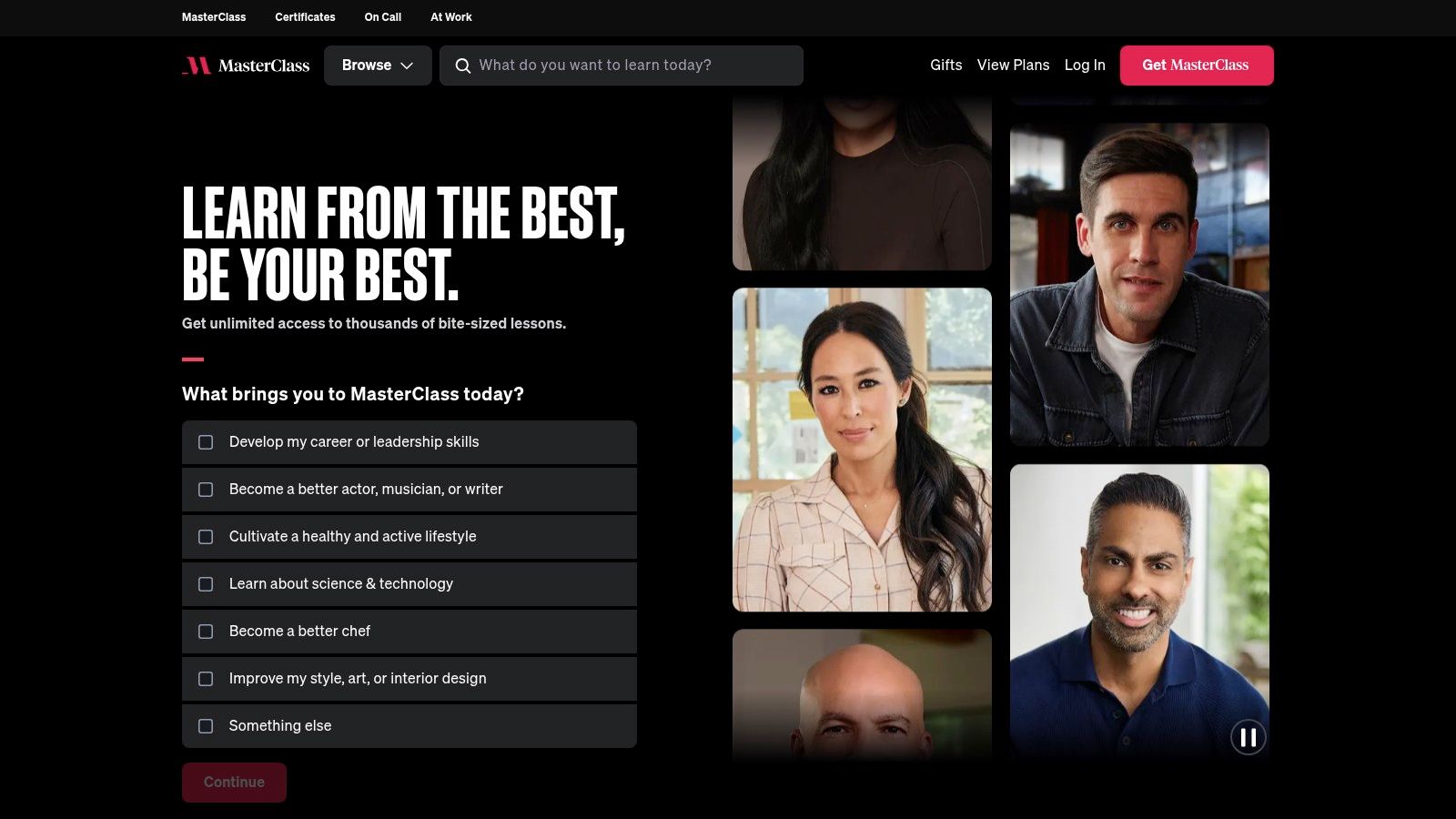
MasterClass offers a unique, cinematic approach to personal growth by providing courses taught by world-renowned experts in their fields. This platform transforms learning into an engaging, inspirational experience, focusing on areas like leadership, creativity, communication, and negotiation. It stands out by giving you access to the minds of icons like Brené Brown on leadership or Chris Voss on negotiation, making it a powerful resource for motivational learning.
The platform’s core strength lies in its exceptionally high production value. Each class is structured like a documentary, making complex topics accessible and enjoyable. This celebrity-led format provides insights you wouldn't find in traditional courses, making it a premier choice for those who learn best through storytelling and expert demonstration.
Key Features and Usage Tips
With over 200 classes, MasterClass offers a deep well of knowledge. The platform supports multi-device viewing and offers offline downloads, allowing you to learn on the go. To maximize its value, focus on one or two classes at a time and complete the accompanying workbooks to apply the lessons.
Practical Tip: Use the class trailers to quickly gauge an instructor's teaching style and the course's focus. If a topic interests you, watch the first lesson to ensure it aligns with your personal growth goals before committing to the entire series.
Be strategic with your time. Instead of trying to watch every class, pick instructors whose expertise directly addresses a skill you want to build. For example, if you're an entrepreneur, start with Sara Blakely's class on self-made entrepreneurship. Note that access requires an annual membership, so watch for seasonal discounts to get the best value.
Pros and Cons
| Pros | Cons |
|---|---|
| Engaging Presentation: Star instructors make learning motivational. | Annual Membership Only: No monthly payment option is available. |
| High Production Value: Cinematic quality enhances the experience. | Renewal/Friction Concerns: Users report issues; check cancellation windows. |
| Unique Expert Insights: Learn directly from world-class practitioners. | Variable Depth: Some classes are more inspirational than instructional. |
| Mobile-Friendly: Offline viewing available for learning anywhere. | Passive Learning Risk: Requires self-discipline to apply concepts. |
Website: https://www.masterclass.com
7. Skillshare
Skillshare is a community-focused learning platform where personal growth is achieved through creative and practical action. It offers thousands of online classes in topics ranging from productivity and freelancing to journaling and mindfulness, making it an ideal resource for learners who want to build tangible skills alongside their personal development journey. Unlike academic platforms, Skillshare emphasizes project-based learning.
The platform's core strength is its focus on accessible, creative skills that directly support personal growth. You can learn to design a vision board, start a bullet journal, or master time management techniques from experts in short, digestible video lessons. This hands-on approach makes it a standout among other personal growth resources by linking self-improvement concepts to immediate, practical application.
Key Features and Usage Tips
Skillshare's subscription gives you unlimited access to its entire class catalog, encouraging exploration. Use the "Learning Paths" feature to follow a curated sequence of classes on a specific topic, like "Unlocking Your Potential," for a more structured development experience. The community galleries for each class allow you to share your project and get feedback.
Practical Tip: Don't just watch the videos; actively participate in the class projects. Applying a new habit-tracking method or a journaling technique and sharing it with the community solidifies your learning and provides valuable accountability.
For targeted learning, use specific search terms like "procreate for mindfulness" or "productivity for creatives" to find classes that match your unique interests. The mobile app's offline viewing is perfect for learning on the go.
Pros and Cons
| Pros | Cons |
|---|---|
| Project-Based Learning: Focuses on practical, hands-on skills. | Annual Billing Model: Default subscription is for a full year. |
| Great for Creativity: Excellent for journaling, art, and design. | Billing Friction: Some users report issues with trial cancellations. |
| Large Catalog: Thousands of short, engaging classes available. | Variable Quality: Class quality can differ between instructors. |
| Strong Community: Get feedback and inspiration from other learners. | Not for Deep Theory: Better for practical application than deep academic study. |
Website: https://www.skillshare.com
8. Mindvalley
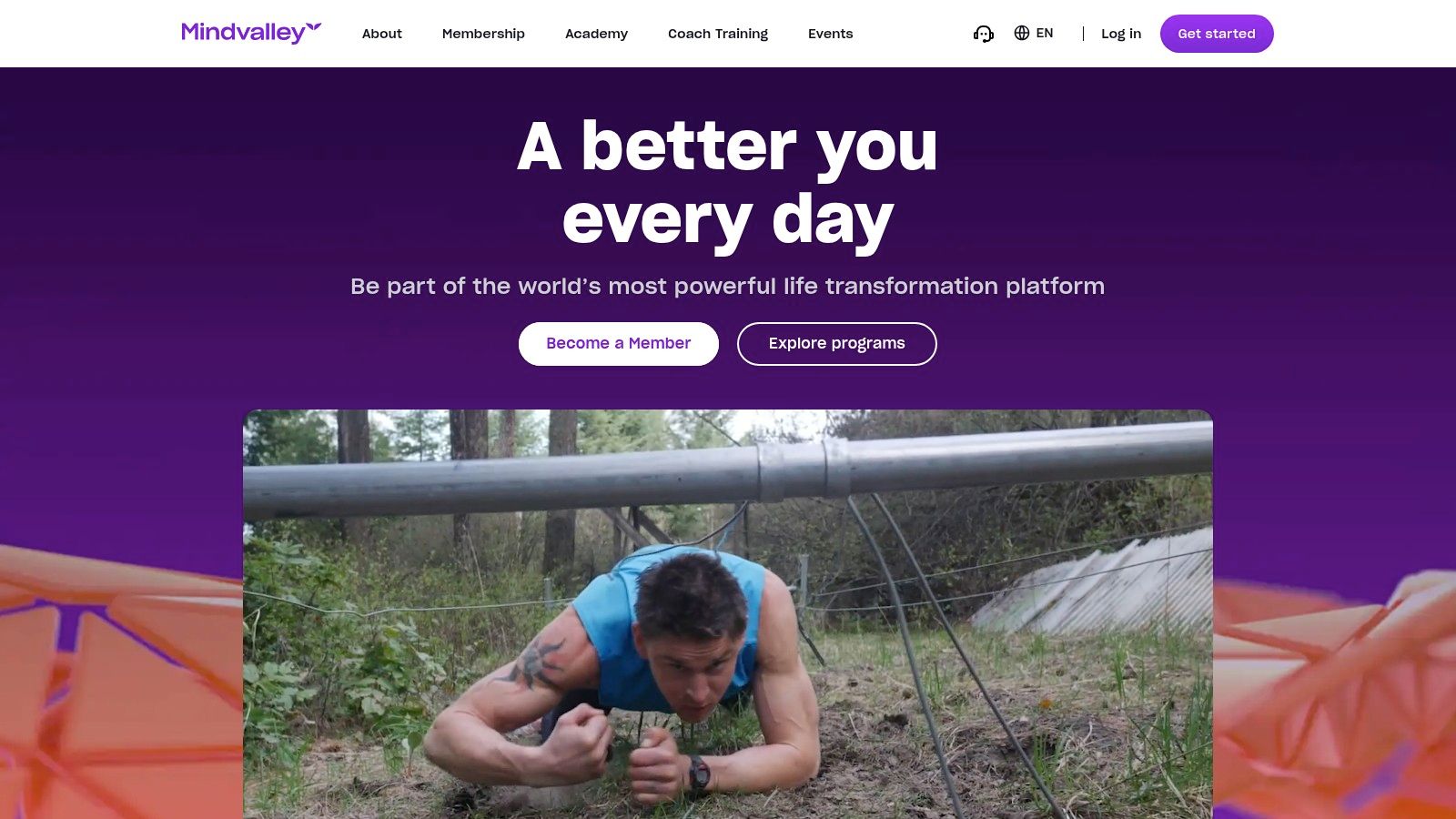
Mindvalley is a personal transformation platform that moves beyond individual courses to offer comprehensive, multi-week "Quests." These programs are designed for holistic life improvement, covering everything from habits and focus to relationships, parenting, and health. It is an ideal resource for people seeking structured, cohort-style learning experiences that promote accountability and deep engagement.
The platform's core strength lies in its unique Quest format, which combines daily micro-learning with community interaction. Each program is paced, meaning you progress alongside a group of peers, fostering a sense of shared purpose and momentum that is often missing from self-paced online courses. This structure helps users stay committed and apply learnings consistently over time.
Key Features and Usage Tips
Mindvalley features over 100 Quests taught by renowned experts, an AI-guided curriculum to personalize your learning path, and an active in-app community. The platform also hosts live events and workshops, creating a blended learning environment. This approach is excellent for those looking to build a consistent personal development practice and develop a growth mindset through guided instruction.
Practical Tip: Fully engage with the community features for your chosen Quest. Participating in group discussions and sharing your progress can significantly boost your motivation and help you overcome challenges, turning a solo journey into a collaborative experience.
Start by taking the Life Assessment to identify key areas for improvement. This will help the platform recommend the most impactful Quests for your current goals. Also, take advantage of the 15-day risk-free refund window to explore the platform and ensure its teaching style aligns with your needs before fully committing.
Pros and Cons
| Pros | Cons |
|---|---|
| Cohort Pacing: Community progression improves follow-through. | Higher Cost: More expensive than typical a la carte course sites. |
| Holistic Curriculum: Covers a very broad range of life domains. | Time Commitment: Quests require consistent daily engagement. |
| High Production Quality: Courses are well-produced and engaging. | Membership Model: No option to purchase individual courses. |
| Strong Community: Active and supportive user base for motivation. | Tier Simplification: The premium "Pro" tier was discontinued. |
Website: https://www.mindvalley.com
9. Headspace
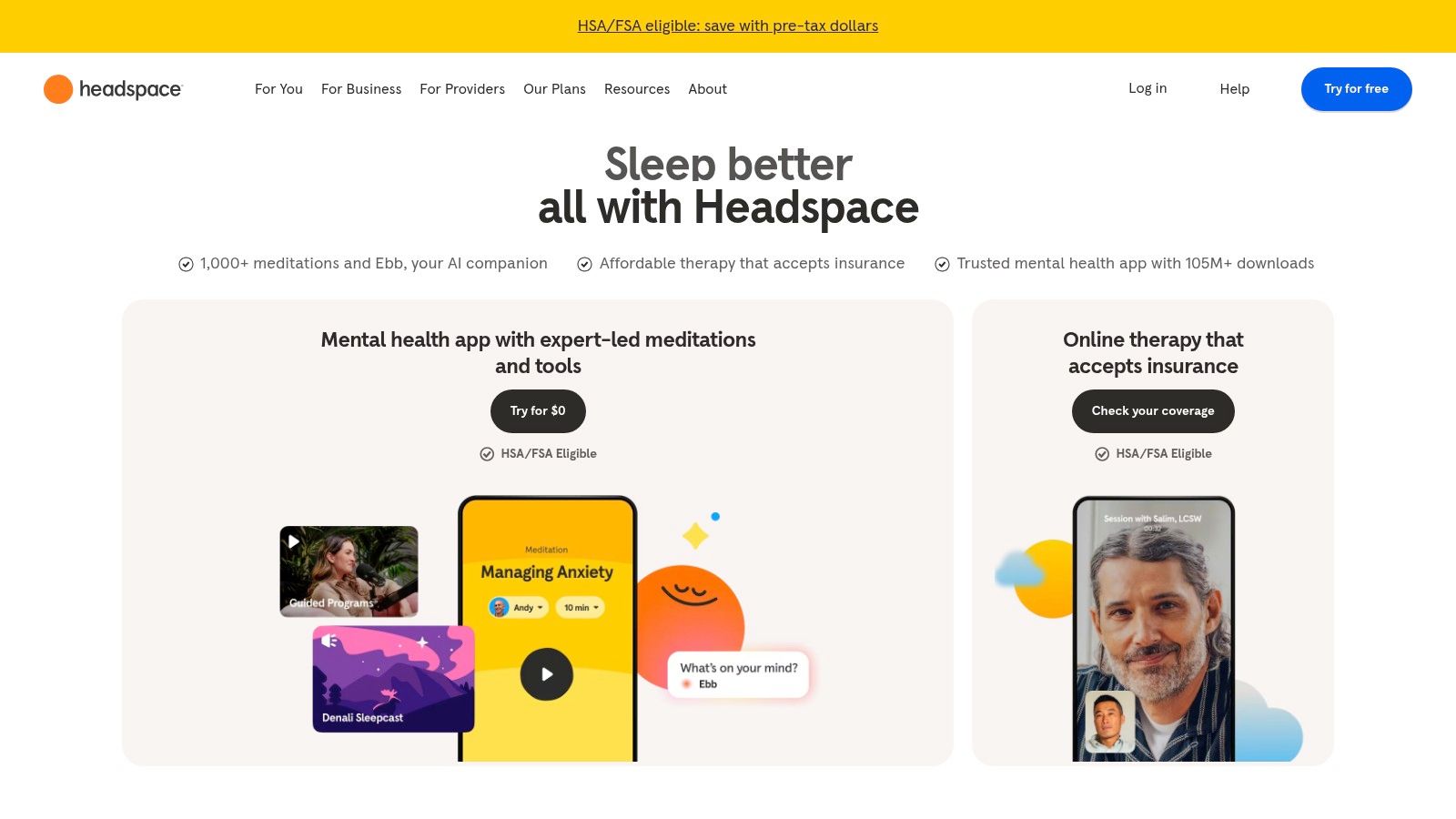
Headspace is a premier app-based mindfulness platform that makes meditation accessible for everyone, especially beginners. It provides guided meditations, sleep content, and focus music designed to reduce stress and improve mental well-being. What sets it apart is its integration of mental health services, offering in-app therapy options, making it a comprehensive tool for both mindfulness practice and professional support.
This platform excels at demystifying meditation with structured, easy-to-follow courses. It’s one of the best personal growth resources for building a consistent mindfulness habit, serving as a gateway to deeper self-awareness. The combination of daily guided content and access to licensed therapists creates a unique ecosystem for holistic mental health care.
Key Features and Usage Tips
Headspace offers a vast library of guided meditations for specific goals like managing anxiety, improving focus, and fostering gratitude. The platform also includes "Sleepcasts," which are unique audio experiences to help you unwind and fall asleep. Its user-friendly interface makes navigating the content simple and engaging.
Practical Tip: Start with the "Basics" course. It's a foundational 10-day program that teaches the core principles of meditation and mindfulness in just a few minutes each day, making it perfect for establishing a routine.
For those in the U.S., explore the Headspace Care feature for therapy and psychiatry services, as it may be covered by your insurance plan. Using tools like these can be a powerful way to how to build emotional intelligence by combining self-practice with professional guidance.
Pros and Cons
| Pros | Cons |
|---|---|
| Beginner-Friendly Content: Structured programs ease you into meditation. | Auto-Renewing Subscription: Requires mindful billing management. |
| Integrated Therapy: U.S. users can access therapy via insurance. | Pricing Inconsistency: Cost can vary based on the sign-up offer. |
| Diverse Content Library: Includes sleep, focus, and kids' content. | Advanced Content Limited: May feel basic for experienced meditators. |
| Clean User Interface: The app is intuitive and visually appealing. | Requires Consistency: Benefits are most felt with regular daily use. |
Website: https://www.headspace.com
10. Calm
Calm is a leading meditation and sleep app designed to reduce stress, improve mindfulness, and promote restful sleep. It stands out in the crowded wellness app market by focusing heavily on high-quality audio content, particularly its famous Sleep Stories narrated by celebrities. While many apps offer meditation, Calm excels at creating a soothing, immersive experience that makes it a top-tier resource for anyone prioritizing mental well-being and sleep hygiene.
The platform's core strength is its vast and beautifully produced library. Users can access hundreds of guided meditations for anxiety, focus, and gratitude, along with music for concentration and relaxation. The app’s simple, intuitive interface makes it easy for beginners to start a mindfulness practice, while the depth of content keeps long-time users engaged. It is an essential tool for building resilience and a calmer mind.
Key Features and Usage Tips
Calm’s key differentiators are its Sleep Stories and Calm Masterclasses. The Sleep Stories are soothing bedtime tales for adults, while the Masterclasses feature world-renowned experts teaching topics like mindful eating and breaking bad habits. The "Daily Calm" provides a fresh 10-minute meditation each day, making it easy to build a consistent practice.
Practical Tip: Pair a short "Daily Calm" session in the morning with a "Sleep Story" at night to create a structured routine. Use the offline download feature to ensure you have access to your favorite sessions while traveling or in areas with poor connectivity.
Explore the music section for focus-enhancing playlists during your workday. The app’s content is not just for formal meditation; it can be integrated throughout your day to manage stress and improve concentration, making it a versatile personal growth resource.
Pros and Cons
| Pros | Cons |
|---|---|
| Broad, High-Quality Sleep Content: Extensive library of stories. | Annual Billing by Default: The default subscription is yearly. |
| Simple User Experience: Intuitive and easy-to-navigate interface. | Expensive Lifetime Tier: The one-time purchase is a high upfront cost. |
| Daily Content: Fresh meditations to encourage regular practice. | Limited Advanced Features: May be too simple for advanced meditators. |
| Celebrity Narrators: Well-known voices add to the appeal. | Repetitive Music Tracks: Some users may find the music selection limited. |
Website: https://www.calm.com
11. Blinkist
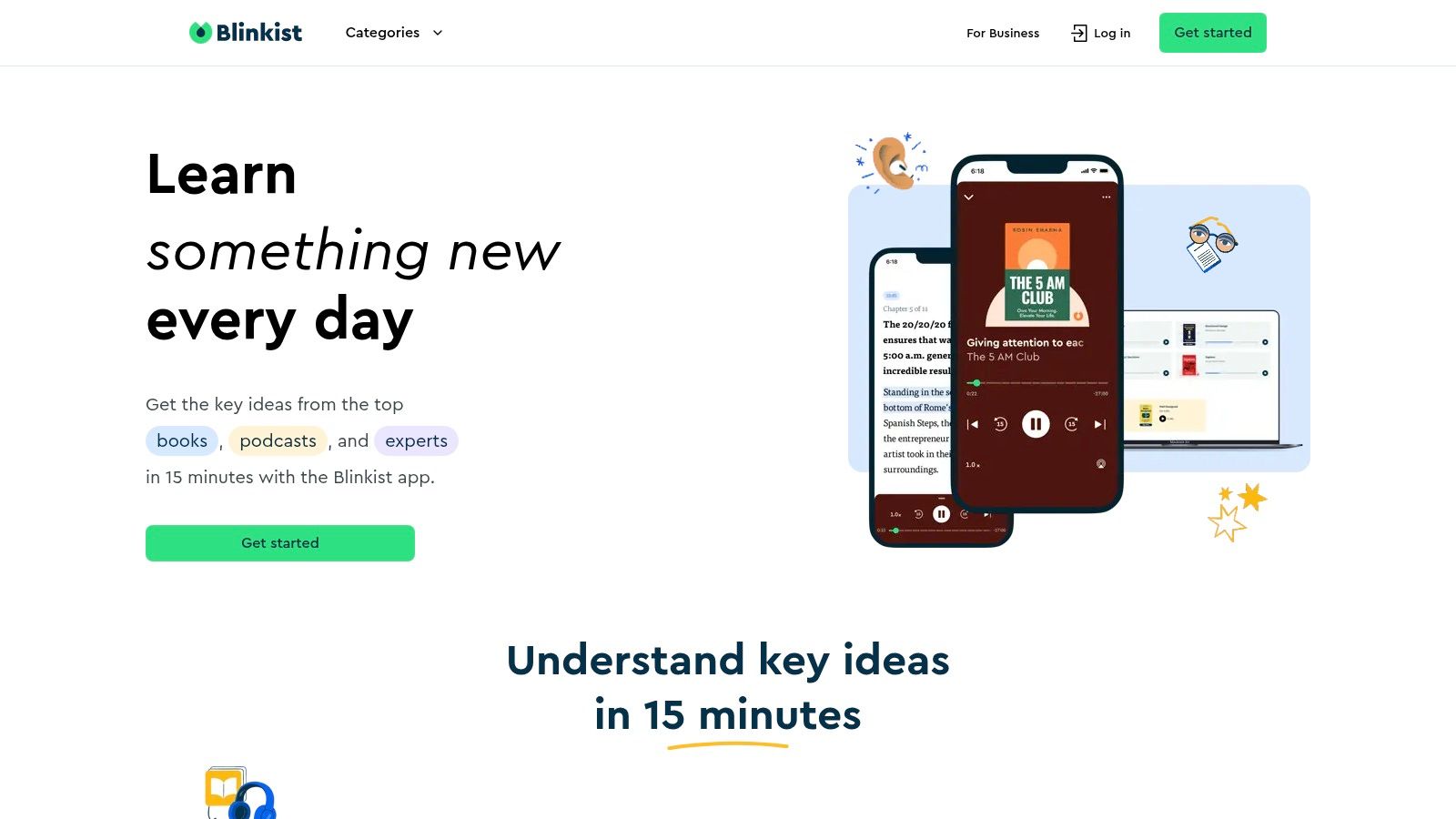
Blinkist is a micro-learning service designed for busy people who want to absorb key insights from non-fiction books quickly. It offers 15-minute summaries, called 'blinks', available in both text and audio formats. This platform is ideal for sampling a wide range of personal growth resources to decide which books are worth a deeper dive, or for stacking small, daily learning habits.
The service excels at distilling core concepts from popular personal development titles into digestible packets of information. Instead of committing hours to a book you might not finish, Blinkist gives you the main arguments and takeaways upfront, making it a powerful tool for efficient knowledge acquisition.
Real-Life Example:
Mark, a busy startup founder, wanted to stay current on business trends but lacked reading time. He subscribed to Blinkist and listened to one 15-minute audio summary during his morning commute. After listening to the summary of "Traction," he realized its framework was perfect for his company and decided to buy the full book to implement the strategies with his team.
Key Features and Usage Tips
The primary feature is its vast library of book summaries, covering topics from productivity to psychology. The audio blinks are particularly useful for learning during commutes, workouts, or household chores. The platform also offers a "Blink of the Day" for free users to sample the content.
Practical Tip: Use Blinkist to build momentum in your learning journey. Listening to one blink each morning can establish a consistent routine. For more on this, discover how micro-habits can transform your life and create lasting change.
To get the most out of the service, use it as a discovery tool. If a summary resonates with you, add the full book to your reading list. Higher-tier plans may include AI features that can help you find relevant titles based on your interests.
Pros and Cons
| Pros | Cons |
|---|---|
| Time-Efficient: Get key ideas from books in just 15 minutes. | Lacks Depth: Summaries can miss the nuance of a full book. |
| Great for Habit-Stacking: Easy to fit into a daily routine. | Regional Pricing: Subscription costs can vary by location. |
| Audio and Text Formats: Learn in the way that best suits you. | Not a Replacement: Best used as a supplement, not a substitute. |
| Broad Topic Discovery: Quickly explore new subjects and authors. | AI Features Gated: Advanced tools may require a premium plan. |
Website: https://www.blinkist.com
12. Wondrium (by The Great Courses)
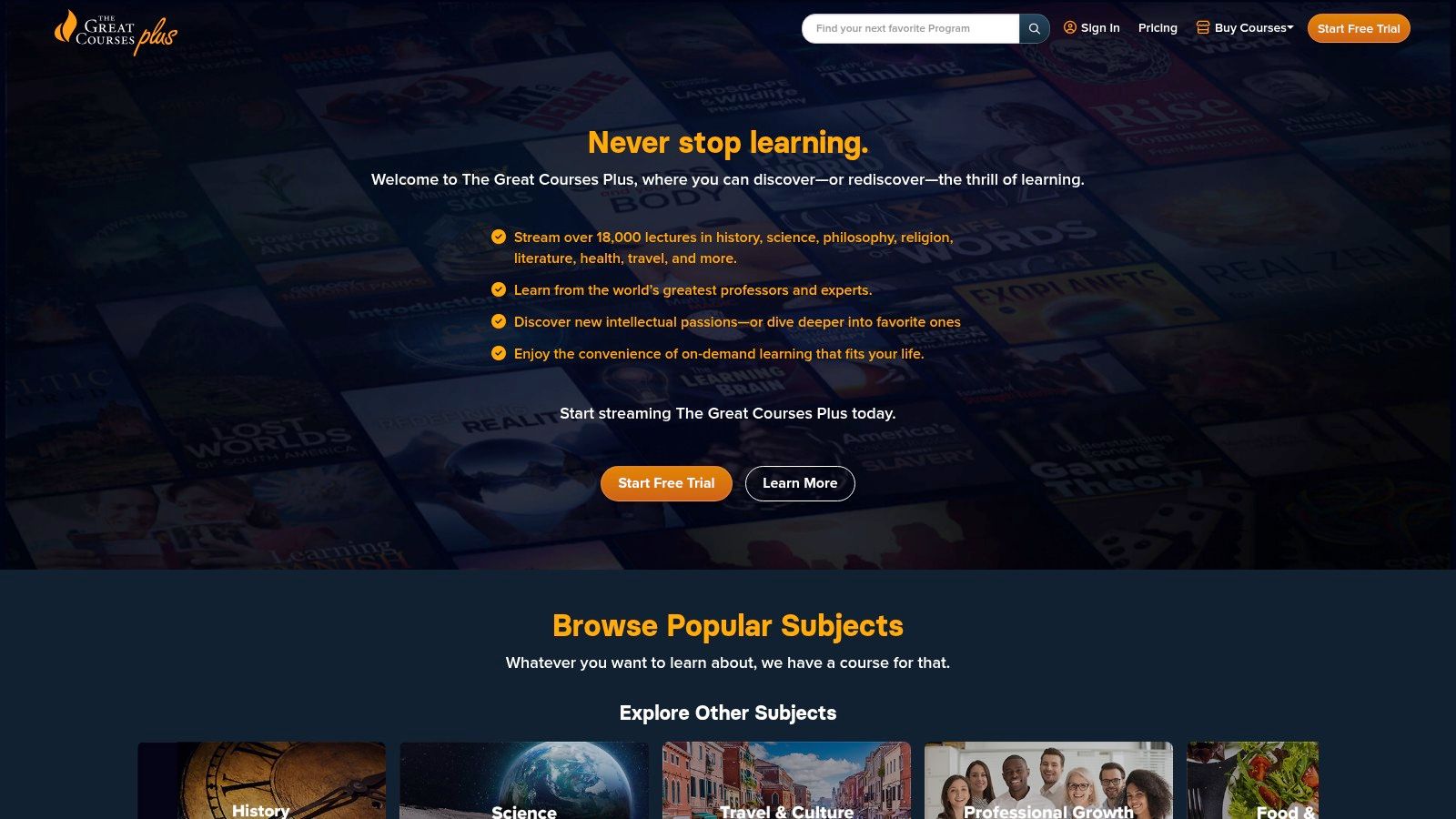
Wondrium is a streaming library of expert-taught, lecture-style courses for learners who want deep, long-form instruction. It moves beyond typical self-help formats, offering university-level content on topics like critical thinking, memory, influence, and well-being. It stands out by providing credible, academic-level personal growth resources from respected professors and experts.
The platform is ideal for those who prefer structured learning and value in-depth exploration over quick tips. Its subscription model provides access to a vast catalog that spans personal growth, science, history, and creativity, making it a comprehensive resource for continuous learning. The content is presented through high-quality video lectures, often accompanied by guidebooks.
Key Features and Usage Tips
Wondrium operates on a subscription streaming model, with options for monthly, quarterly, or annual plans, and often includes a 14-day free trial. You can also purchase individual "Great Courses" for permanent access. The service is available across multiple devices, including web browsers, iOS, Android, and smart TVs, allowing for flexible learning.
Practical Tip: Use the course guidebooks. Most courses come with a detailed PDF guidebook that summarizes lectures, defines key terms, and provides supplementary reading lists. This is an invaluable tool for reinforcing what you've learned.
To get the most out of the platform, treat each course like a mini-university class. Set aside dedicated time, take notes, and explore the topics further using the provided materials. Start with a broad course like "How to Boost Your Physical and Mental Energy" to get a feel for the lecture-based format.
Pros and Cons
| Pros | Cons |
|---|---|
| Credible Instructors: Content is led by vetted experts and professors. | Less Interactive: Primarily a passive, lecture-based experience. |
| In-Depth Content: Provides deep, academic-level learning. | Applied Focus Varies: Some courses are more theoretical than practical. |
| Great Value: Annual plans offer significant savings for learners. | Niche Topics: May not cover trendy or very specific self-help topics. |
| Broad Catalog: Extends beyond personal growth to many subjects. | Pacing Can Be Slow: The lecture format may feel slow for some users. |
Website: https://www.wondrium.com
12 Personal Growth Platforms Comparison
| Service | Core features | UX ★ | Value & Price 💰 | Best for 👥 | Standout ✨🏆 |
|---|---|---|---|---|---|
| Amazon | Massive catalog: print, Kindle, audiobooks; reviews & best‑seller charts | ★★★★ | 💰 Competitive pricing; Prime shipping & used options | 👥 Buyers wanting widest selection & fast delivery | ✨ Unmatched availability & discovery lists |
| Audible | Large audiobook library, Originals, offline listening, credits/plans | ★★★★ | 💰 Subscription (Plus / Premium Plus); credits for ownership | 👥 Audio learners, commuters | ✨ Strong original audio + permanent purchases with credits |
| Coursera | University courses, certificates, Coursera Plus, audit option, AI assistant | ★★★★½ | 💰 Free audit; paid certs or subscription for unlimited access | 👥 Career learners seeking accredited certificates | 🏆 University partnerships & recognized certificates |
| Udemy | A‑la‑carte courses, lifetime access, previews & ratings, frequent sales | ★★★★ | 💰 Pay per course; deep discounts often available | 👥 Budget learners wanting specific skills | ✨ Lifetime access to bought courses |
| LinkedIn Learning | Bite‑size courses, learning paths, LinkedIn profile integration | ★★★★ | 💰 Subscription; sometimes bundled with LinkedIn Premium | 👥 Professionals boosting career skills | ✨ Direct LinkedIn resume/profile visibility |
| MasterClass | Cinematic, celebrity‑led classes, multi‑device, annual plan | ★★★★½ | 💰 Annual membership (premium pricing) | 👥 Motivated learners seeking engaging, inspirational lessons | 🏆 High production value and star instructors |
| Skillshare | Community projects, short creative classes, unlimited annual plan | ★★★★ | 💰 Annual subscription for unlimited classes | 👥 Creatives and project‑based learners | ✨ Community feedback & project focus |
| Mindvalley | Multi‑week Quests, AI guidance, community cohorts, events | ★★★★ | 💰 Premium membership (higher cost) | 👥 Learners wanting cohort pacing & holistic programs | ✨ Cohort structure + AI‑guided curriculum |
| Headspace | Guided meditations, sleep content, in‑app therapy (US), teen/family plans | ★★★★½ | 💰 Subscription; student/family discounts & insurance pathways | 👥 Meditation beginners & those seeking therapy access | ✨ Beginner‑friendly programs + therapy partnerships |
| Calm | Guided meditations, sleep stories, Masterclasses, multi‑device | ★★★★ | 💰 Annual billing; optional lifetime (expensive) | 👥 Users prioritizing sleep & high‑quality mindfulness content | 🏆 Extensive sleep library & simple UX |
| Blinkist | 15‑minute text & audio summaries, Blink of the Day, AI features | ★★★★ | 💰 Subscription; regional pricing; free samples | 👥 Time‑pressed readers wanting quick insights | ✨ Fast micro‑learning habit builder |
| Wondrium (The Great Courses) | Lecture‑style courses, streaming + buy options, deep catalog | ★★★★ | 💰 Subscription or buy individual courses; trial often available | 👥 Learners preferring long‑form, expert lectures | 🏆 In‑depth, credible lecture content |
Start Your Growth Journey Today
We’ve explored a comprehensive suite of personal growth resources, from the vast libraries of Amazon and Audible to the structured learning environments of Coursera and Udemy. We’ve seen how apps like Headspace and Calm can build mindfulness, while platforms like Blinkist and Wondrium offer condensed knowledge for the time-conscious learner. Each tool, whether it’s a high-production MasterClass or a community-driven Skillshare project, offers a unique pathway to self-improvement.
The sheer volume of options can feel overwhelming, but that’s also the beauty of the modern growth landscape. There has never been a better time to access world-class knowledge and practical tools tailored to your specific goals. The key isn't to use every resource, but to strategically select the one that aligns with your immediate needs and learning style.
Turning Information into Transformation
Knowledge is only potential power; action is what unlocks it. The most critical step you can take after reading this guide is to move from passive consumption to active implementation. Merely knowing about these resources won't change your life. Committing to a single book, one 10-minute meditation session, or the first module of a course is what sparks real momentum.
Consider your primary goal right now. Is it career advancement? Emotional well-being? Acquiring a new skill? Let your answer guide your first choice.
- For career-focused professionals, a course on LinkedIn Learning or Udemy might offer the most direct return on investment.
- For those seeking mental clarity, starting a daily practice with Calm or Headspace is a low-friction entry point.
- For lifelong learners with broad interests, a Wondrium or MasterClass subscription provides a wellspring of inspiration.
A Practical Framework for Getting Started
Choosing a tool is the first step, but creating a system around it is what ensures lasting change. Don't just download an app; schedule a specific time to use it. Don't just buy a book; block out 30 minutes on your calendar to read the first chapter.
To kickstart your growth journey effectively, consider implementing strategies for efficiency and productivity. A great way to reframe your approach to work and life is by understanding concepts that challenge traditional norms. For example, learning about the principles from influential books can provide a powerful mental model. You can find inspiration in summaries like the 8 Key Points from The 4-Hour Workweek, which distill concepts on automation and lifestyle design. Integrating such frameworks can help you create the time and mental space needed to fully leverage the personal growth resources you choose.
Your journey is unique, and the right combination of tools will evolve as you do. The most important thing is to begin. Choose one resource from this list that excites you, define a small, achievable first action, and take that step today. The path to a better version of yourself is built not on grand, sweeping changes, but on the foundation of small, consistent daily actions. Your future self is counting on the investment you make now.
Ready to turn your personal growth goals into a structured, daily practice? The resources in this guide provide the "what," but Everyday Next provides the "how." Our platform helps you build powerful habits, track your progress, and stay accountable to the person you want to become. Start your journey with Everyday Next and build the systems that drive real, lasting change.
Frequently Asked Questions (FAQ)
1. What are the best free personal growth resources?
Many platforms offer free entry points. Coursera allows you to "audit" most courses for free (access to video lectures). Headspace and Calm have free introductory meditations. Blinkist provides a free "Blink of the Day." Public libraries are also an excellent free resource for books and audiobooks via apps like Libby.
2. How do I choose the right personal growth resource for me?
Start by identifying your primary goal (e.g., career skills, mental well-being, learning a new hobby). Then, consider your preferred learning style. If you like structured, academic learning, try Coursera. If you prefer learning on the go, Audible is great. For hands-on creative projects, Skillshare is ideal. Use the comparison table in this article to match features to your needs.
3. Are paid personal growth resources worth the investment?
Often, yes. Paying for a resource creates a sense of commitment that can increase your follow-through. Paid platforms typically offer higher-quality, more structured content, expert instructors, and a better user experience without ads. A small investment in a course on Udemy or a subscription to LinkedIn Learning can have a significant return on your career.
4. Can I really learn a skill from an online course?
Absolutely. Platforms like Udemy, Skillshare, and LinkedIn Learning are designed to teach practical, tangible skills. The key to success is active participation: complete the exercises, engage in the projects, and apply what you learn immediately. Passive watching is less effective than active doing.
5. What's the difference between Headspace and Calm?
Both are excellent mindfulness apps, but they have different strengths. Headspace is often praised for its structured, beginner-friendly guided meditation courses. Calm is renowned for its vast library of Sleep Stories, soothing soundscapes, and celebrity narrators, making it a favorite for users focused on sleep and relaxation.
6. How can I stay motivated on my personal growth journey?
Motivation often follows action. Start small with a micro-habit, like one 10-minute meditation or one audio summary per day. Track your progress to create a sense of accomplishment. Join a community (like on Skillshare or Mindvalley) for accountability. Finally, remind yourself of your "why"—the core reason you started this journey.
7. Is MasterClass better for inspiration or for practical skills?
MasterClass excels at providing inspiration, unique insights, and high-level frameworks from world-class experts. While you will learn practical tips, its primary value is in shifting your mindset and understanding the philosophy behind a master's craft. For step-by-step technical skills, platforms like Skillshare or Udemy may be more direct.
8. How can I fit personal growth into a busy schedule?
Leverage resources designed for busy people. Audible and Blinkist are perfect for learning during commutes or chores. Apps like Headspace offer meditations as short as 3-5 minutes. The key is "habit stacking"—linking a new personal growth habit to an existing daily routine, like listening to a course while you make coffee.
9. What's the best resource for professional or career development?
LinkedIn Learning is specifically designed for this purpose, with courses that directly map to career skills and integrate with your professional profile. Coursera is also excellent for earning university-branded certificates that are highly valued by employers.
10. Do I need to use multiple resources at once?
No, and it's often better not to. Trying to use too many resources at once can lead to overwhelm and inaction. Start with one platform that aligns with your most urgent goal. Master it, build a consistent habit, and only then consider adding another resource to complement your learning.
Related Posts

Previous Post
Next Post