Digital Payment Methods: A Complete Guide for 2026
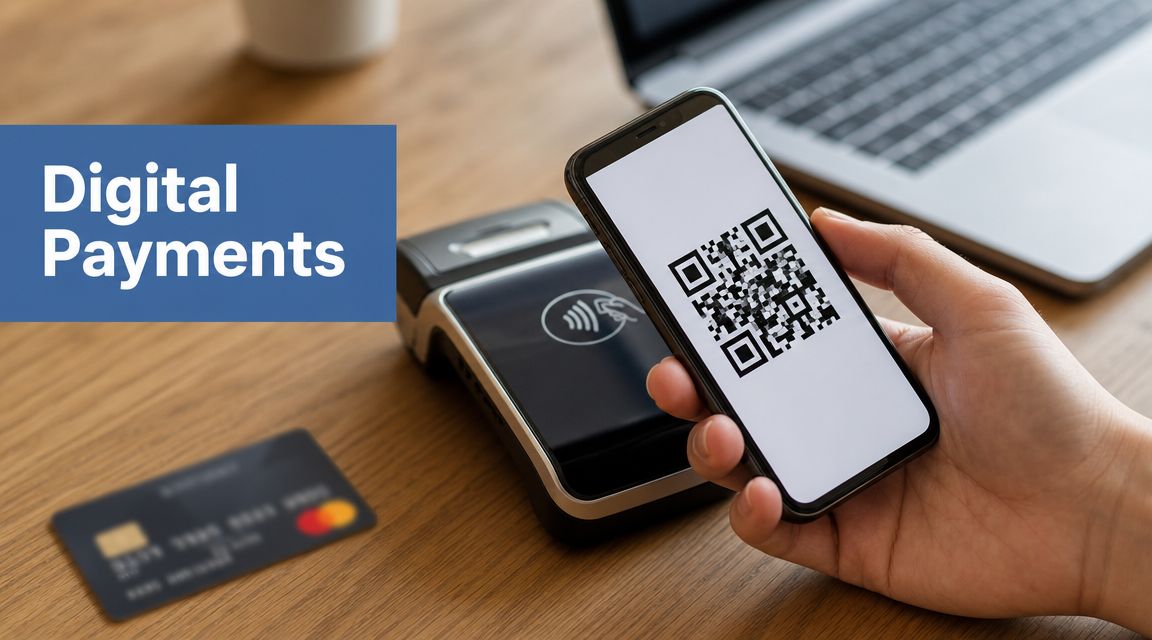
You're standing at a checkout page with six buttons under “Pay now.” Credit card. Apple Pay. PayPal. Bank transfer. Buy now, pay later. Maybe even crypto. In a store, it's the same feeling in a different form. Tap your phone, tap your watch, insert a card, scan a QR code, or send money straight from your bank app.
That choice can feel small, but it isn't. Payment methods shape speed, privacy, fraud risk, refunds, cash flow, and even whether a customer completes a purchase at all. For consumers, picking the wrong option can mean extra fees, weaker protections, or messy budgeting. For a small business, the wrong checkout setup can create friction right where money is supposed to move smoothly.
Digital payment methods aren't just a list of tools. They're a new layer of financial decision-making. If you've ever used a wallet app, paid a friend with a peer-to-peer app, or wondered whether bank transfer beats card, you're already living in this shift. If you use Cash App for everyday money moves, you've seen how quickly payment behavior can become app behavior.
Table of Contents
- Your Guide to the Digital Wallet Revolution
- The Seven Families of Digital Payments
- How Digital Payments Work
- Comparing Payments Security Fees and Experience
- Adoption Trends and The Future of Payments
- How to Choose the Right Digital Payment Methods
- Navigating Digital Payment Risks and Regulations
- Frequently Asked Questions About Digital Payments
- 1. Are digital wallets safer than physical cards?
- 2. What happens if I need a refund on a digital payment?
- 3. Can I use digital payment methods for international transactions?
- 4. What is the difference between a mobile wallet and a digital wallet?
- 5. Do all stores accept all types of digital payments?
- 6. How do digital payments affect my credit score?
- 7. What is NFC and why does it matter for mobile payments?
- 8. Are there limits on how much I can send or spend with digital payments?
- 9. How can I protect myself from digital payment scams?
- 10. What's next for digital payments? Are biometrics the future?
Your Guide to the Digital Wallet Revolution
A decade ago, “digital payment” often meant typing your card number into a website. Today, it can mean accessing your phone, approving with your face, and paying without ever showing the merchant your real card details. That's a major behavioral shift, not just a software upgrade.
The easiest way to understand the change is to think about your phone becoming a financial remote control. It doesn't only store payment options. It organizes them, switches between them, and often adds security layers that physical cards alone can't provide. The same device that handles messages, maps, and tickets now sits at the center of everyday commerce.
For shoppers, this creates a more flexible experience. You might use a wallet for a grocery run, a bank transfer for rent, PayPal for an online marketplace, and BNPL for a larger purchase you want to split over time. For businesses, it means customers arrive with different expectations, and “we accept cards” no longer covers the whole picture.
Digital payments matter because they turn payment choice into a practical skill. The best option changes with the purchase, the risk, and the person paying.
That's why people get confused. They hear terms like wallet, contactless, instant transfer, tokenization, QR payment, and peer-to-peer app as if they all mean the same thing. They don't. Some describe the funding source. Some describe the technology used at checkout. Some describe the network moving the money in the background.
A useful mindset is this: don't ask, “What's the most modern way to pay?” Ask, “Which method gives me the best mix of safety, cost, and convenience for this situation?”
The Seven Families of Digital Payments

A simple map of the landscape
Most digital payment methods fit into a small number of families. Once you see the categories, the whole market gets easier to read.
Card-based payments
These use a credit or debit card, either physically or online. Example: Visa or Mastercard used on a store terminal or ecommerce site.Mobile wallets
These store payment credentials inside an app or device wallet so you can pay with a phone or watch. Example: Apple Pay, Google Pay, Samsung Pay, or PayPal.Direct bank transfers
These move money from one bank account to another without using a card at checkout. Example: paying an invoice through online banking.Real-time payment rails
These are systems built for near-instant bank-to-bank movement. Example: UPI in India.Buy now, pay later
These let shoppers split a purchase into installments while the merchant gets paid through the provider. Example: Afterpay or Klarna.Cryptocurrency payments
These use digital assets on blockchain-based systems. Example: a business accepting payment in Bitcoin through a crypto payment processor.QR code payments
These let the customer scan a code that opens a payment flow, often tied to a wallet or bank transfer. Example: scanning a merchant QR code in a payment app.
Where people get confused
Some of these categories overlap. A QR payment might launch a wallet. A wallet might still use your credit card in the background. A contactless tap might be done with a card, not a phone. That's why it helps to separate three layers:
| Layer | What it means | Example |
|---|---|---|
| Funding source | Where the money comes from | Bank account, credit card, debit card |
| Payment interface | What you use to start the payment | Phone wallet, QR code, app, card terminal |
| Network or rail | What moves the money behind the scenes | Card network, bank transfer system, real-time rail |
A small business owner also needs to think beyond domestic checkout. If you sell across borders, currency conversion, settlement timing, and fees can quickly become more important than the front-end button design. A practical resource on that side of the problem is this guide to cut hidden fees on international transfers.
If you want a broader sense of the companies shaping this space, this overview of popular fintech companies and how they compare helps connect the payment tools to the businesses behind them.
How Digital Payments Work

You tap your phone. The terminal beeps. A receipt appears a moment later.
That quick moment hides a chain of checks and handoffs. The payment system has to confirm who is paying, verify the payment method, decide whether to approve the purchase, and send the transaction through the right network before the money reaches the merchant.
A useful way to follow the process is to separate it into four stages:
- Initiation. The customer taps, scans, clicks, or sends money in an app.
- Authorization. The payment provider, bank, or card issuer checks whether the transaction looks valid and whether funds or credit are available.
- Transmission. The request moves through a processor, network, or bank transfer rail.
- Settlement. The money is delivered to the merchant on the timing set by that system.
For consumers, this explains why a payment can be approved right away even though the final bank movement happens later. For small businesses, it explains why “paid” at checkout does not always mean “in my account now.”
Wallets use a safer stand-in
Digital wallets often create confusion because the front-end experience is so simple. Many people assume the merchant receives their real card number from the phone or app.
In many wallet payments, the merchant receives a token instead. Tokenization replaces the actual card number with a substitute value built for that transaction or device. If someone intercepts that token, it is far less useful than the original card details. Wallets such as Apple Pay, Google Pay, Samsung Pay, and PayPal often use this approach while the payment still travels over familiar card networks like Visa, Mastercard, American Express, or Discover.
The practical takeaway is straightforward. Using a wallet can reduce card-data exposure compared with typing card details into many websites, while keeping checkout fast.
Bank payments depend on the rail underneath
Bank-based digital payments can look similar on the screen but behave very differently in real life. One payment may move in near real time. Another may wait for batch processing, bank review, or cut-off times.
That difference matters more than many people realize. A consumer sending rent or splitting dinner wants speed and clarity. A small business owner cares about settlement timing, cash flow, reconciliation, and whether the customer can reverse the payment easily.
Newer payment systems are also expanding the range of rails behind the scenes. If you want broader context on how payment infrastructure is changing, this overview of what blockchain is used for beyond cryptocurrency is a useful companion.
Here's a short visual explainer before we continue:
BNPL adds a third party to the transaction
Buy now, pay later changes the flow. Instead of a standard card charge between shopper and merchant, a BNPL provider reviews the purchase, decides whether to approve the customer under its own rules, pays the merchant based on its agreement, and then collects installments from the shopper.
This can improve conversion for online sellers and make a larger purchase feel more manageable for the buyer. It also introduces a different set of decisions. The merchant is choosing a provider, accepting that provider's fees and refund process, and depending on its checkout experience. The customer is choosing a credit-like product that may feel lighter only because the cost is split into smaller payments.
That is where a decision framework helps. A payment method is not just a button on a checkout page. It is a bundle of trade-offs around approval rates, fraud exposure, fees, timing, accessibility, and dispute handling.
This point matters even more for underserved communities. Some customers do not have a credit card, a newer smartphone, stable broadband access, or comfort with app-based finance. A method that looks efficient to a merchant can still exclude real buyers. Good payment design means offering options that match how different people get paid, store money, and build trust online.
Comparing Payments Security Fees and Experience
Choosing among digital payment methods gets easier when you stop asking which one is “best” and start asking what trade-off you're making. The same method can be excellent for one job and annoying for another.
Digital Payment Methods Comparison
| Payment Method | Security Level | Typical Consumer Fee | Typical Merchant Fee | User Experience |
|---|---|---|---|---|
| Credit or debit cards | Moderate to high, depending on issuer controls and checkout setup | Often no obvious upfront fee at purchase, though card-related costs can exist outside the transaction | Usually involves processing costs | Familiar and widely accepted, but manual card entry adds friction online |
| Mobile wallets | High in many implementations because of tokenization and device authentication | Usually feels free at the point of use | Usually still follows card-processing economics in the background | Fast and smooth for supported devices and merchants |
| Direct bank transfer | Can be strong, but depends on bank interface and fraud controls | Sometimes low-cost or free, sometimes not, depending on provider and context | Often attractive for merchants compared with card acceptance, but varies | Good for bills and account-to-account payments, less elegant at some checkouts |
| Real-time payments | Strong when built with solid bank authentication, but scams can be harder to reverse once sent | Often positioned as low-cost or low-friction | Can be efficient for merchants where supported | Excellent for immediacy, but acceptance and workflows vary by market |
| BNPL | Moderate, with platform controls layered on top of checkout | Can be convenient, but consumer costs may arise depending on provider terms or missed payments | Merchants often fund part of the convenience through provider fees | Very smooth for larger purchases and online checkout |
| Cryptocurrency payments | Depends heavily on wallet custody, user behavior, and processor setup | Network and conversion costs may apply | Setup, processor, and conversion costs vary | Useful in some niches, but still unfamiliar for many customers |
| QR code payments | Varies by whether the QR launches a secure wallet, bank app, or another flow | Often low-friction for users | Varies by system | Simple in person, especially where scanning is common, but not universal everywhere |
How to read the trade-offs
For many shoppers, mobile wallets hit the sweet spot. They're quick, they reduce typing, and they often add strong authentication with a fingerprint, face scan, or device passcode. If you care most about convenience without giving up security, wallets are hard to ignore.
For many merchants, bank transfer and real-time payment options can be appealing because they may reduce reliance on card-based acceptance. But that only helps if customers trust and use them. Elegant infrastructure doesn't matter if your buyers still prefer cards and wallets.
A payment method succeeds in real life when people understand it, trust it, and can complete it without hesitation.
BNPL deserves extra caution. It can improve conversion at checkout and help customers spread the cost of a purchase. But “easy now” can become “hard later” if a buyer stacks too many installment commitments at once.
Crypto payments are a special case. Some businesses like them for specific customer groups or cross-border use cases. Most mainstream buyers still see them as optional, not default. Security also shifts more responsibility to the user, especially when self-custody is involved.
If security is your top concern, this guide on cybersecurity trends and how digital threats are rising is worth reading alongside your payment decisions.
Adoption Trends and The Future of Payments
A small shop owner updates the checkout counter, adds tap-to-pay, and turns on a wallet option online. A year later, customers treat both as normal. That is the significant shift. Digital payments are becoming the default way many people expect to pay, not a special feature.
The global shift is already underway
Worldpay projects that digital payments will account for 79% of e-commerce payments by 2028, up from 34% in 2014, and 53% of point-of-sale payments by 2028, up from 3% in 2014. Analysts summarized by Airwallex also note that digital wallets handled over US$16 trillion in 2024 and could reach US$28 trillion by 2030, while 3.7 billion people worldwide used digital wallets in 2023, equal to 46% of the global population. The same roundup adds that smartphones may become the payment method for one in every two in-store purchases by 2030, in this summary of global online payment statistics.

For consumers, this means checkout is becoming more like choosing a route on a map. The destination is the same, but the best path depends on speed, cost, and confidence. For a business, the message is even more practical. If your checkout only supports the method you prefer, and not the ones your customers trust, you create friction before the sale is complete.
If you want more context on where these shifts are heading, this look at the fintech revolution and digital payment change connects payments to the wider changes in financial technology.
Why India matters
India shows what happens when payment rails, smartphones, and everyday habits line up. The Reserve Bank of India reports strong ongoing growth in digital payment use, and UPI has become a common part of daily transactions across person-to-person transfers, bill payments, and merchant purchases, as shown in the RBI's digital payments index and payments data.
The lesson is not that every country will copy India point for point. It is that adoption can accelerate fast when a payment method is cheap to accept, easy to understand, and built into apps people already use. A payment system spreads much like a messaging app. It gets stronger as more friends, stores, and service providers are already there.
That framework also helps explain why adoption remains uneven. A method can be technically excellent and still stall if people lack smartphones, reliable internet, bank access, language support, or confidence that they can recover money after a mistake. Underserved communities often face all of those hurdles at once. So the future of payments is not only about faster rails. It is also about trust, usability, and inclusion.
Crypto still sits in a different category for many small businesses. Some see it as a niche option for specific buyers, online audiences, or cross-border use. If you want a focused business perspective, this guide to business crypto payments is a practical companion read.
How to Choose the Right Digital Payment Methods
You are at checkout with your phone in one hand and three payment buttons on the screen. One promises rewards. One promises installment flexibility. One is the fastest tap. For a small business owner, the same moment looks different. You are deciding which buttons to offer so customers finish the purchase instead of abandoning the cart.
That is why choosing a digital payment method is less like picking a favorite app and more like choosing the right tool from a toolbox. A screwdriver is not "better" than a wrench. It depends on the job. The practical test is simple: which option gives you the right mix of security, cost, and ease for this specific transaction?
For personal use
Start with the situation, not the brand.
If you are buying groceries, coffee, or train tickets, speed and low friction usually matter most. A mobile wallet or contactless card often works well because it reduces the amount of account information you expose at checkout and keeps the payment quick.
If you are paying rent, utilities, or sending money to someone you know, bank-based methods usually fit better. These payments are less about rewards and more about reliability, clear records, and moving money directly from one account to another.
Large purchases deserve a pause. Installment options can make a price feel smaller than it really is. A useful gut check is to ask whether you would still buy the item if you had to pay the full amount today.
Use these questions as a filter:
- How much trust do I need in the refund process? Travel, event tickets, online marketplaces, and higher-ticket retail purchases often call for payment methods with clearer dispute handling.
- What is the actual cost? Rewards can look attractive, but interest, late fees, foreign transaction fees, or missed autopay dates can erase the benefit.
- How exposed is my account if something goes wrong? Some methods place a buffer between the merchant and your main bank account. Others pull funds more directly.
- Will this payment help or hurt my budgeting? Fast checkout is convenient, but convenience can also make spending easier to ignore.
One small habit helps a lot. Before you approve any digital payment, look for three things: the total amount, when the money leaves your account, and how you would fix a mistake.
For your business
For a small business, the best payment setup sits at the intersection of customer preference, operating cost, and back-office reality. A method that customers like but your team cannot reconcile cleanly will create work later. A method with low processing fees but poor conversion can cost more than it saves.
A simple way to choose is to score each payment option across three lenses:
- Security: How well does it reduce fraud risk, protect account details, and support disputes or authentication?
- Fees: What do you pay after processing charges, refunds, chargebacks, failed payments, and admin time?
- Experience: How quickly can a customer complete the payment, and how often does the method create confusion or drop-off?
That framework also helps with inclusion. Some customers have newer phones and stored cards in multiple apps. Others may have limited bank access, inconsistent internet, shared devices, or low confidence using unfamiliar financial tools. If you serve students, immigrants, older adults, rural customers, or lower-income households, checkout design affects who can buy from you. Offering only one polished option can exclude people just as effectively as refusing cash once did.
Here is a practical checklist:
- Match payment methods to customer habits. In-store buyers may expect contactless cards or QR payments. Online buyers may prefer wallet buttons or direct bank options.
- Compare the full cost, not just the headline rate. Include refunds, fraud losses, support time, and settlement delays.
- Watch cash flow. Faster settlement can matter more than shaving a small percentage off processing fees.
- Keep reconciliation manageable. Your team should be able to match payments to orders, invoices, and returns without detective work.
- Avoid choice overload. Too many payment buttons can create hesitation. Offer the few methods that cover the broadest real needs.
The business lesson from earlier adoption examples is straightforward. Customer behavior can shift quickly when a cheaper or easier method becomes widely accepted. Review your checkout regularly instead of treating it as a set-and-forget decision.
A balanced setup often works best:
| Business goal | Usually worth prioritizing |
|---|---|
| Fastest customer checkout | Wallets, contactless, strong guest checkout |
| Lower dependence on card rails | Bank transfers, real-time payment options |
| Higher order flexibility | BNPL for selected products or price points |
| Niche or cross-border audience | Specialized processors, possibly crypto options where appropriate |
If your payment mix includes European transfers or remittance flows, this guide to secure SEPA remittances is a useful reference for evaluating security controls and transfer handling.
Navigating Digital Payment Risks and Regulations
Convenience can hide risk. A payment that feels smooth on the screen can still be unsafe, expensive, or hard to reverse. That's especially important for people and businesses who are new to digital payment methods and assume access alone solves the problem.
Access is not the same as safe use
Researchers at the Federal Reserve argue that “underserved” households should not be defined by access alone. They use four dimensions: access, use, safety, and affordability. A household can have a transaction account and still rely on digital payment options only rarely, or depend on methods that are risky or costly for a meaningful share of transactions, as discussed in this Federal Reserve work on households underserved in digital payment services.
That's one of the most useful corrections to common payment advice. “Get a bank account” or “download a wallet” is not the same as building real financial inclusion. People may still face fraud concerns, poor reliability, weak interoperability, confusing interfaces, or fee structures that punish routine use.
More digital doesn't automatically mean more inclusive. A payment system helps only when people can use it safely, affordably, and with confidence.
If you work with euro payments or remittances, this guide to secure SEPA remittances is a useful example of how payment security guidance becomes practical when tied to actual transaction flows.
Simple habits that reduce risk
You don't need to be technical to use digital payments more safely. You do need good habits.
- Turn on device security: Use a strong passcode and biometric login on the phone that holds your wallets and banking apps.
- Be suspicious of urgency: Most payment scams try to rush you. Slow down when someone pushes immediate transfer, gift card purchase, or wallet verification.
- Review app permissions: A payment app doesn't always need broad access to contacts, location, or other data.
- Use official channels: Open your bank or wallet app directly instead of tapping payment links from messages.
- Monitor statements and activity: Small unknown transactions can be warning signs, not harmless glitches.
- Learn the reversibility question: Some methods are easier to dispute than others. Before sending money, ask what happens if the transaction goes wrong.
Regulation also matters, but from a user point of view the key issue is basic protection. Can you recognize a scam, understand the fee model, and get support when something breaks? If the answer is no, the method may be too costly in ways that never appear on the checkout screen.
Frequently Asked Questions About Digital Payments
1. Are digital wallets safer than physical cards?
Often, yes. A wallet can add device authentication and may avoid sharing your raw card data with the merchant. But safety still depends on your phone security and whether you use the wallet carefully.
2. What happens if I need a refund on a digital payment?
Usually, the refund goes back through the original payment path. If you used a wallet, that often means the underlying card or account gets credited. The process may feel invisible on your side, but it still follows the merchant's refund workflow.
3. Can I use digital payment methods for international transactions?
Yes, many digital payment methods work across borders. The main issues are currency conversion, merchant acceptance, settlement timing, and fees charged by providers or banks.
4. What is the difference between a mobile wallet and a digital wallet?
People often use the terms interchangeably. In everyday use, a mobile wallet usually refers to a wallet on your phone or wearable, while digital wallet is the broader term that can also include browser-based or platform wallets.
5. Do all stores accept all types of digital payments?
No. Acceptance varies a lot by country, industry, device, and merchant setup. A store may accept contactless cards but not phone wallets, or QR payments but not BNPL.
6. How do digital payments affect my credit score?
It depends on the product. Paying with a debit card or bank transfer usually doesn't affect your credit score in the same way a credit product can. BNPL and credit-based products may have different reporting and approval rules depending on the provider.
7. What is NFC and why does it matter for mobile payments?
NFC stands for near-field communication. It's the short-range wireless technology that lets your phone, watch, or contactless card communicate with a payment terminal during tap-to-pay checkout.
8. Are there limits on how much I can send or spend with digital payments?
Usually, yes. Limits can depend on your bank, wallet provider, merchant, verification status, fraud controls, or the payment rail being used.
9. How can I protect myself from digital payment scams?
Use multi-factor security where available, avoid payment links sent by strangers, verify requests in a separate channel, and review account activity often. If a message creates panic or urgency, treat it as suspicious.
10. What's next for digital payments? Are biometrics the future?
Biometrics are likely to stay important because they make strong authentication easier for normal users. But they'll probably be one layer in a broader system, not a standalone solution. Good payment design still depends on clear consent, strong device security, and reliable fraud controls.
Everyday money is getting more digital, but that doesn't mean it has to get more confusing. If you want more practical explainers on fintech, investing, technology, and modern life, explore Everyday Next.
Previous Post
Next Post