Are Bananas Good For Weight Loss?
Bananas have a strange reputation in weight-loss advice. One camp treats them like a sugary trap. The other treats them like a flawless diet food. Both views miss the useful question.
Are bananas good for weight loss? Yes, often. But the answer depends less on the fruit itself and more on ripeness, portion, timing, and what you eat with it. A slightly green banana behaves differently in the body than a soft, spotty one. That distinction matters if your goal is better satiety, steadier appetite, or cleaner pre-workout energy.
A lot of weight-loss frustration comes from treating food as a simple pass-or-fail list. That same black-and-white thinking shows up in exercise plans too. If you want a broader reset on why food rules alone often fall short, this breakdown of why dieting alone fails is worth reading. Weight loss usually works better when appetite, activity, habits, and recovery all support each other. The mindset piece matters too, especially if you're trying to build a sustainable routine instead of chasing short bursts of restriction. A thoughtful read on that is balancing mind and wellness in daily life.
Table of Contents
- The Banana and Weight Loss Debate
- A Banana's Nutritional Profile for Weight Management
- How Bananas Influence Satiety and Metabolism
- The Ripeness Strategy Using Green vs Yellow Bananas
- What Research Reveals About Bananas and Body Weight
- Practical Ways to Add Bananas to Your Diet
- Comparing Bananas to Other Fruits and Potential Cautions
- The Final Verdict Actionable Takeaways
- Frequently Asked Questions About Bananas and Weight Loss
- 1. Are bananas good for weight loss or fattening
- 2. Are green bananas better for weight loss
- 3. Are ripe bananas bad for weight loss
- 4. How many bananas can I eat in a day while trying to lose weight
- 5. Is a banana a good breakfast for fat loss
- 6. Should I eat a banana before or after a workout
- 7. Do bananas cause blood sugar spikes
- 8. Are banana chips good for weight loss
- 9. Can I eat bananas at night
- 10. What's the best way to eat bananas for weight loss
The Banana and Weight Loss Debate
The strongest argument against bananas is usually sugar. That sounds reasonable until you look at the full picture. Most advice treats bananas as one uniform food, but ripeness changes how they work.
According to Nutrisense's discussion of bananas and weight loss, green bananas contain resistant starch that slows digestion and promotes satiety, while riper bananas contain more simple sugars and may leave some people hungry sooner. That doesn't make ripe bananas “bad.” It means your choice should match your goal.
If you want a snack that helps control appetite, the best banana may be one that tastes a little less sweet. If you want quick fuel before a workout, a yellower banana may be more useful.
Bananas aren't diet food or diet poison. They're a tool, and tools work best when you use the right one for the job.
The question isn't whether bananas belong in a fat-loss plan. It's whether you're eating the right banana at the right time, and whether you're using it to replace a less helpful snack instead of adding extra calories on top of your day.
A Banana's Nutritional Profile for Weight Management
A medium banana gives you a lot of nutritional value for a modest calorie cost. According to Calorie Tracker Buddy's banana nutrition breakdown, a medium-sized banana contains about 105 calories, 3 grams of dietary fiber, and is naturally fat-free. That matters because weight management usually improves when food provides enough volume and satisfaction without a heavy calorie load.

What stands out nutritionally
Bananas work well in a weight-loss diet because they combine convenience with a useful nutrient mix.
| Nutrient or feature | Why it matters for weight management |
|---|---|
| Calories | Moderate enough to fit into most calorie-controlled eating patterns |
| Fiber | Helps with fullness and can reduce the urge to keep snacking |
| Carbohydrates | Useful when you need steady energy, especially around exercise |
| Potassium | Supports electrolyte balance and can be helpful for active people |
| Fat-free profile | Makes the banana easy to pair with foods that add protein or healthy fat |
The same source notes that replacing a 250-calorie sugary snack with one banana can create a daily deficit large enough to contribute to 10 to 15 pounds of weight loss over a year, assuming that habit stays consistent. That's one of the most practical ways to think about bananas. Not as a miracle food, but as a cleaner swap.
Why this profile beats many convenience snacks
Most packaged snacks are engineered to be easy to overeat. Bananas are different. They come pre-portioned, require no preparation, and don't depend on added oils or sweeteners to taste appealing.
If you want a quick reference for the fruit's macro breakdown, this guide to banana macros is a handy companion.
Practical rule: A banana makes more sense for fat loss when it replaces something less filling, not when it becomes an extra snack you didn't need.
The bigger takeaway is that bananas are not empty calories. They're a nutrient-dense, portable carbohydrate source with enough fiber to make them relevant in a weight-management plan.
How Bananas Influence Satiety and Metabolism
The reason bananas can help with weight loss isn't just their calorie count. It's how they affect appetite after you eat them.
According to Meto's review of bananas and weight-loss science, a medium banana provides 3.07 grams of fiber, about 11% of daily value, and that fiber promotes satiety by slowing digestion and elevating fullness hormones such as GLP-1. The same source notes that increasing daily fiber by 14 grams is linked to a 10% reduction in energy intake and 2 kilograms of weight loss over 4 months.

What fiber is doing behind the scenes
Think of fiber as a traffic-calming system for digestion. A fast-digesting snack races through, spikes hunger again, and often sends you back to the kitchen. A banana slows that pace.
That slower digestive flow can help in three ways:
- It stretches fullness longer. You don't get the same quick rise-and-drop pattern common with refined snacks.
- It supports appetite hormones. GLP-1 and related signals help the body register that you've eaten enough.
- It makes pairing easier. Add protein or fat, and the snack becomes much more durable.
If you train regularly, many of the same principles show up in broader strategies for gym-goers to feel satiated. Appetite control isn't just about what tastes healthy. It's about what keeps hunger from rebounding.
Why metabolism talk needs precision
Bananas don't “boost metabolism” in the dramatic way social media often suggests. A more accurate way to say it is that they can support the conditions that make weight loss easier: steadier energy, better adherence, and fewer impulsive snack decisions.
That's one reason sleep matters too. Poor sleep can overpower even a smart eating plan by amplifying cravings and reducing appetite control. If that's a weak point for you, natural ways to improve sleep quality can make your food choices work better.
Pairing a banana with Greek yogurt or nut butter often changes the experience from “I need another snack in an hour” to “I'm good until lunch.”
The Ripeness Strategy Using Green vs Yellow Bananas
Here, the banana question gets more interesting. Ripeness changes function. If you ignore that, the advice stays shallow.

Why ripeness changes the outcome
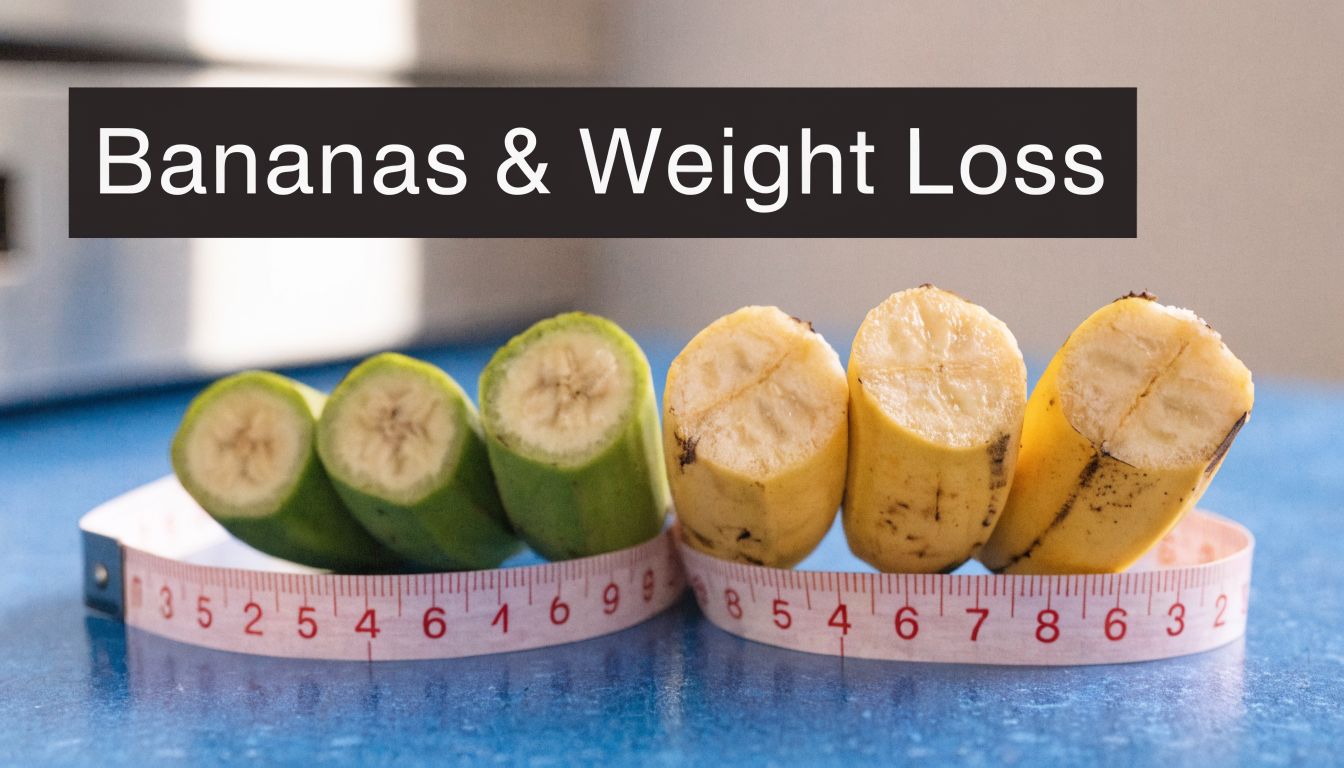
In unripe bananas, resistant starch plays a bigger role. According to the PMC review on native banana starch, resistant starch in unripe bananas acts as a prebiotic and can enhance insulin sensitivity. In a 4-week study, 24 grams per day of native banana starch led to a 1.568 kilogram reduction in body weight, versus 0.3 kilogram in controls.
That doesn't mean eating one green banana will reproduce the same result. It does mean the physiology is real. As bananas ripen, more of that starch converts into simpler sugars. So the same fruit shifts from “slower and steadier” toward “quicker energy.”
This is the hidden lesson often overlooked. Bananas aren't one food across their whole life cycle. They're a spectrum.
How to choose by goal
Use ripeness as a decision tool.
| Banana stage | Best use for weight management | What it tends to offer |
|---|---|---|
| Green to slightly green | Appetite control, steadier digestion, higher satiety | More resistant starch, less sweetness |
| Yellow with a little green | General daily use | Good balance of texture, taste, and slower energy release |
| Fully yellow | Pre-workout or when you want faster fuel | Easier digestion, sweeter taste |
| Very ripe with spots | Best used intentionally, not mindlessly | Sweetest taste, easiest to overuse in smoothies or baking |
A practical shopping move is to buy bananas at two stages. Keep a few greener ones for morning snacks or desk-side hunger control. Let a few ripen for workouts or days when you need something easy on the stomach.
Here's a useful visual explainer on banana ripening and use cases:
Another smart detail is timing. If you're using bananas for weight loss, slightly green bananas fit best when you want to avoid an afternoon hunger spiral. Riper bananas fit better before activity, when quick carbohydrate availability is an advantage.
The best banana for fat loss isn't always the sweetest one. It's the one that matches the moment.
What Research Reveals About Bananas and Body Weight
The case for bananas doesn't rest on one mechanism. It comes from a pattern across fiber, fruit intake, satiety, and metabolic effects.
According to Medical News Bulletin's review of banana health benefits, a 2019 meta-analysis of 12 trials found that high-fiber fruit intake, including bananas, was correlated with 0.5 to 1 kilogram greater weight loss over 3 months compared with low-fiber diets. That doesn't prove bananas are uniquely slimming, but it does support the broader idea that fiber-rich fruit can make calorie control easier.
The same source reports that consuming two bananas daily lowered blood pressure by 10% in one week in a clinical study. Weight loss isn't caused by blood pressure changes directly, but this finding matters for a practical reason. People usually stick with movement more consistently when they feel physically better and less depleted.
What the evidence suggests in real life
The most defensible interpretation is this:
- Bananas can support weight loss when they help reduce overall calorie intake.
- Fiber-rich fruit intake tends to align with better weight outcomes than low-fiber eating patterns.
- Banana type and context matter. A green banana used strategically is different from banana bread marketed as health food.
If you're weighing bananas against structured eating patterns, it's also useful to understand where they fit in plans that compress meal timing. This guide to intermittent fasting and why it's so popular in America gives helpful context.
Research doesn't justify calling bananas a fat-burning hack. It does justify calling them a legitimate, evidence-aligned part of a smart weight-loss diet.
Practical Ways to Add Bananas to Your Diet
The easiest way to make bananas work for weight loss is to stop treating them as a random add-on. Use them with intent.

Simple pairings that work
A banana by itself can be fine. A banana paired well is usually better.
- With Greek yogurt: This is one of the simplest appetite-friendly combinations. The banana adds easy carbohydrates and sweetness, while the yogurt makes the snack feel like a small meal.
- With nut butter: A thin layer works better than a heavy scoop. The goal is balance, not turning a light snack into a calorie bomb.
- In oatmeal: Slice in a slightly green banana if you want more texture and less dessert-like sweetness.
- Before a workout: A yellow banana is practical when you need energy but don't want a heavy meal sitting in your stomach.
- As a dessert replacement: Freeze banana slices and pair them with plain yogurt or a small amount of cocoa for a more structured sweet option.
Real life examples
Here are a few realistic ways a busy person might use bananas across a normal week.
| Situation | Better banana choice | Why it helps |
|---|---|---|
| Mid-morning office hunger | Slightly green banana with Greek yogurt | Better staying power |
| Commute before the gym | Yellow banana | Easy pre-workout fuel |
| Afternoon sweet craving | Banana with a measured amount of nut butter | More satisfying than candy or pastries |
| Weekend breakfast | Banana in oatmeal | Adds sweetness without relying on refined sugar |
Habits matter as much as food quality. If you're trying to build better defaults, these micro habits that transform your life fit well with simple food systems like keeping bananas visible on the counter and higher-calorie snacks out of reach.
Buy bananas in a small range of ripeness, then assign them jobs. One for satiety, one for workouts, one for breakfast.
A final practical point: if you start adding bananas to smoothies, keep an eye on everything else that goes in. Banana, peanut butter, sweetened milk, honey, oats, and granola can turn a healthy idea into a very dense meal fast.
Comparing Bananas to Other Fruits and Potential Cautions
Bananas are good, but they aren't the only fruit that fits a weight-loss plan. The better question is where they perform best compared with other options.
Fruit comparison for weight loss per 100g
| Fruit | Calories (kcal) | Fiber (g) | Sugar (g) | Glycemic Index (GI) |
|---|---|---|---|---|
| Banana | Qualitatively moderate | Qualitatively moderate | Higher as ripeness increases | Low to moderate depending on ripeness |
| Apple | Often chosen for crunch and chewing resistance | Typically considered fiber-friendly | Moderate | Often considered low |
| Berries | Commonly used when people want lower energy density | Often favored for fiber | Generally lower | Often considered low |
| Orange | Useful for volume and hydration | Moderate | Moderate | Often considered low to moderate |
I’m keeping this table qualitative because this section wasn't assigned verified numeric comparison data for those other fruits. The practical interpretation is still useful. Bananas tend to be a stronger choice when you want portability, workout fuel, or a more substantial snack. Berries often work better when you want high volume for fewer calories. Apples can be excellent when chewing satisfaction matters.
Who should be a bit more careful
Bananas aren't automatically ideal for everyone.
- If you have diabetes or major blood sugar swings: Ripeness matters more. Greener bananas may fit better than very ripe ones.
- If you have kidney concerns: Potassium intake may need medical guidance.
- If you tend to overdo smoothies: Bananas can disappear into large blended drinks without much awareness of total intake.
If your broader exercise routine is still a work in progress, this look at no-gym fitness approaches can help tie food decisions to a realistic movement plan.
The caution isn't “avoid bananas.” It's “use them deliberately.”
The Final Verdict Actionable Takeaways
So, are bananas good for weight loss?
Yes, bananas can be very good for weight loss when you use them strategically. They work best when they replace more processed snacks, help you stay full longer, or support workouts without pushing you into rebound hunger later.
A simple banana strategy looks like this:
- Choose by ripeness. Slightly green for satiety and steadier appetite. Yellow for easier pre-workout fuel.
- Watch context. A banana is helpful when it replaces a pastry, candy bar, or oversized snack. It's less helpful when it's just extra.
- Pair smart. Greek yogurt, cottage cheese, or a measured amount of nut butter usually improves staying power.
- Use convenience to your advantage. Bananas are portable, cheap, and naturally portioned. That makes consistency easier.
- Don't turn them into dessert by accident. Banana bread, sugary smoothies, and fried banana chips change the equation.
The overlooked insight is that bananas aren't a yes-or-no food. They're a timing-and-ripeness food. Once you see that, the mixed advice starts to make sense.
Frequently Asked Questions About Bananas and Weight Loss
1. Are bananas good for weight loss or fattening
They can support weight loss. The key is whether they help you control total intake across the day. A banana used instead of a sugary snack is very different from a banana added on top of a full meal plan.
2. Are green bananas better for weight loss
Often, yes, if your main goal is satiety. Green bananas contain more resistant starch, which tends to digest more slowly and may support appetite control better than a very ripe banana.
3. Are ripe bananas bad for weight loss
No. Ripe bananas can still fit well, especially before exercise or when you want quick, easy fuel. They're just not always the best choice for long-lasting fullness.
4. How many bananas can I eat in a day while trying to lose weight
That depends on your total diet. Moderation matters. One practical caution from the evidence reviewed earlier is that eating 4 bananas would exceed 400 calories, which can work against a calorie deficit if you're not accounting for them.
5. Is a banana a good breakfast for fat loss
It can be part of a good breakfast, but it's usually better with protein. Try it with Greek yogurt or stirred into oatmeal with another filling component.
6. Should I eat a banana before or after a workout
A yellow banana works well before a workout when you want readily available energy. After a workout, it often works best paired with protein.
7. Do bananas cause blood sugar spikes
Ripeness changes the answer. Greener bananas tend to be steadier. Riper bananas are sweeter and may leave some people hungry sooner, especially if eaten alone.
8. Are banana chips good for weight loss
Usually not the way fresh bananas are. Packaged banana chips are often more calorie-dense and easier to overeat. Fresh whole bananas are the better default.
9. Can I eat bananas at night
Yes, if they fit your day. Weight gain isn't caused by the clock. It comes from sustained excess intake over time. At night, pairing a banana with protein may help it feel more balanced.
10. What's the best way to eat bananas for weight loss
Use the ripeness strategy. Pick slightly green bananas for fullness, yellow bananas for activity, and pair them with protein or healthy fat when you want the snack to last longer.
Everyday Next publishes practical, evidence-aware guides for people who want to make sharper decisions in health, work, money, and daily life. If you like clear explainers without hype, explore more from Everyday Next.
Previous Post
Next Post