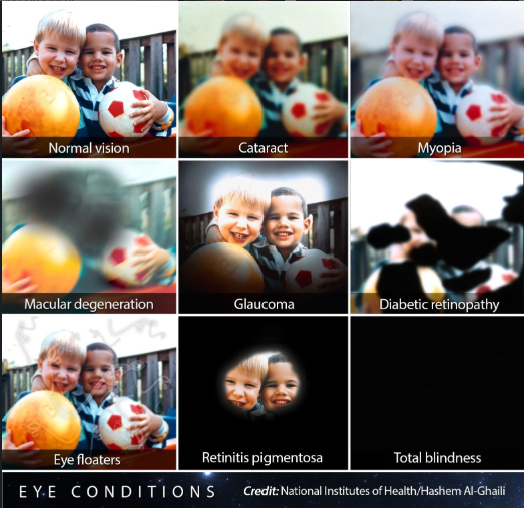
8 Common Eye Conditions: Symptoms and When to Get Help
Blurry vision, flashes, floaters, redness, glare, and eye pain can have many causes. Some are minor and treatable; others can threaten vision without prompt care. The appearance of an eye alone is rarely enough to identify the problem, and several serious conditions cause few or no early symptoms.
This guide explains common eye conditions, typical warning signs, and when to seek urgent help. It is educational and cannot diagnose an eye problem.
When eye symptoms need urgent care
Contact an eye-care professional urgently or seek emergency care for any of the following:
- Sudden loss or major change in vision
- A sudden shower of new floaters, flashes of light, or a dark curtain over part of your vision
- Severe eye pain, especially with nausea, headache, or halos around lights
- A serious eye injury, chemical exposure, or object stuck in the eye
- A very red, painful eye with light sensitivity
- New double vision, drooping, weakness, trouble speaking, or other neurological symptoms
The National Eye Institute advises immediate evaluation for intense pain, vision changes, a very red or watery eye, a foreign object, or serious trauma. If chemicals enter the eye, begin flushing with clean lukewarm water and contact emergency or poison-control services for local instructions.
Common eye conditions at a glance
| Condition | Typical signs | Usual next step |
|---|---|---|
| Refractive error | Blur, squinting, headaches, eye strain | Routine eye exam and corrective lenses if needed |
| Dry eye | Burning, gritty feeling, fluctuating blur, watering | Eye-care assessment if persistent or painful |
| Cataract | Gradual cloudy vision, glare, faded colours | Comprehensive eye exam |
| Glaucoma | Often no early symptoms | Regular dilated exams for detection |
| Age-related macular degeneration | Central blur or distortion; straight lines may look wavy | Prompt eye exam for new distortion |
| Diabetic retinopathy | Often none early; later blur, floaters, dark areas | Regular diabetic eye exams |
| Retinal detachment | Sudden floaters, flashes, curtain or shadow | Emergency eye assessment |
| Conjunctivitis | Redness, discharge, irritation | Assessment based on cause and severity |
1. Refractive errors
Myopia, hyperopia, astigmatism, and presbyopia occur when the eye does not focus light precisely on the retina. They are among the most common causes of blurry vision.
Common symptoms
- Blur at distance, near, or both
- Squinting
- Headaches or eye strain
- Glare or halos
- Difficulty focusing while reading or using a screen
An eye exam can distinguish a refractive problem from disease. Glasses, contact lenses, or refractive surgery may help, depending on the person and condition.
2. Dry eye
Dry eye occurs when the eyes do not produce enough tears or the tears do not work properly. Paradoxically, irritated dry eyes may water excessively.
Common symptoms
- Burning, stinging, or gritty sensation
- Redness or sensitivity to light
- Fluctuating blurry vision
- Watery eyes
- Discomfort with contact lenses
Screen use, dry air, some medicines, eyelid-gland problems, contact lenses, age, and health conditions can contribute. Persistent symptoms deserve professional assessment because treatment depends on the cause.
3. Cataracts
A cataract is clouding of the eye’s natural lens. Cataracts become more common with age but can also follow injury, surgery, radiation, or certain medical conditions and medicines.
Common symptoms
- Cloudy or blurry vision that develops gradually
- Glare and halos around lights
- Poor night vision
- Colours appearing faded or yellowed
- Frequent prescription changes
Early symptoms may be managed with updated lighting or glasses. When a cataract interferes with daily activities, surgery can replace the cloudy lens with an artificial one. An eye doctor should confirm that the cataract, rather than another condition, is causing the vision problem.
4. Glaucoma
Glaucoma is a group of diseases that damage the optic nerve. The most common form often progresses without noticeable early symptoms, which is why waiting for warning signs is unsafe.
A comprehensive dilated eye exam can detect glaucoma. Treatment may include eye drops, laser therapy, or surgery to lower eye pressure and slow further damage. Vision already lost from glaucoma generally cannot be restored, so early detection matters.
Sudden severe pain, red eye, blurred vision, halos, nausea, or headache can indicate an acute form of glaucoma and requires emergency assessment.
5. Age-related macular degeneration
Age-related macular degeneration, or AMD, affects the macula, the central part of the retina used for reading, faces, and detailed vision. Peripheral vision may remain intact.
Possible symptoms
- Central vision becoming blurry
- Straight lines looking wavy or distorted
- A dim, blank, or dark area near the centre of vision
- Difficulty seeing in low light
- Colours appearing less bright
AMD can progress slowly or change more quickly. New distortion or sudden central-vision changes should be assessed promptly. Treatment depends on the type and stage.
6. Diabetic retinopathy
Diabetic retinopathy results from damage to retinal blood vessels associated with diabetes. It may cause no symptoms at first, even while damage develops.
Later symptoms can include blur, floaters, dark areas, and vision loss. Good management of blood sugar, blood pressure, and cholesterol can reduce risk, but it does not replace regular dilated eye exams. Treatment options may include injections, laser procedures, or surgery, depending on the condition.
7. Retinal detachment
A retinal detachment occurs when the retina pulls away from its normal position. It is a medical emergency because delay can increase the risk of permanent vision loss.
Warning signs
- A sudden increase in floaters
- Flashes of light
- A dark curtain, shadow, or veil over part of vision
- Sudden reduction in vision
These symptoms do not always mean a detachment, but they require immediate eye evaluation.
8. Conjunctivitis and other causes of a red eye
Conjunctivitis is inflammation of the thin membrane covering the white of the eye and inner eyelid. Causes include viruses, bacteria, allergies, and irritants. Symptoms may include redness, discharge, itching, tearing, or a gritty feeling.
A red eye is not automatically conjunctivitis. Pain, marked light sensitivity, vision changes, contact-lens use, injury, or severe redness can point to a more serious corneal or internal eye problem and warrants prompt assessment. Avoid sharing towels, eye makeup, or drops, and do not use leftover prescription medication.
How often should you have an eye exam?
The appropriate schedule depends on age, symptoms, prescription, family history, diabetes, medications, and other risk factors. Children, people with diabetes, older adults, those with a family history of glaucoma, and anyone with new symptoms may need more frequent examinations.
A comprehensive eye exam does more than update glasses. It can assess the retina, optic nerve, eye pressure, alignment, and other structures, sometimes identifying disease before the person notices a change.
How to protect your vision
- Attend recommended comprehensive eye exams.
- Manage diabetes, blood pressure, and cholesterol with your healthcare team.
- Wear sunglasses that block UVA and UVB radiation.
- Use appropriate protective eyewear for work, sports, and home projects.
- Follow contact-lens hygiene instructions and never sleep in lenses unless specifically approved.
- Do not smoke; smoking increases the risk of several eye diseases.
- Take screen breaks for comfort, while remembering that screen strain is different from diseases such as glaucoma or retinal damage.
Frequently asked questions
Can I identify an eye disease from a photograph?
Usually not reliably. Some conditions change the visible eye, but many serious diseases affect internal structures and require specialized examination or imaging.
Are new floaters normal?
Floaters become more common with age, but a sudden increase, especially with flashes or a shadow, needs urgent assessment to rule out a retinal tear or detachment.
Does glaucoma always cause high eye pressure?
No. Eye pressure is an important risk factor, but glaucoma can occur at different pressure levels. Diagnosis requires assessment of the optic nerve and other findings.
Can cataracts return after surgery?
The removed natural lens does not grow back. A later clouding of the capsule behind the artificial lens can occur and is often treatable with a laser procedure.
Bottom line
Many eye conditions share symptoms, and several important diseases are silent early on. Use symptoms as a reason to seek appropriate care, not as a self-diagnosis. Sudden vision loss, flashes and floaters, a curtain-like shadow, severe pain, trauma, or a very red painful eye require urgent attention.
References
- National Eye Institute: Eye health information
- National Eye Institute: Refractive errors
- National Eye Institute: Cataracts
- National Eye Institute: Glaucoma
- National Eye Institute: Age-related macular degeneration
- National Eye Institute: Diabetic retinopathy
- National Eye Institute: Retinal detachment
Medical disclaimer: This article provides general information and is not a diagnosis or substitute for care from an optometrist, ophthalmologist, physician, or emergency service. Reviewed under EverydayNext’s editorial standards.
Related Posts



Previous Post
Next Post