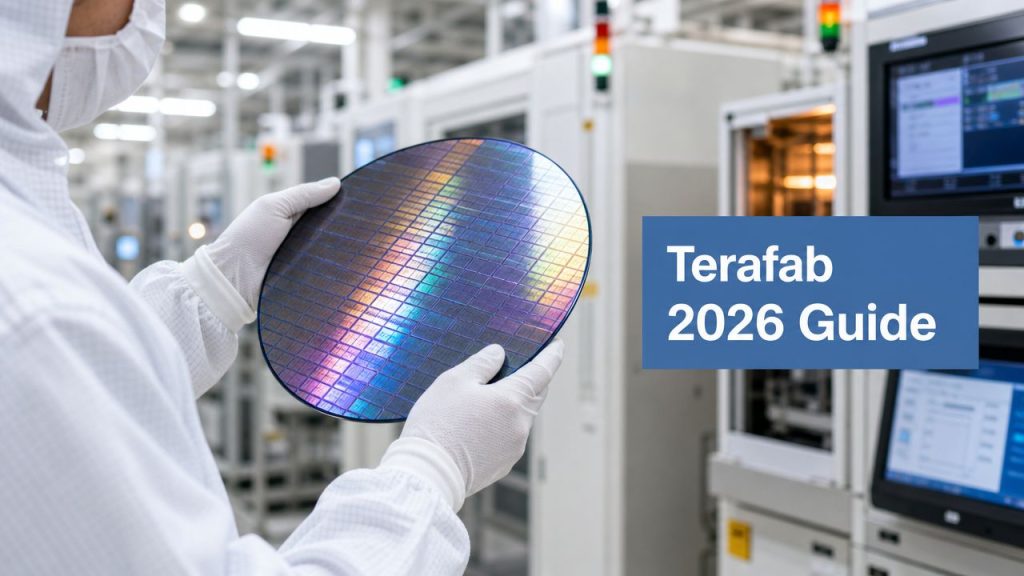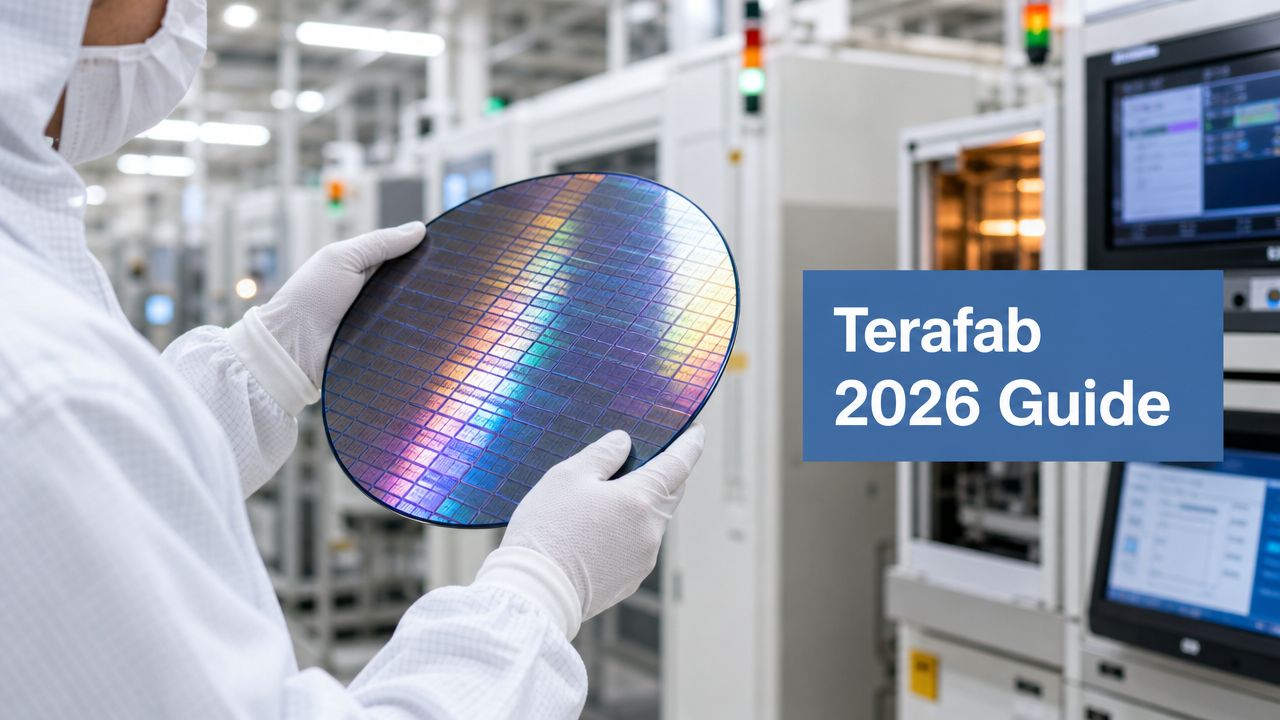
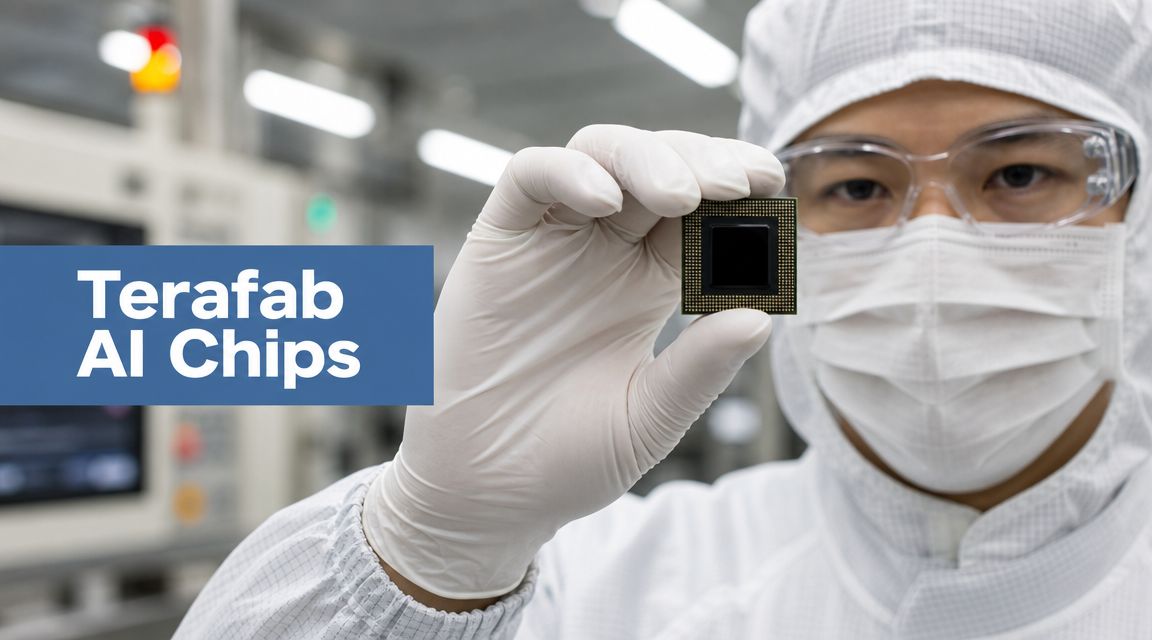
TeraFab is slated to produce two main categories of chips: advanced AI accelerators such as AI5, AI6, and AI7 for Tesla's self-driving cars and Optimus robots, and radiation-hardened D3 chips for SpaceX orbital systems and space-based data centers. The terrestrial chips are aimed at full self-driving, RoboTaxi, and humanoid robotics, while the space chips are designed to keep working in low Earth orbit where ordinary electronics often fail.
That mix is what makes TeraFab unusual. Most chip projects focus on either consumer devices, cloud AI, or defense-grade hardware. Musk's plan ties together cars, robots, satellites, and AI infrastructure in one manufacturing effort. If that sounds overextended, it is. But the evidence suggests the ambition is real, and the product roadmap is more coherent than the hype makes it seem.
The surprising part isn't just the scale. It's the product split. One branch targets edge inference on Earth, where latency and power efficiency matter more than raw data-center throughput. The other targets orbital compute, where radiation tolerance and reliability matter more than benchmark bragging rights. Those are very different design problems, which tells us TeraFab isn't just a bigger fab. It's an attempt to build a custom semiconductor stack for Musk's entire industrial ecosystem.
For readers asking what chips will terafab produce, the short answer is simple. It will make the silicon brains for Tesla's autonomous machines and the hardened processors for SpaceX's space infrastructure. The harder question is whether one fab can realistically serve both worlds at once. That's where the strategy, the manufacturing choices, and the risks become much more interesting.
TeraFab looks less like a supplier project and more like a control project. Musk's companies already depend on advanced chips for autonomy, robotics, AI models, and satellite systems. Owning the fab means owning a larger share of the bottleneck.
That's why the most useful way to think about TeraFab is not as “Tesla entering semiconductors.” It's better understood as a manufacturing bridge between Tesla, SpaceX, and xAI. The terrestrial side needs chips that can make decisions in real time inside moving machines. The orbital side needs chips that can survive a hostile environment without constant replacement.
A useful real-world analogy is the difference between a racing bicycle and a spacecraft. Both need engineering excellence, but they fail for different reasons. A self-driving car chip fails if it can't respond quickly and efficiently enough at the edge. A space chip fails if radiation and thermal stress corrupt its operation. TeraFab's roadmap suggests Musk wants both problems solved with in-house silicon.
The deeper strategic bet is vertical integration. Tesla already tried to control more of its battery and manufacturing stack. TeraFab extends that logic into the most valuable component of AI hardware. Readers who follow Musk's business pattern will recognize that this fits the same “build the bottleneck yourself” approach discussed in broader profiles of how Elon Musk became so rich.
TeraFab matters because the chips it plans to produce aren't generic. They're tightly matched to specific machines, specific environments, and specific corporate dependencies.
For investors, that changes the question from “Can Musk build a chip fab?” to “Which supply constraints is he trying to remove first?” The answer, based on the available evidence, is clear. He wants dedicated AI chips for Tesla products and dedicated rad-hard chips for SpaceX systems.
TeraFab's headline ambition is not merely to make more chips. It is to compress the semiconductor supply chain into a single corporate system that Tesla, SpaceX, and xAI can direct around their own priorities.

That distinction matters because the current chip industry is built on specialization. One company designs processors, another runs the fab, another handles packaging, and others supply memory, tools, and testing. TSMC became the center of that model by manufacturing for many customers at very high scale. Nvidia became one of its biggest beneficiaries by focusing on chip design and software while outsourcing production.
TeraFab points in the opposite direction. Musk's stated model brings design, fabrication, memory, packaging, and test closer together so product teams can change silicon on a shorter cycle. If that works, the advantage is not only lower dependence on outside suppliers. It is faster iteration across hardware and software, especially in products that are still changing quickly, such as humanoid robots, self-driving systems, and space infrastructure.
The comparison with current industry leaders helps clarify how ambitious this is. TSMC's strength comes from manufacturing discipline across a broad customer base. Nvidia's strength comes from designing chips that set the pace in AI training and then relying on partners to build them. TeraFab is trying to combine parts of both models inside one orbit of companies. That would give Musk more control, but it also means taking on far more execution risk than either company took in its early rise.
This is why the project reads less like a routine factory build and more like an attempt to remove a strategic choke point. Foundry access, advanced packaging capacity, and high-bandwidth memory have become constraints for the entire AI sector. A company that controls more of that stack can set its own product timing instead of waiting in line behind larger chip customers. For broader context, coverage of the SpaceX $119 billion semiconductor project shows why analysts see TeraFab as a supply chain play as much as a manufacturing one.
The business logic becomes clearer once you look at demand concentration inside Musk's companies.
Tesla can absorb custom silicon in vehicles, robotics, and autonomy systems. SpaceX has a separate need profile tied to harsh operating environments and long deployment cycles. xAI adds pressure from the data center side, where access to compute hardware has become a competitive issue in its own right. Few new fabs begin life with three internal demand sources that large, that technically demanding, and that willing to trade standardization for tighter vertical control.
That does not guarantee success. It does explain why TeraFab is more credible as a strategy than as a timetable.
The deeper point is that TeraFab aims to change who captures value in the AI hardware stack. If Musk can move even part of chip production in-house, Tesla and SpaceX gain more than supply security. They gain bargaining power, product flexibility, and a path to designs that outside vendors may never prioritize. That pattern aligns with the broader traits discussed in founder-led companies that build around hard bottlenecks.
Practical rule: In semiconductors, the winning question is often not which chip a company wants to sell. It is which dependency it can afford to remove.
That is the strategic heart of TeraFab. Its real product is control over timing, design tradeoffs, and supply in a market where those three factors increasingly shape who leads and who waits.
If TeraFab works as advertised, Tesla would be attempting something few carmakers or robotics companies have managed at scale. It would be building its own supply of autonomy chips rather than waiting in line for merchant silicon designed first for someone else's workload.

The logic is straightforward. Full Self-Driving and Optimus need inference chips that sit inside moving machines, process sensor data continuously, and respond within tight power and thermal limits. That is a different design problem from the one Nvidia solves in the data center, where racks can draw far more power and latency is managed at the system level.
Public reporting on TeraFab points to AI5 as the first meaningful Tesla-oriented target, with later generations such as AI6 and AI7 positioned as follow-ons for vehicle autonomy and robotics. The naming is still inconsistent across reports, which usually signals an early-stage project rather than a finalized product stack. Even so, the direction is clear. Tesla appears to want purpose-built inference silicon for embodied AI.
That distinction matters more than the branding. A robot or driver-assistance computer does not win by posting the biggest benchmark score in a server lab. It wins by delivering repeatable real-time performance inside a constrained device that has to see, decide, and act without overheating, draining too much power, or missing edge cases.
This is why TeraFab should be compared against industry production realities, not just Musk-style ambition. TSMC serves a broad customer base across smartphones, PCs, AI accelerators, and automotive chips. Nvidia ships high-value processors into a compute market that still depends heavily on external foundries and advanced packaging capacity. For Tesla to produce large volumes of custom autonomy chips in-house, it would need to clear the same bottlenecks that slow incumbents, yield, process maturity, packaging, and software co-design. That is a high bar for any entrant, even one with captive demand.
The strategic upside is still real. If Tesla can control more of its inference silicon stack, it gains tighter alignment between model architecture, sensor suite, power budget, and bill of materials. That can matter as much as raw compute. It is the same broad tension discussed in Jensen Huang's view of AI agents and enterprise infrastructure. General-purpose AI chips tend to dominate shared compute environments. Edge autonomy often rewards chips designed around one company's software, hardware, and latency targets.
There is also a capital-markets angle. Investors hear claims about massive wafer output and may assume that more wafers automatically means a direct challenge to Nvidia. That is too simplistic. A successful Tesla autonomy chip business would be disruptive even without displacing Nvidia in cloud training. It would matter because it shifts value from external chip suppliers toward Tesla's own vehicle and robotics margins.
The same vertical-control logic also shows up around Musk's broader compute footprint, including growing interest in how infrastructure partnerships shape AI deployment, as seen in SpaceX infrastructure for Anthropic's Claude.
Here's a useful video primer for the broader context around Musk's chip push:
The practical conclusion is narrower than the hype and more interesting. TeraFab's Tesla chips do not need to beat the best data-center GPU on absolute performance. They need to become the preferred silicon for millions of Tesla-controlled endpoints where latency, power efficiency, integration, and supply control matter more than headline benchmark leadership.
If TeraFab is real at the scale supporters describe, its most strategically unusual output may not be Tesla silicon at all. It may be the space-grade processors SpaceX would need if Musk wants tighter control over satellites, orbital networking, and eventually more autonomous systems beyond Earth.
That matters because space chips are a different business from automotive AI chips. The winning product is not the one with the highest headline throughput. It is the one that keeps producing correct results after repeated radiation exposure, power cycling, and harsh thermal conditions in orbit.
Low Earth orbit is unforgiving for conventional electronics. Radiation can corrupt memory, disrupt logic states, and create intermittent faults that are hard to detect before they become mission problems. A consumer or automotive chip can be excellent on Earth and still be a poor fit for a satellite if it cannot maintain reliability over time.
Public descriptions of the reported D3 design point to classic hardening methods such as triple modular redundancy and radiation-tolerance features, rather than a pure push for maximum speed. That design logic tracks with how aerospace systems are usually built. In orbit, error correction and fault tolerance carry more economic value than marginal benchmark gains, because replacing failed hardware is difficult and service interruptions can affect an entire satellite network.
This is also where TeraFab's investor story gets more complicated. A factory capable of advanced production for space-rated chips would not be competing with Nvidia in the same direct way Tesla inference silicon might. It would be addressing a narrower market with higher qualification burdens, longer validation cycles, and potentially stronger captive demand if SpaceX becomes the anchor customer.
The industry context helps separate ambition from plausibility. TSMC leads high-volume advanced manufacturing because it can produce at scale with tight yields for mainstream commercial customers. Space-grade chips follow a different curve. Volumes are lower, validation is slower, and the product has to survive conditions that mass-market chips are not designed for.
That creates an unusual tension inside the broader TeraFab pitch. Claims about massive wafer starts imply scale economics closer to top-tier commercial foundries. Space-hardened products usually reward reliability engineering, packaging discipline, and qualification depth more than raw unit volume. If Musk is serious about serving both terrestrial AI demand and orbital compute, TeraFab would need to operate more like two businesses inside one fab strategy.
That is hard to execute, but strategically coherent.
SpaceX already has a strong reason to care. Its satellite network depends on dense, power-constrained, highly reliable hardware in a physically inaccessible environment. Reports about SpaceX infrastructure for Anthropic's Claude show how quickly the company's role in compute infrastructure is expanding beyond launch services. Hardened in-house silicon would fit that broader pattern of vertical integration.
| Feature | AI Chips (e.g., AI5, AI6) | Space-Grade Chips (e.g., D3) |
|---|---|---|
| Primary use | Tesla FSD, RoboTaxi, Optimus | SpaceX orbital systems and data centers |
| Design priority | Low-latency edge inference and machine control | Reliability under radiation and thermal stress |
| Operating environment | Cars, robots, terrestrial edge devices | Low Earth orbit |
| Manufacturing direction | Tesla-focused AI accelerator roadmap | Radiation-hardened design on Intel 14A |
| Hardening features | Not described in public detail | TMR and radiation tolerance features |
| Failure concern | Delay or inefficiency in real-time decisions | Bit flips, upset events, and environmental degradation |
For readers tracking the broader tech trends shaping 2025 infrastructure, this is the more surprising part of the TeraFab thesis. Musk is not just chasing more chips. He appears to be testing whether one manufacturing program can serve two very different frontiers: embodied AI on Earth and resilient compute in orbit.
TeraFab stands or falls on manufacturing, not branding. Musk can promise custom AI silicon, orbital-grade chips, and factory-scale output, but the real question is whether the process technology, packaging, and automation stack can work together at yields high enough to matter.

Public reporting ties part of the project to Intel's 14A process. As noted earlier in the article, other descriptions of TeraFab also point to a broader ambition around 2-nanometer-class manufacturing. Investors should read those references as target processes, not proof that full production capability already exists.
That distinction matters because node names are marketing labels tied loosely to real manufacturing complexity. What matters in practice is transistor density, power efficiency, defect rates, and whether a fab can deliver those gains at volume. A leading-edge process can look impressive on a slide deck and still fail commercially if yields stay low or packaging becomes the bottleneck.
Intel's role is therefore strategic. TeraFab appears to be trying to pair Musk-style vertical integration with outside foundry process expertise, rather than inventing every layer from scratch. That is a more realistic path than building a competitive advanced-node ecosystem independently, but it still leaves TeraFab exposed to the same risks that constrain incumbents such as Intel, TSMC, and Samsung. Process ramps at the frontier are slow, capital-intensive, and unforgiving.
Automation is part of that equation. Advanced fabs depend on tightly controlled handling, metrology, and defect detection because tiny variations can ruin output. The broader push toward factory automation, visible in trends like China's industrial robot production surge in April 2025, helps explain why semiconductor manufacturing is becoming as much a software and robotics problem as a lithography problem.
One of the more credible signals in TeraFab reporting is the emphasis on advanced packaging. That deserves more attention than it usually gets.
For AI chips, packaging often determines real-world performance as much as the logic die does. High-bandwidth memory placed close to compute reduces the distance data must travel, which improves bandwidth and lowers power wasted on movement. Nvidia's recent AI systems have shown this clearly. The commercial winner is rarely the chip with the best headline transistor story alone. It is the platform that combines compute, memory, interconnect, and thermals into a usable product.
That comparison is important for judging TeraFab's claims. If Musk is aiming at output levels that would put the project in the same conversation as top-tier semiconductor manufacturers, then advanced packaging is not a side detail. It is one of the main gating factors. TSMC's position in AI hardware has been strengthened not only by process leadership but also by CoWoS and related packaging capacity, which became a real industry constraint during the AI boom. Any TeraFab plan that targets Tesla-scale AI deployment or broader merchant relevance has to solve that same problem.
The harder part is that TeraFab appears to want one manufacturing base to support very different chip classes. Automotive and robotics silicon reward efficiency, cost discipline, and high-volume repeatability. Space-oriented devices put more weight on reliability and environmental tolerance. The overlap is not zero, but it is narrower than the marketing pitch suggests.
So the manufacturing thesis is ambitious in a specific way. TeraFab is not just trying to fabricate advanced chips. It is trying to combine frontier process technology, complex packaging, and factory automation into a system that could eventually challenge the economics of established foundries. That is why the upside looks disruptive, and why the execution risk remains the central variable.
If TeraFab reaches anything close to its stated capacity goals, it would rank as one of the most disruptive semiconductor buildouts attempted in decades. That is exactly why the timeline matters more than the headline.
The current roadmap, as noted earlier, points to an initial pilot phase before any large-scale ramp. That matters because semiconductor projects rarely fail on vision. They fail on yields, packaging throughput, tool timing, and the long sequence of engineering fixes required before a design can ship in volume.

A pilot-to-ramp sequence is standard for advanced manufacturing, but the scale implied here is not. Moving from early runs to meaningful wafer volume is the point where a chip program stops being a product story and becomes a factory story.
That distinction matters for investors.
TSMC built its position over decades by proving it could move from process development to repeatable high-volume output across many customers. Nvidia, by contrast, dominates AI economics because it pairs advanced silicon with software, packaging access, and customer demand. TeraFab appears to be aiming at a narrower but still ambitious target. It wants enough internal manufacturing strength to support Tesla and SpaceX at volumes that would normally require dependence on established foundries.
A sensible way to read the timeline is to break it into three tests:
Each phase screens out a different kind of risk. Design risk comes first. Manufacturing risk comes next. Organizational complexity becomes the long-term challenge.
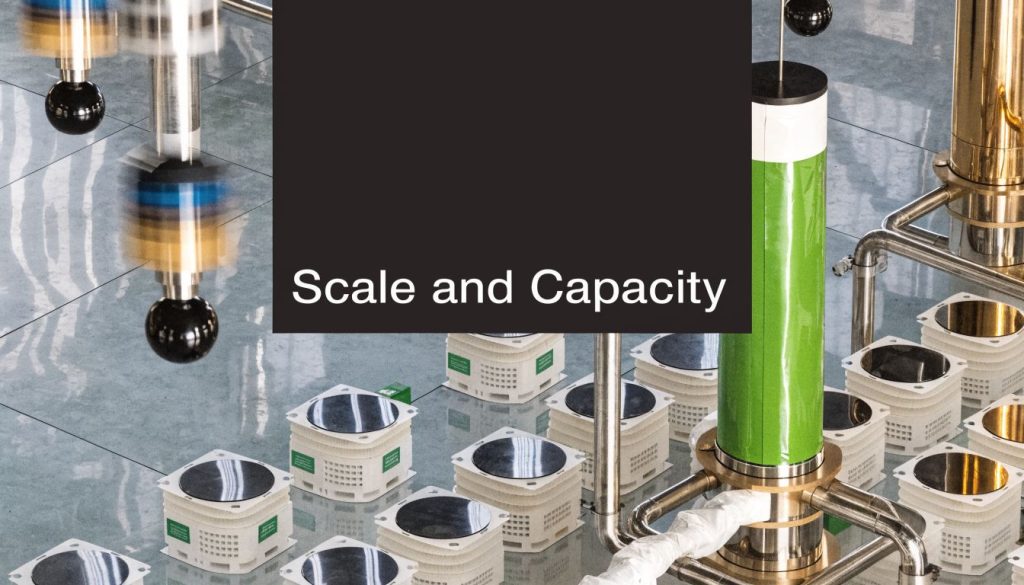
The boldest capacity claim associated with TeraFab is the idea of eventually reaching about 1 million wafer starts per month. If that number is taken at face value, it would place TeraFab in the same conversation as the largest fabrication operations in the industry, not a niche captive facility. That is the right benchmark to use. Investors should compare the project against TSMC-scale manufacturing realities, not against the output of a single product line.
The comparison also clarifies what is speculative. TSMC's scale rests on a mature supplier network, proven yield learning, deep customer diversification, and years of execution at advanced nodes. TeraFab, based on what is publicly discussed so far, would begin with captive demand from Musk-linked companies. That creates an advantage and a constraint. Demand may be easier to secure internally, but internal demand does not solve the hard part of fab economics. The plant still has to run efficiently at high utilization and high yields.
Nvidia is a different benchmark, but still a useful one. Nvidia does not own leading-edge fabs. Its advantage comes from architecture, software, packaging access, and ecosystem lock-in. TeraFab could still pressure Nvidia indirectly if Tesla and SpaceX reduce dependence on outside AI silicon or build purpose-specific hardware that is good enough for their own workloads. That would not make TeraFab a direct merchant rival to Nvidia. It would make it a vertically integrated compute stack with strategic insulation from the broader chip supply chain.
| Competitive question | Established leaders | TeraFab's implied position |
|---|---|---|
| Scale benchmark | TSMC operates at proven industrial scale | TeraFab is targeting scale that would need TSMC-like execution discipline |
| AI benchmark | Nvidia sets the pace in AI system value | TeraFab appears focused on internal workloads over broad market sales |
| Demand model | Broad external customer base | Captive demand from Tesla and SpaceX could support the early ramp |
| Main constraint | Market cycles, customer mix, node transitions | Yield, packaging capacity, process maturity, and execution speed |
| Strategic upside | Industry-wide reach and credibility | Control over compute supply across cars, robots, and orbital systems |
The non-obvious point is that TeraFab does not need to beat TSMC or Nvidia on their own terms to matter. It only needs to become credible enough that Tesla and SpaceX can shift meaningful portions of their compute roadmap onto an internal supply base.
If that happens, the broader tech sector will pay attention quickly. A successful TeraFab would suggest that the next era of semiconductor competition is not only about who has the best chip. It is also about which industrial groups can justify building their own manufacturing backbone because their AI, robotics, and infrastructure demand is large enough to support it.
The clearest near-term production target is AI5 for Tesla applications. Verified reporting says small-batch AI5 production is slated for 2026, with broader ramp-up after that. Public descriptions place it in Tesla's terrestrial AI roadmap for self-driving and robotics.
No. The available evidence points to two major product families: Tesla-focused AI chips and SpaceX-focused space-grade chips. That's important because it means TeraFab is being designed as shared infrastructure across Musk's companies, not just a vehicle chip plant.
D3 is the reported radiation-hardened chip line intended for SpaceX orbital systems and data centers. Its purpose is to operate in low Earth orbit, where normal commercial chips can fail because of radiation and extreme thermal conditions.
Commercial chips often aren't built for the radiation and environmental stresses of orbit. The verified reporting says D3 is designed to withstand total ionizing dose up to 300 krad and reduce upset-related failures with triple modular redundancy. In simple terms, it's engineered for correctness and survival in space.
Not in the simplest sense. Nvidia sells broadly into the AI market. TeraFab appears aimed first at internal demand from Tesla, SpaceX, and xAI. That still creates competitive pressure because captive custom silicon can reduce dependence on outside suppliers.
Intel's role appears tied to the 14A process and foundry support. That matters because building advanced chips isn't only about design. The manufacturing process itself is one of the hardest parts, and Intel brings process expertise that Tesla and SpaceX don't publicly have on their own.
It means the chip is designed to keep functioning in environments where radiation can corrupt electronic behavior. Engineers use methods like redundancy and specialized substrates to reduce the chance that a single radiation event causes a damaging error.
The biggest visible risk is execution. The plan depends on advanced manufacturing, difficult yields, and an immature-enough process that Musk reportedly acknowledged it isn't fully complete yet. In semiconductor terms, a strong design is not enough. The fab has to manufacture it repeatably at scale.
There's no verified evidence here that confirms an external merchant strategy. The more likely early use is internal. Tesla, SpaceX, and xAI already provide enough demand to justify a large custom manufacturing effort if the project can execute.
Because TeraFab touches several industries at once: semiconductors, AI infrastructure, robotics, autonomous vehicles, and space systems. Even if the project falls short of its largest claims, it can still influence supplier relationships, competitive positioning, and where future AI compute gets built.
If you want more practical analysis on emerging technology, investing ideas, and the world impact of innovation, Everyday Next is worth bookmarking. It's a useful resource for readers who want clear explainers without the usual hype cycle noise.